Using Generative AI Tools and Techniques for Program Assessment Workshop
The Using Generative AI Tools and Techniques for Program Assessment workshop bridges the foundational concepts of program assessment with the innovative capabilities of Generative Artificial Intelligence (GAI). Participants explore how tools like ChatGPT can be used to streamline and strengthen assessment practices across disciplines—no prior AI experience required.
Designed for faculty, assessment coordinators, administrators and anyone involved in program assessment, the workshop blends practical demonstrations with guided practice. Participants craft effective prompts, and refine them, to assist with program assessment processes, apply GAI to real assessment tasks and critically evaluate the validity of these AI-generated outputs. Emphasis will also be placed on ethical use, sustainability considerations and proper citation of AI tools.
Who Should Attend:
Regardless of discipline, those interested in program assessment and the program assessment process and those interested in learning and using Generative Artificial Intelligence in their program assessment processes.
No prior experience in Generative Artificial Intelligence is needed to attend this workshop but access to your own ChatGPT, or similar tool, will help your learning.
The Using Generative AI Tools and Techniques for Program Assessment workshop bridges the foundational concepts of program assessment with the innovative capabilities of Generative Artificial Intelligence (GAI). Participants explore how tools like ChatGPT can be used to streamline and strengthen assessment practices across disciplines—no prior...
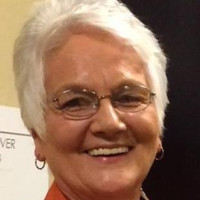
Gloria Rogers
Senior Adjunct Director, Professional Programs, ABETGloria Rogers designs and facilitates faculty workshops and webinars on academic program assessment, with a focus on ABET-aligned continuous improvement processes.
A long-time advocate for data-informed, faculty-driven assessment, Gloria has helped institutions strengthen their use of assessment processes to develop program continuous improvement processes.
Her recent work explores how Generative AI can serve as a responsible partner in these processes—supporting efficiency, accuracy, and reflection while preserving human judgment at the core of program assessment. She is a member of the Generative Artificial Intelligence Community of Practice under the auspices of the Assessment Institute in Indianapolis.
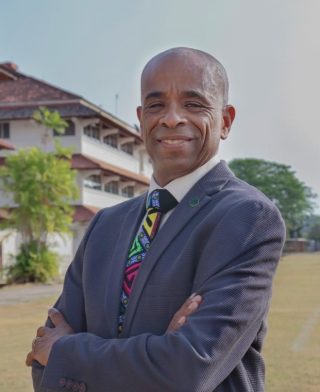
Kevin Huggins
Professor of Computer Science and Data Science, Harrisburg University of Science and TechnologyKevin Huggins, Ph.D., is a Professor of Computer and Data Science at Harrisburg University of Science and Technology. He also serves as the Interim Chair of the Department of Computer Science as well as the Executive Director of the Data Analytics Institute.
Dr. Huggins has also served as a commissioner for the Computing Accreditation Commission of ABET and is currently a Senior IDEAL Scholar, facilitating workshops on assessment throughout the US and internationally.
In addition to his bachelor's degree from West Point, Kevin also holds an M.S. and Ph.D. in Computer Science from the Naval Postgraduate School in Monterey, California, and MINES ParisTech in France, respectively.
Fundamentals of Program Assessment Workshop
The Fundamentals of Program Assessment Workshop is an in-person workshop designed with a focus on small group interaction and individual assignments to introduce the context for program assessment, examine assessment processes, develop measurable outcomes and apply data collection and reporting methods. The exercises and examples are from associate’s, bachelor’s and/or tech-focused programs. These can be applied to other program types and/or timeframes.
This workshop will allow you to work in teams and ask questions of experienced facilitators.
The workshop prepares you to:
- Identify key elements of a functional assessment process.
- Clarify the similarities and differences between course and program assessment.
- Make student outcomes measurable with the development of performance indicators.
- Understand the methods to assess student outcomes.
- Develop rubrics as one method to score student performance in achieving student outcomes.
- Identify the pros and cons of various data collection methods.
- Decipher and report results.
The Fundamentals of Program Assessment Workshop is an in-person workshop designed with a focus on small group interaction and individual assignments to introduce the context for program assessment, examine assessment processes, develop measurable outcomes and apply data collection and reporting methods. The exercises and examples...
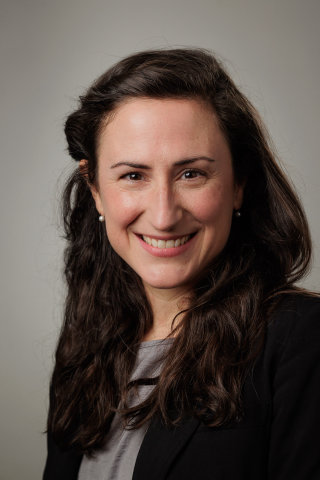
Christina Haden
Associate Teaching Faculty, Mechanical Engineering and Mechanics, Lehigh UniversityDr. Christina Viau Haden is Associate Teaching Faculty for the Mechanical Engineering and Mechanics Department at Lehigh University and the newly appointed Director of the First Year Rossin Engineering (FYRE) experience, which is reimagining how engineering education is approached in the first year. She led her department's ABET accreditation process, chaired the undergraduate curriculum committee and served as Associate Chair. In addition to a passion for teaching and curriculum innovation, she is also deeply committed to improving the retention rates of women in STEM through mentoring, retention programs and advising Lehigh's chapter of the Society for Women Engineers (SWE).
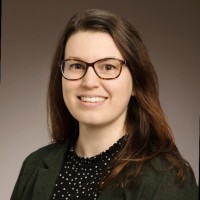
Jenny Amos
Teaching Professor, Bioengineering, University of Illinois at Urbana-ChampaignJenny Amos is a Teaching Professor in Bioengineering at the University of Illinois Urbana-Champaign. She is an AIMBE Fellow, BMES Fellow, BMES Board of Director Member, ABET Commissioner, two-time Fulbright Specialist in engineering education and has won multiple awards and recognitions for her teaching and scholarship of teaching.
Amos was also the lead investigator for the National Science Foundation Revolutionizing Engineering Departments award for Illinois, leading efforts to innovate assessment practices for engineering toward producing more holistic engineers. Amos has over a decade’s worth of experience leading curriculum reform implementing robust assessment strategies.

James Warnock
Adjunct Director, Professional Programs, ABETDr. James N. Warnock is a professor and the Associate Dean in the Jere W. Morehead Honors College at the University of Georgia, Athens, USA. Prior to joining the Morehead Honors College in 2024, Dr. Warnock served as chair of the School of Chemical, Materials and Biomedical Engineering in the College of Engineering, a position he held since 2017.
Dr. Warnock has conducted research in engineering education and has earned international acclaim for his work using problem-based learning to enable students to develop professional skills. He currently serves as the director for Engineering Workforce Development for the NSF Engineering Research Center in Cellular Manufacturing Technologies (CMaT).
Dr. Warnock holds a bachelor’s degree in biological science from the University of Wolverhampton, United Kingdom. He earned a master’s in biochemical engineering and a doctorate in chemical engineering from the University of Birmingham. He was a postdoctoral research fellow for the Georgia Institute of Technology/Emory University Center for the Engineering of Living Tissues.

Karen Tarnoff
Associate Dean for Assessment and Assurance of Learning, East Tennessee State UniversityKaren, an Associate Professor of Management, serves as the Associate Dean for Assessment in the College of Business and Technology at East Tennessee State University. She coordinates assessment of student learning across eight diverse departments (i.e., Accountancy, Computing, Economics and Finance, Management and Supply Chain Management, Sport and Recreation Management, Marketing, Digital Media and Media and Communications) and multiple accreditors (ABET CAC, AACSB business and accountancy accreditation, NASAD, SACSCOC).
She has given numerous conference presentations on assessment-related topics and has served as a consultant to many schools helping them develop and refine their assessment processes and systems. Karen facilitates ABET assessment workshops and serves an AACSB Global Lead Facilitator having created assessment offerings for both accreditors. She also serves as co-chair of the AACSB’s Annual Assessment Conference.
Advanced Program Assessment Workshop
Prerequisites
- Fundamentals of Program Assessment Workshop
or - Institute for the Development of Excellence in Assessment Leadership (IDEAL)
If you have already attended an ABET Fundamentals of Assessment Workshop and are confident in your assessment knowledge, but looking for a highly focused, hands-on group session to hone and refine your current process, this is your next step.
Developing sustainable assessment processes that lead to quality improvement of educational programs is an iterative process. Most experts would agree that the first few cycles of an assessment process lead to more improvements in the actual assessment processes than they do in improvements of student learning. This workshop is designed to help you take a critical look at your current assessment processes and take them to the next level of quality. Time is spent on critiquing processes and developing ways to ensure consistency in the assessment of student learning across multiple faculty evaluators. In this workshop, you build on the principles taught in ABET Fundamentals to develop more efficient and effective processes.
During the Advanced Program Assessment workshop, you work in a small group to critique performance indicators, undergo rubric calibration training, critique assessment processes, and engage in exercises centered on data visualization and evaluation. You leave the workshop with the ability to apply what you learned to improve your own assessment program.
The workshop prepares you to:
- Create a sustainable assessment process.
- Assure consistency in multi-faculty evaluations.
- Identify ways to improve your current assessment processes.
Prerequisites Fundamentals of Program Assessment Workshop or Institute for the Development of Excellence in Assessment Leadership (IDEAL) If you have already attended an ABET Fundamentals of Assessment Workshop and are confident in your assessment knowledge, but looking for a highly focused, hands-on group session to...

Daina Briedis
Adjunct Director, Professional Programs, ABETDaina Briedis is Associate Professor Emerita of Chemical Engineering and Materials Science at Michigan State University. She served as her program’s and college’s assessment coordinator for over 20 years across the span of four accreditation reviews including an early EC2000 visit.
Dr. Briedis has been a Lead Facilitator for ABET Program Evaluator training for eight years and was involved in the early design of the training program. Over the past 35 years, Daina has served ABET as a program evaluator for AIChE, a team chair and member of the Engineering Accreditation Commission (EAC), the first chair of the EAC Training and Materials Development Committee, an EAC Executive Committee member and a member of the ABET Board of Directors.
She was a program evaluator on one of the very first EC2000 visits and subsequently chaired several new criteria visits. She is currently an Adjunct Director of Professional Development at ABET, Inc. wherein she facilitates and helps design ABET's assessment workshops. Dr. Briedis is active nationally and internationally as a consultant in engineering accreditation and is a Fellow of ABET, ASEE and the AIChE.
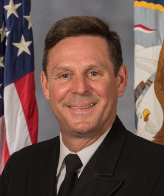
Owens Walker
Associate Professor, United States Naval AcademyOwens Walker is an associate professor in the electrical and computer engineering department at the United States Naval Academy, where he has served as both the assessment chair and the associate chair. He has led initial ABET accreditation and reaccreditation efforts for multiple programs and has served on the Executive Steering Committee for the Naval Academy’s 2016 Middle States Commission on Higher Education reaccreditation. Walker received his bachelor degree in electrical engineering from Cornell University in 1987 and both his master's and doctorate in electrical engineering from the Naval Postgraduate School, Monterey, California in 1995 and 2009, respectively. He is a senior member of the IEEE, a member of Eta Kappa Nu, and an ABET Senior Institute for the Development of Excellence in Assessment Leadership (IDEAL) Scholar.
Self-Study Development Workshop
In this interactive seminar, individuals receive a step-by-step look at the accreditation process according to the most recent accreditation criteria and the Accreditation Policy and Procedure Manual (APPM). Sessions include a thorough look at each criterion and an inside view at what the review teams look for during their visit.
Through group activities, senior ABET volunteer leadership will lead participants through the stages of developing a clear, concise and targeted Self-Study report. Priority registration is for those attendees anticipating an accreditation review in the 2026-27 review cycle.
Participation in this accreditation workshop is limited to two people per institution. We will only honor the first two registrations from each institution.
Tables will be grouped by commission and you will not be able to switch tables if you register incorrectly. There will not be a waitlist and we will not accept walk-ins on the day of the workshop. Registration will be first come, first served.
Room 306 A
Applied and Natural Science Accreditation Commission (ANSAC)
Computing Accreditation Commission (CAC)
Room 306 B&C
Engineering Accreditation Commission (EAC)
Engineering Technology Accreditation Commission (ETAC)
In this interactive seminar, individuals receive a step-by-step look at the accreditation process according to the most recent accreditation criteria and the Accreditation Policy and Procedure Manual (APPM). Sessions include a thorough look at each criterion and an inside view at what the review teams...
Opening Keynote
The 2026 ABET Symposium will open with a focus on Advancing Innovation Through Partnership with Purpose, emphasizing the importance of intentional collaboration, interdisciplinary thinking and addressing the complex challenges facing higher education and society. Jane Emmet, ABET Senior Director of Accreditation Operations, will welcome participants and serve as Master of Ceremonies, introducing Dr. Laura Dietsche, President of ABET, who will provide an overview of ABET’s progress, priorities and future in advancing quality assurance in higher education. ABET CEO Dr. Michael Milligan will then bridge to the symposium theme by reflecting on sustainability as both a global challenge and a source of hope—underscoring that meaningful progress depends on understanding human behavior and strengthening partnerships.
The keynote address will be delivered by Nicole Stott—astronaut, engineer, artist, author and former NASA mission specialist—who will explore how collaboration, creativity and community are essential to solving complex global challenges. Drawing from her experiences aboard the International Space Station, undersea expeditions and her work with the Space for Art Foundation, Stott will encourage participants to rethink traditional boundaries and recognize their role as active contributors in shaping a more innovative and resilient future.
The 2026 ABET Symposium will open with a focus on Advancing Innovation Through Partnership with Purpose, emphasizing the importance of intentional collaboration, interdisciplinary thinking and addressing the complex challenges facing higher education and society. Jane Emmet, ABET Senior Director of Accreditation Operations, will welcome participants...

Jane Emmet
Senior Director, Accreditation Operations, ABETJane Emmet has been responsible for the management and administration of ABET’s accreditation policies and procedures and the overall operations of ABET’s accreditation processes since November, 2015. She joined ABET in January 2014 as the training manager responsible for the training of the over 2,000 volunteer professionals who serve ABET. Today, Emmet is the senior director, accreditation operations.
Emmet's background, prior to joining ABET, includes directing and managing training and leadership development programs at professional service organizations, energy companies and developing education programs for history museums. She holds a bachelor’s degree from Barnard College in history/education and a master’s degree in museum education from The George Washington University. She also holds a graduate certificate from the University of Maryland Baltimore County in instructional systems design.
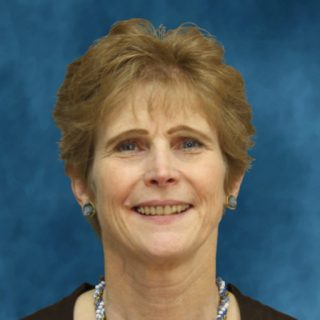
Laura Dietsche
President, ABETLaura Dietsche received both her B.S. and Ph.D. degrees in chemical engineering from the University of California at Berkeley and is a licensed professional engineer. Her career in industrial research and development spans over 35 years with Dow Chemical Company, where she is known for the application of transport fundamentals and computational fluid dynamics (CFD) to advance chemical and polymer processing technology and material development. Dietsche continues to work in the area of numerical modeling with a recent focus on hybrid machine learning models.
In addition to her industrial career accomplishments, she is passionate about enhancing her profession through volunteer activities. She is involved in improving the quality of engineering education through her 20+ years of volunteering and leadership within ABET and the AIChE Education and Accreditation Committee. Dietsche is also a recent past chair of the Chemical Engineering Technology Operating Council (CTOC) of AIChE and is a past chair and a current director of the Mid-Michigan section of AIChE. Currently, she serves on the AIChE Fellows Council and Public Affairs and Information Committee (PAIC).

Michael K. J. Milligan
Chief Executive Officer, ABETMichael K. J. Milligan is the Executive Director and Chief Executive Officer of ABET, the global accreditor of over 4,300 college and university programs in applied and natural science, computing, engineering and engineering technology.
Prior to joining ABET in 2009, Milligan was a systems director at the Aerospace Corporation, leading a team at the NASA Goddard Space Flight Center developing the next generation environmental satellites for the National Oceanic and Atmospheric Administration (NOAA). Milligan served over 24 years as a career U.S. Air Force (USAF) officer working in operations, education, international research & development, and technology acquisition. During his USAF career, he served as an associate professor and deputy department head in the Department of Electrical and Computer Engineering at the U.S. Air Force Academy in Colorado.
Milligan earned his Ph.D. from the University of Texas at Austin, his M.S.E. from the University of Massachusetts at Lowell, and his B.S. from Michigan State University — all in electrical engineering. He also earned an M.B.A. in Business Administration from Western New England College, is a registered Professional Engineer (PE) in Colorado and Maryland, and a Certified Association Executive (CAE).
Milligan is also a member of the Tau Beta Pi Engineering Honor Society, IEEE Eta Kappa Nu Electrical and Computer Engineering Honor Society, and a senior member of the Institute of Electrical and Electronics Engineers (IEEE).

Nicole Stott
Astronaut, Author, Artist and Advocate, The Space Art FoundationNicole Stott is an astronaut, aquanaut, engineer, artist, and author of Back to Earth: What Life in Space Taught Me About Our Home Planet – And Our Mission to Protect It; and most importantly a mom. She creatively combines the awe and wonder of her spaceflight experience with her artwork to inspire everyone’s appreciation of our role as crewmates here on Spaceship Earth.
Nicole is a veteran NASA Astronaut with two spaceflights and 104 days in space as a crewmember on both the International Space Station and the Space Shuttle. Personal highlights of her time in space include being the 10th woman to perform a spacewalk, first person to operate the ISS robotic arm to capture a free-flying cargo vehicle, painting the first watercolor in space, working with her international crew for the benefit of all life on Earth, and of course the life-changing view of our planetary home.
Nicole is also a NASA Aquanaut. In preparation for spaceflight, she was a crewmember on an 18-day NEEMO9 saturation dive mission at the Aquarius undersea laboratory.
Nicole believes that the international model of peaceful and successful cooperation we have experienced in the extreme environments of space and sea holds the key to the same kind of peaceful and successful cooperation for all life here on Earth.
On her post-NASA mission, she is a technical and creative consultant, motivational speaker, and advocate for all we do in space that is ultimately for the benefit of all life on Earth. Nicole is also extremely proud of her role as a founding director of the Space for Art Foundation — uniting a planetary community of children through the awe and wonder of space exploration and the healing power of art; as a partner in purpose with Christina Korp and Space For a Better World; and an enthusiastic ambassador for our planet with organizations like Ocean Culture Life, Sheba Hope Grows, Platform Earth, Astra Carta, the Everglades Foundation, Plant a Million Corals, and 11th Hour Racing.
From Principles to Practice: Embedding and Measuring Ethics in Engineering Education
As engineering education continues to respond to complex global, social and technological challenges, the integration of ethics and societal impact has become an essential component of curriculum design and assessment. This panel brings together complementary perspectives on embedding ethics within engineering education, including conceptual frameworks, practical implementation strategies and approaches to measuring ethical learning outcomes. Panelists will share insights from institutional, international and pedagogical contexts, highlighting both challenges and successes in integrating ethics across engineering programs. Through discussion and audience engagement, the panel will explore how ethics can be meaningfully embedded, assessed and sustained within engineering education to prepare students for responsible professional practice.
Learning Objectives
- Describe multiple approaches for embedding ethics and societal impact into engineering education across diverse institutional contexts.
- Compare frameworks and strategies used to integrate ethical considerations into engineering curricula and learning activities.
- Identify methods for assessing ethical learning outcomes in engineering programs.
- Reflect on transferable practices that can be adapted to their own teaching, programs or institutional environments.
As engineering education continues to respond to complex global, social and technological challenges, the integration of ethics and societal impact has become an essential component of curriculum design and assessment. This panel brings together complementary perspectives on embedding ethics within engineering education, including conceptual frameworks,...

James Tippey
Department Chair, Computer Technologies, Excelsior UniversityDr. James Tippey has worked with computers since high school and has extensive experience in IT, holding roles across small companies, non-profits, and higher education. He earned his Doctor of Computer Science with a focus on Cybersecurity and Information Assurance in 2021. Tippey has served as CTO of Computers in Ministry, IT Director at the St. Louis Symphony, and is now the Department Chair of IT and Cybersecurity at Excelsior University. He brings a strong focus on the ethical and societal impacts of technology, driving discussions on security, privacy, and the responsible use of technology in education and beyond.
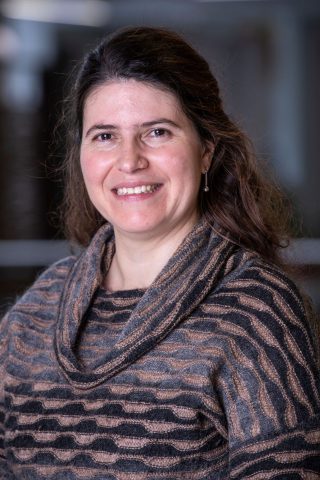
Carola Hernandez
Associate Professor, Universidad de los AndesCarola Hernández Hernández is an Associate Professor at the Faculty of Engineering and the Engineering Education Support Unit Coordinator at the Universidad de Los Andes. She has aPhD in Science and Technology from Aalborg University (Denmark) in 2013, physics (2001) with a master's in education (2004) and a master's in physics (2009) from the Universidad de Los Andes.
She is part of the Education and Evaluation in the Disciplines research group, classified A1 in the Colombian research system. Her research interests include Problem-Based Learning Oriented by Projects, Engineering Education, Teacher Training and Research in Education. She has taught courses that implement pedagogical innovations in engineering and transversal competencies, such as ethics and teamwork.
She is currently part of the accreditation committee for engineering programs and has participated in the ABET accreditation process. Besides, he has participated in several research projects in engineering education, and she has published several peer-reviewed articles in recognized conferences and journals.
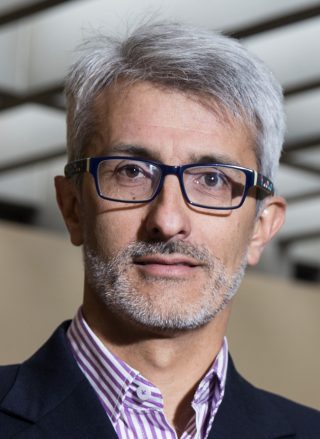
Carlos Rodriguez
Associate Professor, Universidad de los AndesCarlos F. Rodríguez is an Associate Professor in the Department of Mechanical Engineering at Universidad de los Andes, Colombia. He earned his degree in Mechanical Engineering from the same university, a PhD in Robotics and Artificial Intelligence from Universidad Politécnica de Madrid.
He has led several times the ABET accreditation of engineering programs of the School of Engineering. Since 2023, he has served as Vice Dean of Academic Affairs in the School of Engineering.
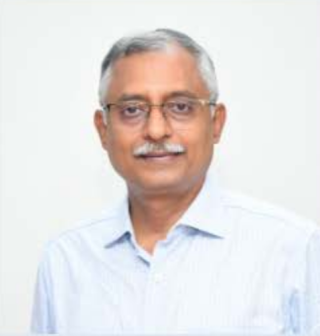
Palani Muthiah
Dean, SRM Institute of Science and TechnologyDr. Palani Natha Raja M is a distinguished academician and industry expert, bringing forth over 32 years of experience. He earned his PhD in Quality Engineering and Management from IIT Delhi in 2008, following his ME in Mechanical Engineering from BITS Pilani in 1994 and BE from Madurai Kamaraj University in 1992.
Dr. Raja commenced his professional journey with a commendable stint in industries, garnering invaluable insights for four years before transitioning to academia. Since 1997, he has been an integral part of Thiagarajar College of Engineering, starting as a Lecturer and steadily ascending the ranks to become Assistant Professor, Associate Professor, and Professor in 2005, 2008 and 2011 respectively. His leadership roles include serving as the Head of the Department of Mechatronics from 2017 to 2025 and fulfilling administrative responsibilities as Registrar from 2006 to 2016, Dean of Planning and Development from 2016 to 2021 and as Principal In Charge from 2021 to 2024.
Now, he is a Dean of Quality Assurance at SRM Institute of Science and Technology, KTR Campus, Chennai. Dr. Raja serves as an esteemed NBA Accreditation Expert Member and Chairman of NBA Committees, contributing significantly to the enhancement of educational standards. Additionally, he plays a pivotal role as a panel member in NAAC's New Accreditation Norms Committee, furthering the cause of quality assurance in higher education.
Educator Workshop – Authentic Experiential Learning & Assessment “At Scale”
We know that authentic, real-world experiential learning can be transformative for careers and lives. Yet traditional models are notoriously resource-intensive, making them costly and largely unscalable. How do we provide high-impact experiences to all students, not just a select few? And how can we ensure our assessment and feedback processes are up to the task of supporting authentic, transformative learning experiences?
This highly interactive session tackles the twin challenges of scaling and assessing experiential learning. It introduces our scalable pedagogy for "mass experiential learning" (an award-winning framework we developed at University College London), along with data from our highly interdisciplinary global programs.
Most importantly, this is a ‘case-in-point’ workshop; participants will experience the pedagogy first-hand. We will introduce and explore pedagogical building blocks — such as challenge-based frameworks and structured peer-assessment rubrics — that make authentic learning and assessment feasible at scale. The aim is to support participants in leaving with preliminary ideas for adapting these high-impact practices for their own institutional contexts.
Learning Objectives
By the end of the workshop, participants will be able to:
- Identify pedagogical building blocks for scalable experiential learning.
- Analyze how these blocks enable authentic assessment.
- Formulate preliminary ideas to adapt these practices for their own context.
We know that authentic, real-world experiential learning can be transformative for careers and lives. Yet traditional models are notoriously resource-intensive, making them costly and largely unscalable. How do we provide high-impact experiences to all students, not just a select few? And how can we ensure...

Jason Blackstock
Founder & CEO, How to Change the WorldDr Jason Blackstock is the founder and CEO of How to Change the World – a social enterprise that he spun out from University College London (UCL). How to Change the World is a social enterprise transforming careers to create a sustainable future through online experiential learning programs – while building the tech to revolutionise online experiential learning at scale.
Blackstock's previous experience spans quantum physics research; silicon valley tech development; sustainability, technology & innovation policy; and higher education innovation & leadership. Since the mid-2000s, he has taught, provided policy advice and led research from universities and think tanks such as Harvard, Oxford, the Centre for International Governance Innovation, and the International Institute for Applied Systems Analysis. Jason was the Founding Head of UCL STEaPP (2013-18), and currently serves as a director or advisory board member for numerous organisations, including MIT IDSS and We Make Change.
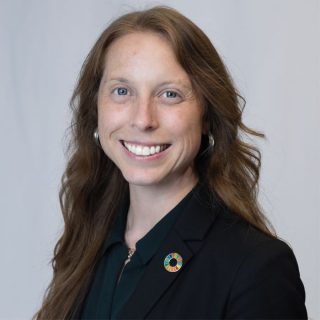
Alana Heath
Co-founder & COO, How to Change the WorldAlana Heath is the co-founder and COO of How to Change the World. How to Change the World is a social enterprise transforming careers to create a sustainable future through online experiential learning programs – while building the tech to revolutionise online experiential learning at scale.
Prior to her current role, Heath spent over a decade mobilising business and technology as forces for good in sectors such as financial inclusion, energy access and sustainability. She has worked across the U.S., Europe, India and East Africa with social enterprises, non-profits and impact investing funds such as Grassroots Capital Management, the Microfinance Information Exchange and SunFunder, and as a consultant on World Bank projects. In 2012 Heath co-founded Alta Solar, a non-profit introducing solar technology to villages in the Himalayan mountain range in Ladakh (northern India), and in 2016 she co-founded Ara Energy, a venture researching access to energy in East Africa in partnership with Factore[e] Ventures.
Bridging Classrooms and Communities Through Interdisciplinary Research
This panel features three faculty in computer science whose interdisciplinary research in healthcare exemplifies how purposeful partnerships can advance innovation and transform education. Drawing from projects that integrate computing with health sciences, and social equity, the panelists will share how collaborations with hospitals, rural communities, and local organizations lead to impactful research while reshaping how students learn.
Each panelist will discuss how interdisciplinary partnerships inform the design of project-based coursework, enabling students to connect technical problem-solving with ethical, human-centered practice. These examples reveal how computing classrooms become spaces for civic engagement, cultural humility, and systems-level thinking skills essential for tackling today’s complex challenges.
Through interactive dialogue, participants will explore strategies to initiate and sustain interdisciplinary collaborations, engage collaborators as co-creators in research, and translate those experiences into meaningful student learning outcomes. Attendees will leave with practical models for building purpose-driven partnerships that connect innovation, inclusion, and education.
Learning Objectives
- Identify ways to integrate interdisciplinary research into computing courses to enhance student learning
- Examine how interdisciplinary partnerships can foster innovation and inclusion
- Develop strategies to sustain purpose-driven collaborations that link research, community and education
This panel features three faculty in computer science whose interdisciplinary research in healthcare exemplifies how purposeful partnerships can advance innovation and transform education. Drawing from projects that integrate computing with health sciences, and social equity, the panelists will share how collaborations with hospitals, rural communities,...

Jomara Sandbulte
Assistant Professor, University of Minnesota DuluthDr. Jomara Sandbulte is an Assistant Professor in the Computer Science Department at the University of Minnesota, Duluth. Her research centers on Human-Computer Interaction(HCI) with a specialization in Health Informatics. Sandbulte’s work explores how technology can be used to support individuals’ health and wellbeing. Identifying as a Latina woman in STEM, Dr. Sandbulte is committed to connect her research with diversity initiatives. As an educator, she strives to create an engaging classroom environment with meaningful learning experiences that supports students from diverse backgrounds which aligns with ABET standards.

Temitope Olorunfemi
Assistant Professor, University of Minnesota DuluthDr. Temitope Olorunfemi is an Assistant Professor in the Computer Science Department at the University of Minnesota, Duluth. She is from the southwestern part of Nigeria and has focused her work and research on improving the lives of women and girls there. Her research centers around health-based educational applications in different languages. She believes it is only through working with people with different perspectives that we can come up with constructive solutions that have a broad societal impact. As an educator and researcher, she is committed to improving diversity in the Computer Science community through her teaching and research activities in alignment to ABET standards.
Use of Performance Indicators for Program Assessment
Performance indicators are vital educational tools for programs, both in setting course objectives and helping students understand expectations of their learning. As such, performance indicators should be developed carefully and once assessed, the results should be reviewed to determine what actions should be taken to improve student learning. With emerging interest in the importance of ethics and ethical practice of engineering, this session focuses on a mature program's experience with a case study of ethics introduction within an engineering curriculum. The session will delve into the mechanics of performance indicator development, best practices for their monitoring at varying stages of student development, and faculty engagement strategies.
Learning Objectives:
- Develop effective performance indicators to assess and enhance educational outcomes in engineering programs.
- Establish a systematic monitoring process for performance indicators across stages of student development.
Performance indicators are vital educational tools for programs, both in setting course objectives and helping students understand expectations of their learning. As such, performance indicators should be developed carefully and once assessed, the results should be reviewed to determine what actions should be taken to...
Christina Haden
Associate Teaching Faculty, Mechanical Engineering and Mechanics, Lehigh UniversityDr. Christina Viau Haden is Associate Teaching Faculty for the Mechanical Engineering and Mechanics Department at Lehigh University and the newly appointed Director of the First Year Rossin Engineering (FYRE) experience, which is reimagining how engineering education is approached in the first year. She led her department's ABET accreditation process, chaired the undergraduate curriculum committee and served as Associate Chair. In addition to a passion for teaching and curriculum innovation, she is also deeply committed to improving the retention rates of women in STEM through mentoring, retention programs and advising Lehigh's chapter of the Society for Women Engineers (SWE).
Discussion Den: Ask Me Anything – Assessment
In this Ask Me Anything Discussion Den about Assessment, attendees are invited to ask any and all assessment-related questions and our experts will answer them.
Each Discussion Den brings ABET thought leaders together with Symposium attendees for an informal and enlightening discussion on a specific topic. These are organic conversations. There is no agenda or PowerPoint presentation. The audience’s questions and experiences build an inquisitive conversation that the group leaders guide with their insight and expertise.
Discussion Dens allow attendees to learn from the group leaders as well as from the questions and experiences of their peers.
In this Ask Me Anything Discussion Den about Assessment, attendees are invited to ask any and all assessment-related questions and our experts will answer them. Each Discussion Den brings ABET thought leaders together with Symposium attendees for an informal and enlightening discussion on a specific...
James Warnock
Adjunct Director, Professional Programs, ABETDr. James N. Warnock is a professor and the Associate Dean in the Jere W. Morehead Honors College at the University of Georgia, Athens, USA. Prior to joining the Morehead Honors College in 2024, Dr. Warnock served as chair of the School of Chemical, Materials and Biomedical Engineering in the College of Engineering, a position he held since 2017.
Dr. Warnock has conducted research in engineering education and has earned international acclaim for his work using problem-based learning to enable students to develop professional skills. He currently serves as the director for Engineering Workforce Development for the NSF Engineering Research Center in Cellular Manufacturing Technologies (CMaT).
Dr. Warnock holds a bachelor’s degree in biological science from the University of Wolverhampton, United Kingdom. He earned a master’s in biochemical engineering and a doctorate in chemical engineering from the University of Birmingham. He was a postdoctoral research fellow for the Georgia Institute of Technology/Emory University Center for the Engineering of Living Tissues.
Gloria Rogers
Senior Adjunct Director, Professional Programs, ABETGloria Rogers designs and facilitates faculty workshops and webinars on academic program assessment, with a focus on ABET-aligned continuous improvement processes.
A long-time advocate for data-informed, faculty-driven assessment, Gloria has helped institutions strengthen their use of assessment processes to develop program continuous improvement processes.
Her recent work explores how Generative AI can serve as a responsible partner in these processes—supporting efficiency, accuracy, and reflection while preserving human judgment at the core of program assessment. She is a member of the Generative Artificial Intelligence Community of Practice under the auspices of the Assessment Institute in Indianapolis.
Daina Briedis
Adjunct Director, Professional Programs, ABETDaina Briedis is Associate Professor Emerita of Chemical Engineering and Materials Science at Michigan State University. She served as her program’s and college’s assessment coordinator for over 20 years across the span of four accreditation reviews including an early EC2000 visit.
Dr. Briedis has been a Lead Facilitator for ABET Program Evaluator training for eight years and was involved in the early design of the training program. Over the past 35 years, Daina has served ABET as a program evaluator for AIChE, a team chair and member of the Engineering Accreditation Commission (EAC), the first chair of the EAC Training and Materials Development Committee, an EAC Executive Committee member and a member of the ABET Board of Directors.
She was a program evaluator on one of the very first EC2000 visits and subsequently chaired several new criteria visits. She is currently an Adjunct Director of Professional Development at ABET, Inc. wherein she facilitates and helps design ABET's assessment workshops. Dr. Briedis is active nationally and internationally as a consultant in engineering accreditation and is a Fellow of ABET, ASEE and the AIChE.
We Are Interested in Seeking ABET Accreditation: Are We Ready?
This session is for anyone considering ABET accreditation for the first time. Participants will gain a firm understanding of the foundational processes and procedures of the ABET accreditation process, what is needed to prepare for the initial accreditation of a program and where to turn for additional information. We will go over the entire process of ABET accreditation — from how to apply, to the purpose of the Self-Study Report, to what to expect during the on-site visit. You will also understand what a due process response entails and when to expect the final decision.
Learning Objectives
After this presentation, you should understand:
- The prerequisites to apply for ABET accreditation.
- The timeline associated with the ABET accreditation.
- The general topics covered with the Accreditation Criteria.
This session is for anyone considering ABET accreditation for the first time. Participants will gain a firm understanding of the foundational processes and procedures of the ABET accreditation process, what is needed to prepare for the initial accreditation of a program and where to turn...

Philip Schenewerk
Adjunct Accreditation Director, Engineering, ABETPhilip Schenewerk, Ph.D., P.E., P.G. is a retired geological and petroleum engineer whose career has spanned government, the academy and the private sector.
Schenewerk has served as an ABET volunteer throughout his working career as a program evaluator, team chair and as a member of the EAC and its ExCom. He currently serves as an Accreditation Adjunct for Engineering.
Douglas Bowman
Adjunct Accreditation Director, Engineering, ABETDouglas Bowman, Ph.D., entered the engineering profession in 1978 after graduating from the U.S. Military Academy with a degree in general engineering. He attended Stanford University as a Hertz Fellow, receiving MSEE and doctorate degrees in 1983 and 1986, respectively. During a multifaceted career, he held a wide variety of engineering and leadership positions in the military, academia and the aerospace industry until retiring from Lockheed Martin.
A senior member of IEEE and the American Institute of Aeronautics and Astronautics, Inc. (AAIA), Bowman is also a registered professional engineer and an ABET Fellow. Included among his activities are stints on the National Society of Professional Engineers Industry Advisory Group and the AIAA Systems Engineering Technical Committee. Other accomplishments include service on the Research Advisory Committee of the Institute for Systems Research at the University of Maryland and the Board of Directors of the Microelectronics and Computer Technologies Corporation. He currently serves as an adjunct accreditation director for the Engineering Accreditation Commission of ABET.
Criterion 4: Continuous Improvement Best Practices
ABET Criterion 4 focuses on Continuous Improvement and serves to guide educational institutions toward greater efficacy and quality. This session seeks to empower educators, administrators and evaluators to navigate Criterion 4 by discussing best practices that support the assessment and evaluation processes and drive meaningful change. Case studies involving common Criterion 4 misconceptions will be discussed and previously developed materials on this topic will be made available. The ABET Volunteer Experts hosting this session are also interested in hearing your Criterion 4 related questions, issues and concerns for use as feedback to help improve our training materials.
Learning Objectives
- Define the assessment, evaluation, and continuous improvement actions that make up Criterion 4
- Address the best practices regarding each of these steps
- Capture audience questions regarding Criterion 4 for inclusion in future training materials and sessions
ABET Criterion 4 focuses on Continuous Improvement and serves to guide educational institutions toward greater efficacy and quality. This session seeks to empower educators, administrators and evaluators to navigate Criterion 4 by discussing best practices that support the assessment and evaluation processes and drive meaningful...

John Estell
Professor, Ohio Northern UniversityJohn K. Estell is the Herbert F. Alter Endowed Chair of Engineering Sciences and Professor of Computer Engineering and Computer Science at Ohio Northern University. He is an ABET Fellow, a 13-year ABET Commissioner and an Accreditation Council Training Committee member; he previously was an CAC Executive Committee Member, a CAC Editor, and CAC Training Committee Co-Chair.
He is also an ASEE Fellow and former ASEE Vice President. Estell has received multiple ASEE awards for both his scholarship on engineering education pedagogy and his service to the Society.
His research includes streamlining program outcomes assessment processes, including developing the well-known FCAR methodology, and applying entrepreneurial mindset approaches to engineering design pedagogy.
Jenny Amos
Teaching Professor, Bioengineering, University of Illinois at Urbana-ChampaignJenny Amos is a Teaching Professor in Bioengineering at the University of Illinois Urbana-Champaign. She is an AIMBE Fellow, BMES Fellow, BMES Board of Director Member, ABET Commissioner, two-time Fulbright Specialist in engineering education and has won multiple awards and recognitions for her teaching and scholarship of teaching.
Amos was also the lead investigator for the National Science Foundation Revolutionizing Engineering Departments award for Illinois, leading efforts to innovate assessment practices for engineering toward producing more holistic engineers. Amos has over a decade’s worth of experience leading curriculum reform implementing robust assessment strategies.
Strengthening Soft Skills for AI Economy
The rapid development of Artificial Intelligence has had profound transformative effects on many areas of engineering education. Specifically, the curriculum content for signal processing has moved on from feature extraction and classical pattern recognition to Artificial Neural Networks and Deep Learning architectures for processing text, audio, speech, image and video processing. While many institutions have been able to transition to the new curriculum, considerations for adapting soft skills to the new realities has been less pronounced. Qualities, attitudes, and habits of students that have bearing on collaboration, lifelong learning, innovation and ethical considerations at work environment for professional practice deserve an equal re-examination. In this talk we will present actual experience both from class-room interactions as well as development and orientation of young engineers in the first months and years of their employment. Development of trustworthy AI models that embed these ethical considerations is one helpful example. We will also cover the culture of engineering community inside of Nvidia and provide an analysis related to desired soft skills being considered by ABET.
Learning Objectives
Use practical experience in an engineering environment to further develop educational content to strengthen soft skills in engineering students and graduates, particularly for development of trustworthy AI models.
The rapid development of Artificial Intelligence has had profound transformative effects on many areas of engineering education. Specifically, the curriculum content for signal processing has moved on from feature extraction and classical pattern recognition to Artificial Neural Networks and Deep Learning architectures for processing text,...
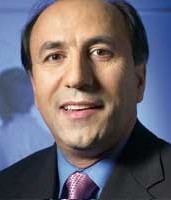
Farzin Aghdasi
Senior Software Manager for Deep Learning, NvidiaDr. Farzin Aghdasi holds a PhD in Electrical Engineering specializing in Image Processing. He has been a tenured associate professor and has over 50 refereed publications.
He then moved to industry and developed algorithms for image and video analysis including deep learning models. For the past decade he has been managing senior engineers at Nvidia, developing AI models for computer vision applications. He holds over 70 granted patents for video analytics and systems engineering. He has hired numerous interns and engineers and mentored them to innovate to create software products both for propriety and open-source AI models.
He has promoted trustworthy AI models and has lectured on ethical uses of AI. He has served as an ABET evaluator and developed courses for professional development as an adjunct professor to strengthen soft skills offerings at an engineering school. He collaborates with several universities, commercial and non-profit organizations to modernize their training programs and update them for the AI age. He has served as an evaluator for Nvidia's academic research grants. The flagship product of his team is to Train, Adapt, and Optimize (TAO Toolkit) from Nvidia's Metropolis software product family available as open source on GitHub.
ABET Recognition of Credentials: Be Among The First!
The educational landscape is undergoing dramatic change. Learners are looking for ways to stay current, move into emerging areas, and meet employer demands for job-ready knowledge and skills. Additionally, more learners are entering shorter-term credential programs in lieu of traditional higher ed programs. With an explosion of offerings, employers and learners struggle to be confident of the value added by the myriad of credentials being offered across a broad spectrum of providers - How are they to differentiate high quality programs from those of lesser quality?
ABET’s Recognition of Credentials service was launched last fall to answer this challenge. It provides a fully virtual, quality assurance service that provides value-added, expert review of credential program offerings. Putting credentials through this process helps show the learners and their prospective employers that the credential they have earned will deliver on the advertised learning outcomes.
In this session, you will learn what is involved in getting a credential program offering Recognized by ABET, and how credential programs can stand out by having ABET’s quality stamp. By being an early adopter, one can also have the distinction of being a leader in this important new endeavor.
This session provides background for our companion panel session tomorrow where participants will share their personal experiences with the service.
Learning Objectives
Attendees will gain familiarity with:
- Motivation, recognition standards and pilot process for credential quality assurance
- The value proposition for ABET Recognition
- Steps to take to get a credential offering recognized.
The educational landscape is undergoing dramatic change. Learners are looking for ways to stay current, move into emerging areas, and meet employer demands for job-ready knowledge and skills. Additionally, more learners are entering shorter-term credential programs in lieu of traditional higher ed programs. With an...

Melanie Diaz
Senior Manager, Professional Programs, ABETMelanie Diaz is a passionate experienced quality assurance, business development, and education leader, with a proven track record of expanding the reach of quality training programs globally. Her background in strategic partnerships and market analysis enables me to develop and deliver lifelong learning opportunities to address the skills gap across a multitude of industry sectors.
With over two decades of delivering innovative learning solutions in the non-profit, for-profit and academia space, her goal is to make a difference in student's lives, giving them access to quality education while ensuring alignment with organizational goals and mission-driven initiatives.
She also possesses a strong background in program design, development, delivery, and assessment, as well as marketing and sales expertise.
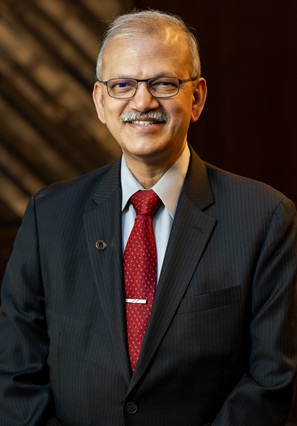
S. K. Ramesh
Professor of Electrical and Computer Engineering & Director “SECURE” for Student Success Program, California State University, NorthridgeS. K. Ramesh is ABET’s Global Council Chair with over two decades of service to ABET including: 2022-23 President, Engineering area delegation chair, Lemelson award committee chair and as a program evaluator. He is an IEEE Life Fellow, 2016 President of IEEE-HKN, and served on the IEEE Board of Directors as Vice President Educational Activities.
With 38+ years of service as dean, department chair and faculty in the California State University System, Ramesh is presently Professor of Electrical and Computer Engineering at Cal State Northridge where he has led nationally recognized programs to advance student success with several USDE grants.
He earned his MSEE and PhD in Molecular Science from SIU Carbondale, and BS in ECE from NITT India.
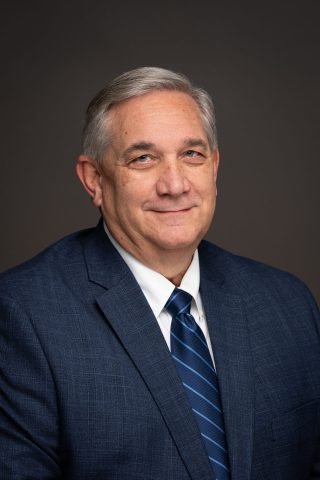
Paul Leidig
Professor and Director (Retired), Grand Valley State UniversityPaul M. Leidig is a recently retired professor and the founding director of the School of Computing at Grand Valley State University.
He serves as vice president of the Computing Sciences Accreditation Board (CSAB), the Computing Area Director on the ABET Board of Directors, and the ACM Education Board. He co-chaired the ACM/AIS Information Systems Curriculum (IS2020) taskforce, co-chaired the ACM taskforce for Computing Competencies for Undergraduate Data Science Curricula, and served on the Computing Curricula 2020 (CC2020) taskforce.
He was named a Fellow of CSAB and is an Education Special Interest Group (EDSIG) Fellow. Dr. Leidig earned his Ph.D. in Business: Information Systems from Virginia

Andrew Phillips
Executive Director, CSAB Inc.Andrew Phillips is the Executive Director of Computing Sciences Accreditation Board (CSAB) Inc, the lead ABET member society for accreditation of degree programs in computing disciplines. Prior to that role, Dr. Phillips served from 2009-2023 as Academic Dean and Provost at the U.S. Naval Academy and was a tenured Professor of Computer Science.
He has been a program evaluator for ABET since 1997, was a member of its Computing Accreditation Commission from 2004-2009 and served as the Computing Area Director and member of the ABET Board of Directors from 2018-2022.
He is also a past President of CSAB, a CSAB Fellow, an ABET Fellow, and continues to be a Team Chair/Program Evaluator for both ABET and the Middle States Commission on Higher Education in the United States.

Donna Reese
Recognition of Credentials Steering Committee, ABETDonna Reese is professor emerita of Computer Science at Mississippi State University where she retired as head of computer science and engineering in 2017. She is a former president of CSAB, the professional society for all computing accreditations.
In addition to her service on ABET's Computing Area Delegation, Reese also serves as a lead facilitator for ABET’s Program Evaluator Training. She began her ABET service in 2005 as a program evaluator and was elected to the Computing Accreditation Commission in 2009.
After serving on the ExCom of CAC from 2014-2017, she served as the chair of the Computing Accreditation Commission in 2017-18. Reese was named an ABET Fellow in 2020 and a CSAB Fellow in 2023.

Lawrence Jones
Recognition of Credentials Steering Committee, ABETLawrence G. Jones’ 35+ years of ABET service includes: 2015-16 President, Accreditation Council Chair, & Computing Accreditation Commission Chair. Lately, he co-led projects to accredit associate programs in cybersecurity, bachelor programs in data science and ABET recognition of certificates.
Larry’s U.S. Air Force career includes Chair of Computer Science at the USAF Academy. He retired from Carnegie-Mellon’s Software Engineering Institute as Distinguished Principal Researcher.
His BS and MS in Industrial Engineering are from the University of Arkansas, and PhD in Computer Science from Vanderbilt. He is a Fellow of ABET & CSAB, recipient of ABET’s highest honor, the Grinter Award, and CSAB’s highest honor, the Walsh Award.
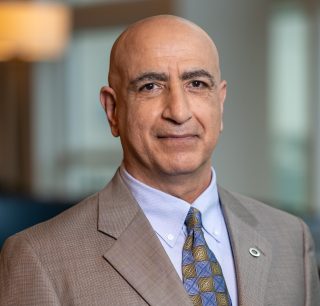
Hamid Fonooni
ABET Past President, Director, Ergonomics Program, University of California, DavisHamid Fonooni served as ABET’s 2022-23 President. Prior to coming to UC Davis, Hamid held tenured positions at East Carolina University and the University of Minnesota-Duluth.
He has published numerous articles, book chapters, papers and technical reports in his specialties. His extensive industrial experience includes work as a Senior Ergonomics Engineer for the Ohio Division of Safety and Hygiene. He has also assisted industries in Northern Minnesota and Eastern North Carolina.
Hamid’s earned his master's and Ph.D. in Mechanical Engineering from the University of Cincinnati. His undergrad degree in Mechanical Engineering Technology is from Indiana State University. He is a Board-Certified Professional Ergonomist (CPE) and leads ergonomics efforts for UC Davis Campus staff and faculty.
School-Level Strategies for ABET Assessment and Continuous Improvement
The School of Engineering at Universidad Pontificia Bolivariana (UPB), Medellín, Colombia, has developed a collaborative model to strengthen assessment and continuous improvement across its engineering programs. Initially prepared for Chemical and Mechanical Engineering accreditation, the model expanded to all Bachelor programs, fostering a culture of partnership across disciplines and with industry. Key achievements include: (1) definition of school-wide performance indicators for ABET Student Outcomes, reducing duplication of effort across programs; (2) integration of the Basic Sciences Center, aligning foundational courses in mathematics, physics, and chemistry with ABET expectations; (3) creation of major design experiences in all programs using a backward design approach; and (4) transfer of good practices at the institutional level, including pertinence committees, faculty qualification courses on assessment and learning outcomes, and stronger practices for capstone projects. Two innovative curricular practices will also be highlighted: integration of process safety throughout the Chemical Engineering curriculum and Applied Engineering Modules in Mechanical Engineering, which scaffold project-based learning from the first semester. This session will share lessons learned, tools developed, and strategies for scaling ABET assessment practices across programs, offering a replicable model for institutions seeking sustainable continuous improvement.
Learning Objectives
Participants will learn how a school-level approach to performance indicators, integration of foundational sciences, institutional transfer of good practices, and innovative curricular design can streamline ABET assessment, foster collaboration, and sustain continuous improvement.
The School of Engineering at Universidad Pontificia Bolivariana (UPB), Medellín, Colombia, has developed a collaborative model to strengthen assessment and continuous improvement across its engineering programs. Initially prepared for Chemical and Mechanical Engineering accreditation, the model expanded to all Bachelor programs, fostering a culture of...
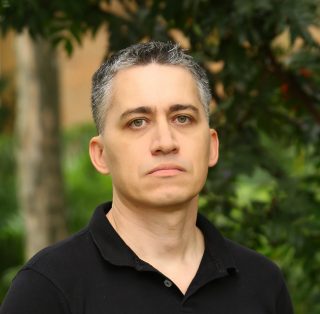
Elkin Taborda
Professor , Department of Mechanical Engineering at Universidad Pontificia Bolivariana (UPB)Elkin Taborda is a Full Professor in the Department of Mechanical Engineering at Universidad Pontificia Bolivariana (UPB) in Medellín, Colombia. He received his B.S. in Mechanical Engineering from UPB in 2005 and his M.Sc. in Mechanical Engineering from Purdue University in West Lafayette, USA, in 2012.
He has 20 years of experience in higher education. His research interests span unmanned vehicles, marine systems, ocean technologies, mechatronic systems, renewable energy, design processes and engineering education.
Professor Taborda has contributed to curriculum transformation and accreditation initiatives, including efforts by UPB’s School of Engineering to align all undergraduate and graduate programs with the ABET Engineering Accreditation Commission (EAC) Student Outcomes.
Evaluating What Matters: Turning Assessment into Meaningful Improvement
A sound evaluation process is critical to produce findings and recommendations for the improvement of student learning. Evaluation is where all the assessment processes merge for review and recommendations for improvements. This session will demonstrate the elements of an effective evaluation process that involves faculty and leads to the improvement of student learning, assessment processes and curriculum integrity around desired learning outcomes. Examples of how the process can improve the quality of stated learning outcomes, curriculum mapping, and faculty engagement are provided. Participants will engage in identifying the important elements of evaluation and recognizing and diagnosing symptoms of ineffective processes.
Learning Objectives
Learning Outcomes: At the end of this session, participants will be able to:
- Explain the role of evaluation in the improvement of student learning and the assessment process.
- Understand the importance of engaging faculty as a learning community.
- Evaluate their own evaluation processes
A sound evaluation process is critical to produce findings and recommendations for the improvement of student learning. Evaluation is where all the assessment processes merge for review and recommendations for improvements. This session will demonstrate the elements of an effective evaluation process that involves faculty...
Daina Briedis
Adjunct Director, Professional Programs, ABETDaina Briedis is Associate Professor Emerita of Chemical Engineering and Materials Science at Michigan State University. She served as her program’s and college’s assessment coordinator for over 20 years across the span of four accreditation reviews including an early EC2000 visit.
Dr. Briedis has been a Lead Facilitator for ABET Program Evaluator training for eight years and was involved in the early design of the training program. Over the past 35 years, Daina has served ABET as a program evaluator for AIChE, a team chair and member of the Engineering Accreditation Commission (EAC), the first chair of the EAC Training and Materials Development Committee, an EAC Executive Committee member and a member of the ABET Board of Directors.
She was a program evaluator on one of the very first EC2000 visits and subsequently chaired several new criteria visits. She is currently an Adjunct Director of Professional Development at ABET, Inc. wherein she facilitates and helps design ABET's assessment workshops. Dr. Briedis is active nationally and internationally as a consultant in engineering accreditation and is a Fellow of ABET, ASEE and the AIChE.
Gloria Rogers
Senior Adjunct Director, Professional Programs, ABETGloria Rogers designs and facilitates faculty workshops and webinars on academic program assessment, with a focus on ABET-aligned continuous improvement processes.
A long-time advocate for data-informed, faculty-driven assessment, Gloria has helped institutions strengthen their use of assessment processes to develop program continuous improvement processes.
Her recent work explores how Generative AI can serve as a responsible partner in these processes—supporting efficiency, accuracy, and reflection while preserving human judgment at the core of program assessment. She is a member of the Generative Artificial Intelligence Community of Practice under the auspices of the Assessment Institute in Indianapolis.
Advancing Evidence-Based Innovation and Research-Informed Practices to Support Accreditation
Accreditation and educational research are often treated as parallel rather than intersecting paths in higher education. Yet, accreditation standards such as ABET’s General Criteria are inherently flexible and can serve as catalysts for innovation, evidence-based teaching, and student-centered transformation. This session highlights how research-grounded and theory-informed practices can be intentionally aligned with accreditation to advance holistic student and program flourishing. STEM education research offers strategies that strengthen: (1) theory-driven student development and evidence-based belonging and student agency structures and practices (Criterion 1), (2) authentic stakeholder and constituent engagement to ensure relevance and support innovation (Criterion 2), (3) integrative learning outcomes to educate the Whole Engineer (Criterion 3), (4) systematic and innovative assessment for continuous improvement (Criterion 4), (5) adaptive curricular design structures and learning connections across curricula (Criterion 5), (6) inclusive and evidence-supported faculty practices (Criterion 6), (7) collaborative and intentionally designed learning spaces to support experiential learning (Criterion 7), and (8) strategic partnerships that amplify educational impact (Criterion 8). Drawing from both research and practice, this session demonstrates that accreditation does not stifle innovation—it can institutionalize it when grounded in evidence and purpose.
Learning Objectives
- Identify evidence-based, research-grounded, & theory-informed strategies to be leveraged within accreditation frameworks to drive educational innovation.
- Recognize how ABET accreditation processes can serve as catalysts—not constraints—for implementing practices that foster flourishing.
Accreditation and educational research are often treated as parallel rather than intersecting paths in higher education. Yet, accreditation standards such as ABET’s General Criteria are inherently flexible and can serve as catalysts for innovation, evidence-based teaching, and student-centered transformation. This session highlights how research-grounded and...
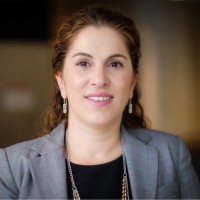
Olga Pierrakos
Program Director, STEM Education Directorate, National Science FoundationOlga Pierrakos, Ph.D. is a STEM Education Program Director (2nd stint) at NSF & Professor at Wake Forest University (WFU). As a first-generation college student, engineer, and academic, Olga saw the power of education and sees the opportunities & responsibilities of higher education. With a vision to Educate the Whole Engineer, Olga led WFU Engineering (2017-22) to achieve unprecedented outcomes:(1) curricular & pedagogical innovation, (2) student diversity- 42% women & 25% racial/ethnic, (3) faculty diversity- 50% women & 25% racial/ethnic, (4) research excellence, (5) 14th "Best Undergraduate Engineering Program" by US News Report (2023). An ABET EAC PEV, Team Chair, and Commissioner (2019-24),Olga led WFU & JMU through EAC accreditation.
Supplemental Materials for Site Visits
This presentation will provide guidance on supplemental materials for programs preparing for an upcoming accreditation visit (in-person or online). We will review the scope of materials a program needs to provide in order to show compliance with the relevant criteria, as well as options for organizing and providing materials, focusing on those aspects of supplemental materials common to all ABET commissions. Commission-specific issues will be addressed via a panel of commission representatives.
Learning Objectives
Participants will understand the need for supplemental materials, the scope of the materials needed, options for organizing materials, and when and how to provide them to the visit team. Questions may be addressed directly to members of a panel of accreditation experts from all four commissions.
This presentation will provide guidance on supplemental materials for programs preparing for an upcoming accreditation visit (in-person or online). We will review the scope of materials a program needs to provide in order to show compliance with the relevant criteria, as well as options for...
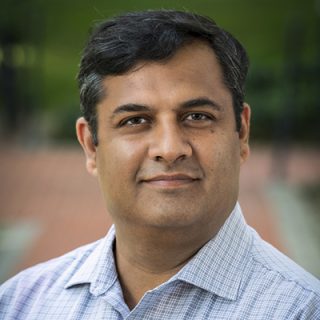
Mohsin Siddiqui
Associate Professor of Civil, Construction, and Environmental Engineering, University of DelawareDr. Mohsin K. Siddiqui is an Associate Professor and Interim Associate Chair of Undergraduate Education for Civil, Construction and Environmental Engineering at the University of Delaware, where he leads a study abroad program in Dubai.
Previously, he held faculty roles in the Middle East, focusing on program assessment and accreditation. A member of ASCE and CMAA, Dr. Siddiqui became an ABET PEV in 2013 and currently chairs the Forms Committee for ANSAC.
An ASCE ExCEEd Scholar (2019), he emphasizes student-centered learning. He holds a PMP certification, is a licensed PE in Wyoming, and completed a certificate in Instructional Design (2024) from the University of Delaware.
He is an ExCom member at large of the 2025-26 ABET ANSAC.
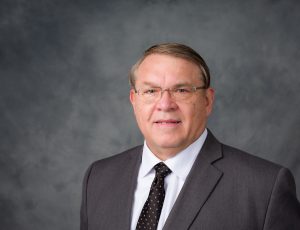
Stan Thomas
CAC Adjunct, ABETDr. Stan Thomas, Ph.D. has nearly four decades of experience in computing and computing education. He currently serves as the adjunct director of training for ABET. Thomas has been a faculty member of Wake Forest University since 1983, serving as department chair from 2004 to 2011, with visiting appointments at the United States Air Force Academy and Lahore University of Management Science, Lahore, Pakistan. His research interests are data management, data analysis and computer science education.
Thomas earned his undergraduate degree in mathematics from Davidson College and a Ph.D. in computer science from Vanderbilt University. He went on to spend four summers as research faculty at the NASA Kennedy Space Center and has worked as an expert witness and professional consultant with several organizations. Thomas has been an ABET program evaluator since 1996 and served as the chair of the Computing Accreditation Commission in 2014-15. He is also a senior member of IEEE-CS and was identified as a CSAB fellow in 2013 and an ABET fellow in 2018.
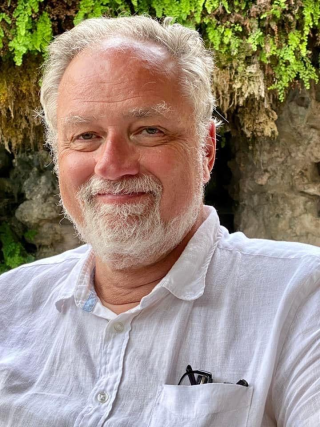
Bruce McMillin
CAC ExCom Member-at-Large, ABETDr. Bruce McMillin is professor emeritus of computer science at the Missouri University of Science and Technology, where he worked for 34 years in cybersecurity research and teaching.
For the last 15 years, he has been an ABET volunteer, currently serves on the Executive Committee for the Computing Accreditation Commission (CAC) as Vice Chair of Operations and is chair of the program evaluator candidate training subcommittee.
He is a fellow of CSAB.
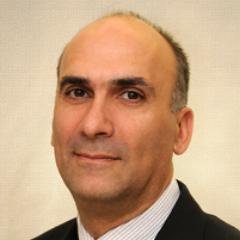
Venancio Fuentes
2025-26 Chair, ETAC, ABETVenancio “Venny” L. Fuentes, P.E., is a retired professor from County College of Morris (CCM), a two-year community college in Randolph, NJ. He taught for nearly 30 years at CCM and served as the department chairperson for the Engineering Technologies/Engineering Science department for over 20 years.
His experience in ABET includes being on both sides of a visit as a department chairperson, program evaluator, team chair and statement editor. He continues to teach and is currently a full-time member of the faculty at Mohawk Valley Community College in Utica, NY. He has been an IEEE program evaluator since 2002.
He served on the IEEE Committee on Engineering Technology Accreditation Activities (CETAA) before joining the ABET Engineering Technology Accreditation Commission (ETAC) as a commissioner. He is presently serving as the Chair of the ETAC Executive Committee.
Before his teaching career, he was a systems engineer working on navigation systems for air, sea, and space applications.

Mark Archambault
2025-2026 Vice Chair of Operations, EAC, ABETMark Archambault received his B.S. and M.S. in aerospace engineering from Florida Tech in 1992 and 1993. He then joined the Air Force Research Laboratory as a research scientist and earned his Ph.D. in aeronautics and astronautics from Stanford University in 1999.
In 2004, he joined the faculty of the aerospace engineering program at Florida Tech where he now holds the rank of Professor. Dr. Archambault later served as the Assistant Dean of Academics in the College of Engineering and Science and was appointed Associate Provost for Accreditation for the university in 2023.
In 2013, Dr. Archambault became an ABET PEV for aerospace engineering programs and an EAC Commissioner in 2017. He currently serves as the EAC Vice-Chair of Operations. His professional memberships include American Institute of Aeronautics and Astronautics (AIAA), American Society for Engineering Education (ASEE), and Institute for Liquid Atomization and Spray Systems (ILASS).
Discussion Den: Ask Me Anything – Accreditation
In this Ask Me Anything Discussion Den about Accreditation, attendees are invited to ask any and all accreditation-related questions and our experts will answer them.
Each Discussion Den brings ABET thought leaders together with Symposium attendees for an informal and enlightening discussion on a specific topic. These are organic conversations. There is no agenda or PowerPoint presentation. The audience’s questions and experiences build an inquisitive conversation that the group leaders guide with their insight and expertise.
Discussion Dens allow attendees to learn from the group leaders as well as from the questions and experiences of their peers.
In this Ask Me Anything Discussion Den about Accreditation, attendees are invited to ask any and all accreditation-related questions and our experts will answer them. Each Discussion Den brings ABET thought leaders together with Symposium attendees for an informal and enlightening discussion on a specific...
Jane Emmet
Senior Director, Accreditation Operations, ABETJane Emmet has been responsible for the management and administration of ABET’s accreditation policies and procedures and the overall operations of ABET’s accreditation processes since November, 2015. She joined ABET in January 2014 as the training manager responsible for the training of the over 2,000 volunteer professionals who serve ABET. Today, Emmet is the senior director, accreditation operations.
Emmet's background, prior to joining ABET, includes directing and managing training and leadership development programs at professional service organizations, energy companies and developing education programs for history museums. She holds a bachelor’s degree from Barnard College in history/education and a master’s degree in museum education from The George Washington University. She also holds a graduate certificate from the University of Maryland Baltimore County in instructional systems design.
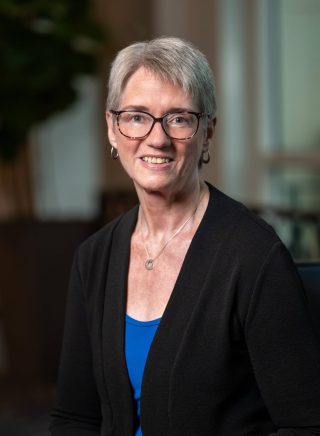
Ann Kenimer
Chief Accreditation Officer, ABETDr. Ann Kenimer is the Chief Accreditation Officer at ABET, bringing over three decades of academic and leadership experience to her role. Prior to joining the ABET Headquarters staff in 2024, Kenimer spent over 20 years as an ABET volunteer serving as a program evaluator, team chair, executive committee member and officer in the Engineering Accreditation Commission.
Kenimer is also professor emerita and associate provost emerita at Texas A&M University, where she held various leadership positions before retiring. Over her 30-year career as a faculty member at Texas A&M, she held several college- and university-level positions including associate dean and interim executive associate dean in the College of Agriculture and Life Sciences, associate dean of faculties, interim dean and chief operating officer at Texas A&M University at Qatar, and associate provost for undergraduate studies.
In addition to her status as fellow of ABET and the American Society of Agricultural and Biological Engineers (ASABE) and registered Professional Engineer in Texas, Kenimer has received numerous teaching awards, including the Minnie Stevens Piper Professor award.
Kenimer earned her Ph.D. in agricultural engineering from the University of Illinois at Urbana-Champaign in 1990, following her M.S. and B.S. degrees in agricultural engineering from Virginia Tech.
Book Signing with Keynote Speaker Nicole Stott
ABET Symposium attendees are invited to a special book signing with keynote speaker and astronaut Nicole Stott.
Bring your copy of the book: If you would like to participate, please bring your own copy of the "Back to Earth: What Life in Space Taught Me About Our Home Planet—And Our Mission to Protect It" to the event. Books will not be available for sale.
Please purchase the book from your preferred retailer, such as Hachette Book Group, and bring it with you.
ABET Symposium attendees are invited to a special book signing with keynote speaker and astronaut Nicole Stott. Bring your copy of the book: If you would like to participate, please bring your own copy of the “Back to Earth: What Life in Space Taught Me...
Nicole Stott
Astronaut, Author, Artist and Advocate, The Space Art FoundationNicole Stott is an astronaut, aquanaut, engineer, artist, and author of Back to Earth: What Life in Space Taught Me About Our Home Planet – And Our Mission to Protect It; and most importantly a mom. She creatively combines the awe and wonder of her spaceflight experience with her artwork to inspire everyone’s appreciation of our role as crewmates here on Spaceship Earth.
Nicole is a veteran NASA Astronaut with two spaceflights and 104 days in space as a crewmember on both the International Space Station and the Space Shuttle. Personal highlights of her time in space include being the 10th woman to perform a spacewalk, first person to operate the ISS robotic arm to capture a free-flying cargo vehicle, painting the first watercolor in space, working with her international crew for the benefit of all life on Earth, and of course the life-changing view of our planetary home.
Nicole is also a NASA Aquanaut. In preparation for spaceflight, she was a crewmember on an 18-day NEEMO9 saturation dive mission at the Aquarius undersea laboratory.
Nicole believes that the international model of peaceful and successful cooperation we have experienced in the extreme environments of space and sea holds the key to the same kind of peaceful and successful cooperation for all life here on Earth.
On her post-NASA mission, she is a technical and creative consultant, motivational speaker, and advocate for all we do in space that is ultimately for the benefit of all life on Earth. Nicole is also extremely proud of her role as a founding director of the Space for Art Foundation — uniting a planetary community of children through the awe and wonder of space exploration and the healing power of art; as a partner in purpose with Christina Korp and Space For a Better World; and an enthusiastic ambassador for our planet with organizations like Ocean Culture Life, Sheba Hope Grows, Platform Earth, Astra Carta, the Everglades Foundation, Plant a Million Corals, and 11th Hour Racing.
Open Source ABET-Aligned Resources to Integrate Sustainability into Engineering Education
Are you seeking free, online teaching resources to integrate sustainability into existing courses or programs while aligning with ABET Student Outcomes? Are you looking for real-world curricular and programmatic examples to advance sustainability and climate education? Do you want to learn about collaborative partnerships that are working to advance sustainability initiatives in engineering education?
You’re invited to participate in this interactive session where you’ll gain a comprehensive understanding of Engineering for One Planet (EOP) teaching materials that were co-created and tested by hundreds of engineering faculty, and sustainability and climate experts. We will demonstrate the application of the EOP Framework along with “how to” companion teaching guides, aimed at integrating environmental and social sustainability into engineering curricula. Integration examples will be shared from across engineering disciplines.
During this session, we will:
- Acquaint participants with free, online EOP resources —all updated in 2026— focused on sustainability and climate education.
- Illustrate how EOP resources align to all seven ABET student outcomes as well as UN SDGs and Bloom's Taxonomy.
- Reveal real world examples of course, program and institutional change from across engineering disciplines.
- Share stories of EOP partnerships to advance sustainability in STEM education.
- Engage with audience members to work through interactive activities.
Learning Objectives
Learn about the Engineering for One Planet (EOP) Framework and companion teaching guides. Understand how engineering faculty and administrators can address ABET Student Outcomes while infusing sustainability- and climate-focused learning activities into existing engineering courses.
Are you seeking free, online teaching resources to integrate sustainability into existing courses or programs while aligning with ABET Student Outcomes? Are you looking for real-world curricular and programmatic examples to advance sustainability and climate education? Do you want to learn about collaborative partnerships that...

Cindy Anderson
Engineering for One Planet Strategy Consultant, The Lemelson FoundationCindy Anderson (she/her) is the co-founder of the Engineering for One Planet (EOP) initiative and EOP strategy consultant with The Lemelson Foundation. As a sustainability consultant, Cindy specializes in innovative sustainability-focused research and curriculum projects for academic institutions, non-profits, government and industry.
Anderson has taught thousands of people through courses and workshops, around the world and online, in the fields of biology, sustainability and biomimicry. Her prior work includes launching the world’s first online interdisciplinary MA in Sustainable Design, founding The Biomimicry Institute’s higher education program, and conducting climate change impact research on seabirds in the Antarctic and Arctic.
Laying Foundations to Credential Modern Construction Professionals in the United Kingdom
The UK’s construction sector faces a skills crisis: over 250,000 more workers are needed to deliver essential housing and infrastructure demands by 2030; they also need new and different skills that support the net zero transition, and companies must be able to verify the training which may come via a range of academic, industry, and trade organization providers. In response, the New Model Institute for Technology and Engineering’s Centre for Advanced Timber Technology designed and delivered technical, transferable, and sustainability skills training aligned to a competency framework developed in collaboration with industry, academia, and trade organisations. The educational content is in modular formats which can be combined to form part or all of different credentials, from accredited continuing professional development to traditional degree courses. This session will describe the process taken to design and deliver the credentials, and the work still to be done on badging, verification and expanding / scaling this model. Participants will learn an approach for making ongoing and meaningful connections between industry skills needs, government policy, and educational offerings that can quickly evolve in response to new innovations, technologies, and priorities. A process for linking learner activities, knowledge checks, and assessed components to the competencies required in the skills framework will be described, along with responses to learner and employer feedback.
Learning Objectives
Participants will learn how to identify a broader range of sectoral partners, implement modular learning in different credentialing contexts, and techniques for navigating the complex credentialing landscape in order to create high-quality, industry-relevant educational offerings.
The UK’s construction sector faces a skills crisis: over 250,000 more workers are needed to deliver essential housing and infrastructure demands by 2030; they also need new and different skills that support the net zero transition, and companies must be able to verify the training...

Sarah Hitt
Lead for Transferable Skills, Centre for Advanced Timber Technology, New Model Institute for Technology and Engineering (NMITE)Dr. Sarah Hitt has been teaching in universities for 20 years in both the US and the UK. At the Colorado School of Mines, she served as Director of the Writing Center, Director of the McBride Honors Program and Founding Director of a First Year Program designed to bring the arts into ethical engineering design and to recruit diverse students to engineering. In 2019 she moved to the UK to become Founding Professor of Liberal Studies at Hereford’s start-up higher education provider, the New Model Institute for Technology and Engineering (NMITE), specializing in bringing ethics, communication, sustainability and a place-based approach to the curriculum.
Now, she acts as Project Manager for the Engineering Professors’ Council’s Ethics, Sustainability, and Complex Systems Toolkits, is Visiting Professor in the School of Computing, Engineering, and the Built Environment at Edinburgh Napier University and is Lead for Transferable Skills at NMITE’s Centre for Advanced Timber Technology.
She has recently authored chapters for the International Handbook of Engineering Education Research and the International Handbook of Engineering Ethics Education. She has supported multiple institutions in reimagining their engineering curricula to incorporate globally responsible, real-world, challenge-based learning approaches.
Using Assessment Data to Drive Meaningful Curriculum Reform
Faculty often rely on course grades or ABET outcome assessment results to reinforce their preconceived notions about student learning without critically examining the underlying learning process. Grades, test scores, and student course evaluations provide limited information. Even direct assessment results may conceal nuances of student learning, especially when viewed solely at face value—that is, if a threshold is met, we consider it satisfactory. While students may meet outcome thresholds, they may lack integration or contextual application across subjects, whether disciplinary or non-disciplinary.
Indirect assessment, often overlooked due to a perceived lack of validity, can offer deeper insights into student learning when combined with the typically numerical results of direct assessment. This approach aids programs in identifying gaps in students’ understanding of fundamental disciplinary concepts and enables the collection of authentic reflections that reveal where and how student learning occurs—or the areas where it stalls.
In this session, we will explore how actionable data, not just compliance metrics, can foster continuous improvement in the curricula of ABET programs. We will examine whether we truly understand what our students are learning and how data can be used to refine and modernize our curricula through adaptive improvements.
Learning Objectives
- Evaluate the relative advantages of different methods for assessing student learning.
- Holistically evaluate indirect and direct assessment data to gain deeper insights into student learning.
- Use actionable data to design revisions and modernization of the curriculum.
Faculty often rely on course grades or ABET outcome assessment results to reinforce their preconceived notions about student learning without critically examining the underlying learning process. Grades, test scores, and student course evaluations provide limited information. Even direct assessment results may conceal nuances of student...
James Warnock
Adjunct Director, Professional Programs, ABETDr. James N. Warnock is a professor and the Associate Dean in the Jere W. Morehead Honors College at the University of Georgia, Athens, USA. Prior to joining the Morehead Honors College in 2024, Dr. Warnock served as chair of the School of Chemical, Materials and Biomedical Engineering in the College of Engineering, a position he held since 2017.
Dr. Warnock has conducted research in engineering education and has earned international acclaim for his work using problem-based learning to enable students to develop professional skills. He currently serves as the director for Engineering Workforce Development for the NSF Engineering Research Center in Cellular Manufacturing Technologies (CMaT).
Dr. Warnock holds a bachelor’s degree in biological science from the University of Wolverhampton, United Kingdom. He earned a master’s in biochemical engineering and a doctorate in chemical engineering from the University of Birmingham. He was a postdoctoral research fellow for the Georgia Institute of Technology/Emory University Center for the Engineering of Living Tissues.
Daina Briedis
Adjunct Director, Professional Programs, ABETDaina Briedis is Associate Professor Emerita of Chemical Engineering and Materials Science at Michigan State University. She served as her program’s and college’s assessment coordinator for over 20 years across the span of four accreditation reviews including an early EC2000 visit.
Dr. Briedis has been a Lead Facilitator for ABET Program Evaluator training for eight years and was involved in the early design of the training program. Over the past 35 years, Daina has served ABET as a program evaluator for AIChE, a team chair and member of the Engineering Accreditation Commission (EAC), the first chair of the EAC Training and Materials Development Committee, an EAC Executive Committee member and a member of the ABET Board of Directors.
She was a program evaluator on one of the very first EC2000 visits and subsequently chaired several new criteria visits. She is currently an Adjunct Director of Professional Development at ABET, Inc. wherein she facilitates and helps design ABET's assessment workshops. Dr. Briedis is active nationally and internationally as a consultant in engineering accreditation and is a Fellow of ABET, ASEE and the AIChE.
Common Challenges and Findings: Tips for Meeting the ABET Engineering Accreditation Commission (EAC) Criteria
This session discusses commonly identified shortcomings from EAC team visits over the most recent cycle of evaluations. Statistics on shortcomings by criterion and their resolution through the review process are also presented. The presentation provides suggestions on how to be proactive with steps that can be taken to avoid these common mistakes. In addition, common review terminology is defined and explained.
Learning Objectives
The objective of the session is to help prepare individuals who are in the process of creating their program's self-study report. The goal is to ensure that they do not make these most commons mistakes and to facilitate a trouble-free program evaluation.
This session discusses commonly identified shortcomings from EAC team visits over the most recent cycle of evaluations. Statistics on shortcomings by criterion and their resolution through the review process are also presented. The presentation provides suggestions on how to be proactive with steps that can...
Philip Schenewerk
Adjunct Accreditation Director, Engineering, ABETPhilip Schenewerk, Ph.D., P.E., P.G. is a retired geological and petroleum engineer whose career has spanned government, the academy and the private sector.
Schenewerk has served as an ABET volunteer throughout his working career as a program evaluator, team chair and as a member of the EAC and its ExCom. He currently serves as an Accreditation Adjunct for Engineering.

Chris Taylor
2025-26 Chair, EAC, ABETDr. Chris Taylor is the Vice Chair of the Dwight and Dian Diercks School of Advanced Computing, Program Director for the Software Engineering housed within the school, and Professor at the Milwaukee School of Engineering.He is an enabler who enjoys working with others and seeing them succeed. He is a builder, enjoying anticipating needs, building solutions and, with the benefit of time, discovering all the ways they can be used productively. He is a people-person who values who he works with more than the work that he does. He is a proponent of persuasion who seeks to assert authority sparingly.Taylor is a Fellow of CSAB and currently serves as the chair of the Engineering Accreditation Commission of ABET.
Patricia Brackin
EAC Commissioner, ABETDr. Patsy Brackin is the former director of Rose-Hulman's award-winning engineering design program. Her expertise is in design methodology, creativity and innovation. She spent 11 years as director of Rose-Hulman's Operation Catapult program, helping introduce high school seniors to the wonders of science and engineering.
Before becoming a college professor, Brackin was a design engineer for Chicago Bridge and Iron. Brackin has served as a program evaluator, a team chair and as a member and chair of the EAC.
Discussion Den: Ask Me Anything – Custom Accreditation Advising Services from ABET Bridge – How We Can Help You and Your Program!
ABET Bridge offers fee-based custom accreditation advising services by ABET experts for individual programs and institutions. Advising services include opportunities for general advising for new or existing programs, self-study reviews, practice accreditation visits (mock visits) and/or support in setting up continuous improvement systems. Come learn about our services and meet an ABET BridgeTM representative to learn more! ABET Bridge advising is independent of ABET's accreditation processes and supports the educational, charitable and scientific purposes of ABET.
Learning Objectives
Attendees will attain an understanding of ABET Bridge accreditation advising opportunities and how these might support their program(s) as they prepare for accreditation review.
ABET Bridge offers fee-based custom accreditation advising services by ABET experts for individual programs and institutions. Advising services include opportunities for general advising for new or existing programs, self-study reviews, practice accreditation visits (mock visits) and/or support in setting up continuous improvement systems. Come learn...
Mary Kasarda
Board of Directors President, ABET BridgeMary Kasarda is an Associate Professor Emerita in the Virginia Tech Department of Mechanical Engineering (VTME). She was a tenure-track/tenured faculty member at VTME from 1997-2024.
She received her BS, MS, and PhD in Mechanical Engineering from the University of Virginia. She has five years of professional engineering experience, including analytical and field work for Du Pont and Ingersoll Rand, respectively. She has over 90 technical publications and has been involved in securing over $2.0M in research funding from public and private sources during her time at VT.
She is a Fellow of ASME. She has been honored to serve ABET on behalf of ASME since 2005 in roles as a Program Evaluator (PEV), Team Chair (TC), Engineering Accreditation Commission (EAC) Commissioner, ABET Engineering Area Delegate and ABET Board of Delegate member, as well as serving on the ABET Bridge Board of Directors as a member between 2019-2025. As of 2026, she serves as President of the ABET Bridge Board of Directors.
Hamid Fonooni
ABET Past President, Director, Ergonomics Program, University of California, DavisHamid Fonooni served as ABET’s 2022-23 President. Prior to coming to UC Davis, Hamid held tenured positions at East Carolina University and the University of Minnesota-Duluth.
He has published numerous articles, book chapters, papers and technical reports in his specialties. His extensive industrial experience includes work as a Senior Ergonomics Engineer for the Ohio Division of Safety and Hygiene. He has also assisted industries in Northern Minnesota and Eastern North Carolina.
Hamid’s earned his master's and Ph.D. in Mechanical Engineering from the University of Cincinnati. His undergrad degree in Mechanical Engineering Technology is from Indiana State University. He is a Board-Certified Professional Ergonomist (CPE) and leads ergonomics efforts for UC Davis Campus staff and faculty.
Getting Started with Program Assessment
This session is designed for faculty and administrators who are new to program assessment or looking to strengthen their existing practices. Participants will be guided through the essential components of program-level assessment, including writing clear student learning outcomes, developing curriculum maps, collecting and analyzing assessment data, interpreting results, and using findings to inform program improvements. The presenters will share practical examples and best practices that can help participants design or refine their assessment process in a meaningful and sustainable way. By the end of the session, attendees will have a clearer understanding of how to formalize their assessment practices, foster faculty engagement and buy-in, and establish a continuous improvement cycle that supports student learning and program quality.
Learning Objectives
By the end of this session, participants will be able to identify the key components of an effective program assessment process and apply best practices for sustaining a meaningful and manageable program assessment process over time.
This session is designed for faculty and administrators who are new to program assessment or looking to strengthen their existing practices. Participants will be guided through the essential components of program-level assessment, including writing clear student learning outcomes, developing curriculum maps, collecting and analyzing assessment...
Jenny Amos
Teaching Professor, Bioengineering, University of Illinois at Urbana-ChampaignJenny Amos is a Teaching Professor in Bioengineering at the University of Illinois Urbana-Champaign. She is an AIMBE Fellow, BMES Fellow, BMES Board of Director Member, ABET Commissioner, two-time Fulbright Specialist in engineering education and has won multiple awards and recognitions for her teaching and scholarship of teaching.
Amos was also the lead investigator for the National Science Foundation Revolutionizing Engineering Departments award for Illinois, leading efforts to innovate assessment practices for engineering toward producing more holistic engineers. Amos has over a decade’s worth of experience leading curriculum reform implementing robust assessment strategies.
Ben Juliano
Director, Assessment and Program Review, California State University - ChicoBen is Professor of Computer Science at Chico State. He is an ABET IDEAL Scholar (2011) and an alumnus of the WSCUC Assessment Leadership Academy (2016).
He has been involved with assessment since 2002, leading program assessment in his home department, facilitating program assessment in his college, and now coordinating both the assessment and program review processes for all programs in his campus.
In addition to his faculty experience, he has had administrative roles, including department chair, associate dean, and dean, director of Institutional Research and campus Accreditation Liaison Officer (ALO).
Engineering Technology Accreditation Commission (ETAC): Common Challenges and Findings During ABET Reviews and How to Avoid Them
This discussion will focus on the most frequent findings and how to avoid them during ABET ETAC program reviews. Evaluation insights and key points of the discussion will include best practices for materials preparation, site-visit preparation and logistics, common APPM issues, general criteria findings and common program criteria findings.
Learning Objectives
Participants will gain an increased understanding for their preparation of program reviews and how to avoid common shortcomings for program reviews conducted by ETAC.
This discussion will focus on the most frequent findings and how to avoid them during ABET ETAC program reviews. Evaluation insights and key points of the discussion will include best practices for materials preparation, site-visit preparation and logistics, common APPM issues, general criteria findings and...

Gary Clark
2025-26 Chair Elect, ETAC, ABETDr. Gary Clark is the chair elect and executive committee member of the Engineering Technology Accreditation Commission (ETAC) of ABET, and was a Program Evaluator (PEV) for the Engineering Accreditation Commission (EAC).
Dr Clark is a licensed professional engineer and a senior associate dean/professor emeritus with the College of Engineering at Kansas State University. He is also a Fellow of the American Society of Biological and Agricultural Engineers (ASABE).
Berrin Tansel
2025-26 Vice-Chair of Operations, ETAC, ABETDr. Berrin Tansel is the vice-chair of operations and executive committee member of the Engineering Technology Accreditation Commission (ETAC) of ABET, and a Program Evaluator (PEV) for the Engineering Accreditation Commission (EAC). Dr. Berrin Tansel is an environmental engineer, researcher, author, educator and professor in the Civil and Environmental Engineering Department at Florida International University (FIU).
Dr. Tansel is a Diplomate of the American Academy of Water Resources Engineers and a Board-Certified Environmental Engineer by the American Academy of Environmental Engineers (AAEES). She is an elected fellow of the Water Environment Federation (WEF), the American Society of Civil Engineers (ASCE), and Environmental and Water Resources Engineers (EWRI).
Practical Paths to Academia–Industry Partnerships
Programs often want stronger ties with industry, but it can be hard to know where to start and how to keep collaborations working over time. This panel addresses a critical need for academic programs, industry partners, and accreditation evaluators: practical, resource-conscious pathways to building sustainable academia-industry partnerships that support innovation, workforce preparation, and continuous improvement.
Each panelist shares real examples of initiating collaborations, aligning goals despite different organizational cultures, establishing clear roles and expectations, and maintaining partnerships through personnel changes and shifting priorities.
The session directly engages participants through moderated discussion addressing common barriers (budget constraints, IP concerns, assessment documentation) and ample Q&A time for peer exchange. Attendees learn straightforward approaches for forming advisory boards, co-developing experiential learning, managing data sharing within typical resources and keeping equity and community needs central—all aligned with ABET's values of quality, inclusivity and evidence-based improvement.
Intended for program leaders, faculty, industry practitioners, and evaluators seeking accessible partnership models that generate meaningful outcomes without requiring large budgets or complex infrastructure.
Learning Objectives
Participants will identify simple partnership structures, connect them to accreditation and assessment needs, and outline first steps to start or strengthen a collaboration with clear roles, basic metrics, and sustainable practices through real examples from diverse institutional contexts.
Programs often want stronger ties with industry, but it can be hard to know where to start and how to keep collaborations working over time. This panel addresses a critical need for academic programs, industry partners, and accreditation evaluators: practical, resource-conscious pathways to building sustainable...

Howard Appelman
Adjunct Associate Professor , Missouri University of Science and TechnologyHoward Appelman is an adjunct associate professor at Missouri University of Science and Technology (MS&T) and a member of the ABET Industry Advisory Council (IAC).
Appelman shares his knowledge of manufacturing and product and process design with mechanical and aerospace engineering undergraduate and graduate students in his courses each semester, with students participating both in-class and remotely in a hybrid format. Appelman is also an active member of the American Society for Engineering Education (ASEE) where he previously served on the Corporate Member Council (chair), ASEE Nominating Committee for Society Elections, ASEE Board of Directors, Long Range Planning, Isadore T. Davis Award Committee, and Constitution and Bylaws Committee. Appelman also chaired ASEE’s International Forum, where he helped bring people from around the world to reaffirm ASEE's commitment to international engineering education.
As a senior manufacturing engineer at Boeing (retired), Appelman provided leadership and support to teams and stakeholders executing operations internal application development projects. He also conducted assessments of manufacturing readiness and worked with program leadership, affordability focals and production engineers to overcome operational constraints.
Raised in St. Louis, Appelman returned to his hometown after graduating from MIT with a bachelor’s in electrical engineering. He joined McDonnell Douglas (which later merged with Boeing) and earned a master’s in electrical engineering and an M.B.A. from Washington University in St. Louis. Appelman began teaching in 1995 at the Boeing/St. Louis Community College Center for Business, Industry and Labor before joining Missouri University of Science and Technology in 2004.
Adele Doser
Manager, New Mexico University Partnerships Sandia National LaboratoriesAdele Doser got her bachelor’s degree at Michigan Technological University, and her master’s and Ph.D. at University of Arizona, all in Electrical Engineering. After graduation, Dr Doser worked as a postdoctoral researcher at Los Alamos National Laboratory. She was an assistant professor at University of Texas at Dallas before accepting a staff position at Sandia National Laboratories in Albuquerque, New Mexico.
Dr. Doser has been at Sandia for 24 years, has worked in many exciting research areas in national security and has served in management. She currently works as a manager in the Academic Programs group at Sandia and is Sandia’s liaison to universities in New Mexico and Texas.
In her role, she establishes research collaborations between Sandia and academia, works to improve student pipelines, and assists in the development of joint courses in areas of interest. She is a member of the New Mexico AI Consortium and New Mexico EPSCoR.
Additionally, Dr. Doser is a program evaluator for ABET, a member of the ABET Industrial Advisory Council and a senior member of IEEE.

Andrew Lloyd
Project Manager, AECOMAndrew Lloyd, PE possesses over a decade of expertise in roadway design across the southeast United States, including projects in every FDOT District. His work spans from small-scale improvements to major reconstruction, offering a comprehensive view of industry standards and graduate expectations. Before joining AECOM, he contributed as an industrial engineer to operational advancements in steel and rebar factories both domestically and abroad.
At the University of South Florida, he pursued a degree in civil and environmental engineering, complementing his studies with leadership roles in student government and engineering societies including Tau Beta Pi and Theta Tau where he served in both to an advisory capacity for many years after completing his bachelor’s degree.
His contributions at USF were acknowledged through a nomination for the Golden Bull Award by the Engineering Dean, John Wiencek. Andrew’s diverse professional and academic experiences provide him with a unique perspective on the civil engineering industry’s evolving needs, particularly in preparing graduates for these challenges.
Hy Tran
Senior Scientist and Engineer, Sandia National LaboratoriesHy D. Tran, PhD, PE, F. ASME. Dr. Tran retired in November 2025 as a senior scientist/engineer at Sandia National Laboratories. His responsibilities included research and development for the metrology program at Sandia.
He also chaired the staff advisory committee to the office of research and development excellence, providing guidance and support for scientists and engineers executing Sandia’s excellent service in the national interest. He continues to volunteer extensively, including service with ABET’s Engineering Technology Accreditation Commission, ABET’s industrial advisory council, ASME standards development and with the New Mexico Partnership for Math and Science Education.
He received bachelors degrees in life sciences and in mechanical engineering from MIT. His MS and PhD were in mechanical engineering at Stanford University.
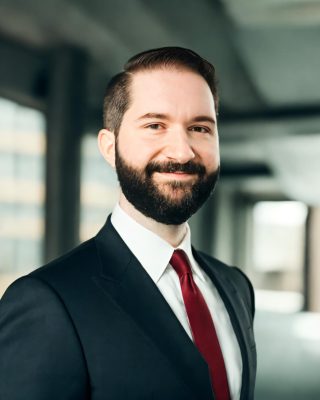
Matt Conwell
VP Operations Engineering, Invenergy LLCMatt Conwell is the Vice President, Operations Engineering for Invenergy, the largest privately held, global developer, owner, and operator of renewable energy projects. He joined the organization in 2010 and now leads a multi-disciplinary team of engineers and data scientists dedicated to improving the safety, reliability, and performance of Invenergy's operational wind, solar, and energy storage projects. Matt holds a B.S. in Mechanical Engineering from Marquette University, a M.S. in Mechanical Engineering from Columbia University, and is a licensed Professional Engineer (P.E.) in the state of Illinois. He has been a member of the ABET Industrial Advisory Council since January 2021.
Student Workshop – Imagine a World: Co-Creating the Future of Technology
"We cannot create what we cannot imagine." Today's engineering and technology students must solve problems that do not yet exist. This highly interactive, dual-format (in-person/remote) session builds critical competencies beyond the technical, focusing on foresight, collaboration, and narrative-building.
Participants will engage in a guided foresight process. In small teams, they will identify inspiring and concerning large-scale trends across technology and society; and together they will co-create plausible future scenarios, develop narratives and, most importantly, consider their opportunities and responsibilities to shape a better future.
The most valuable outcomes are not the scenarios, but the new relationships, common language and co-developed stories of possible futures. Participants will leave with a shared vision and a clear, actionable answer to the question: What is the future you want to see – and how can you help create it?
Learning Objectives
By the end of the workshop, participants will be able to:
- Apply a foresight process to collaboratively co-create plausible future scenarios.
- Analyze and articulate their role and responsibility in shaping those futures.
- Develop an actionable vision for the future they want to create.
“We cannot create what we cannot imagine.” Today’s engineering and technology students must solve problems that do not yet exist. This highly interactive, dual-format (in-person/remote) session builds critical competencies beyond the technical, focusing on foresight, collaboration, and narrative-building. Participants will engage in a guided foresight...
Jason Blackstock
Founder & CEO, How to Change the WorldDr Jason Blackstock is the founder and CEO of How to Change the World – a social enterprise that he spun out from University College London (UCL). How to Change the World is a social enterprise transforming careers to create a sustainable future through online experiential learning programs – while building the tech to revolutionise online experiential learning at scale.
Blackstock's previous experience spans quantum physics research; silicon valley tech development; sustainability, technology & innovation policy; and higher education innovation & leadership. Since the mid-2000s, he has taught, provided policy advice and led research from universities and think tanks such as Harvard, Oxford, the Centre for International Governance Innovation, and the International Institute for Applied Systems Analysis. Jason was the Founding Head of UCL STEaPP (2013-18), and currently serves as a director or advisory board member for numerous organisations, including MIT IDSS and We Make Change.
Alana Heath
Co-founder & COO, How to Change the WorldAlana Heath is the co-founder and COO of How to Change the World. How to Change the World is a social enterprise transforming careers to create a sustainable future through online experiential learning programs – while building the tech to revolutionise online experiential learning at scale.
Prior to her current role, Heath spent over a decade mobilising business and technology as forces for good in sectors such as financial inclusion, energy access and sustainability. She has worked across the U.S., Europe, India and East Africa with social enterprises, non-profits and impact investing funds such as Grassroots Capital Management, the Microfinance Information Exchange and SunFunder, and as a consultant on World Bank projects. In 2012 Heath co-founded Alta Solar, a non-profit introducing solar technology to villages in the Himalayan mountain range in Ladakh (northern India), and in 2016 she co-founded Ara Energy, a venture researching access to energy in East Africa in partnership with Factore[e] Ventures.
Bridging Academia and Employment: Co-Designing Credentials with Industry
Building meaningful workforce credentials requires more than employer endorsement; it takes a shared design process that integrates academic quality, technical infrastructure, and industry relevance from the start. This session highlights how Arizona State University’s Fulton Schools of Engineering and Siemens Digital Industries Software are co-designing a new PCB Design Credential that responds to workforce needs in the electronics industry. Presenters from both organizations will outline the key components of a successful university–industry partnership, including how the teams collaborated on learning outcomes, content alignment, technology integration, and go-to-market strategy. Together, they will share practical lessons on how to structure shared ownership, maintain communication, and ensure the resulting credential delivers measurable value to learners, employers, and academic partners. Participants will leave with a clear strategy for developing partnerships that move beyond consultation to true co-design and deliver lasting workforce impact.
Learning Objectives
Learn the key components of a successful university–industry partnership for credential design, including collaboration on content, technology, and implementation strategies that strengthen workforce outcomes.
Building meaningful workforce credentials requires more than employer endorsement; it takes a shared design process that integrates academic quality, technical infrastructure, and industry relevance from the start. This session highlights how Arizona State University’s Fulton Schools of Engineering and Siemens Digital Industries Software are co-designing...

Joanna Pritchard
Head of Global EDA Academic Strategy and Engagement, Siemens Digital Industries SoftwareJoanna is a dynamic leader and strategic thinker with a unique perspective from her experiences on both sides of the Atlantic. She fosters academic partnerships and drives innovative solutions, ensuring students acquire the critical skills needed for the future of work.
As the Global Academic Strategy and Engagement Lead for Siemens EDA, Joanna equips educators with advanced teaching tools and prepares students with in-demand skills. She has previously served as the Director of MBA and Digital Learning at the University of Bradford and the University of South Wales, and she continues to teach sales and marketing as an adjunct faculty member at UNC Wilmington.
A Fellow of the Higher Education Academy with a STEM PhD and an MBA from Emory, Joanna excels at building collaborative relationships within education and industry. She is passionate about mentoring, championing diversity and inclusivity and creating supportive environments where individuals can thrive. Residing by the beach in Wilmington, NC, Joanna is a proud mother of two—an Appalachian State freshman and a high school junior—and the wife of a dedicated world history teacher.

Janelle Simmonds
Global Enablement Lead, Siemens Digital Industries SoftwareJanelle Simmonds is passionate about advancing education at the intersection of academia and industry. She has used her expertise in university/industry partnerships, organizational strategy and online learning to positively impact institutions and individuals throughout the course of her career in both higher education and the corporate sector.
Simmonds is the Global Enablement Lead for the Academic and Future Workforce Strategy team at Siemens Digital Industries Software. She is responsible for content and credential strategy, enabling learners and educators with resources to prepare the future workforce with the skills needed to succeed in industry.
Before joining Siemens, she led the Partnership Development team at the University of Michigan’s Center for Academic Innovation and previously served as chief of staff to the Office of the Provost at the University of Michigan-Dearborn.
Before joining U-M, she spent 12 years overseas, working in international pathways education in the UK and Europe. During that time, she leveraged her former career in PR and public affairs to teach PR, marketing, advertising, writing and business development to students from across the world. At Kaplan International Pathways, she served as a lecturer and curriculum consultant, then as a program leader, college director, and associate director of the Center for Learning Innovation and Quality.
Simmonds holds a BA in Communications and International Studies, and an MA in Communication from Wayne State University. She also completed an executive coaching certification from the University of Michigan and provides coaching and consulting to empower leaders and teams in moving toward their goals.

Nicholas Maddox
Program Manager, Arizona State UniversityNick Maddox is a Program Manager for Global Outreach and Extended Education at Arizona State University's Ira A. Fulton Schools of Engineering. He manages a growing portfolio of professional development programs, including custom training programs, microcredentials and faculty development workshops.
He works closely with faculty, external partners, and platform teams to move projects from idea to launch. His work covers everything from development agreements and compensation to onboarding and ongoing communication with internal and external stakeholders. Before this role, Nick was the Assistant Director for Academic Support in ASU’s College of Integrative Sciences and Arts. He led course and curriculum planning, enrollment strategy, program assessment and data reporting across a large academic portfolio that included 82 degree programs and 180 upskilling courses.
He also supported career-connected learning and instructional design projects. Earlier roles focused on academic operations and transfer credit, always with an emphasis on improving systems and supporting students. Nick’s background is in higher education leadership, curriculum development and operational strategy, with a focus on building practical, scalable learning experiences.

Meghan Gibson
Director of Global Operations , Arizona State UniversityMeghan Gibson is Director of Global Operations for the Office of Global Outreach and Extended Education (GOEE) in the Ira A. Fulton Schools of Engineering at Arizona State University. She leads the implementation and management of a global portfolio of workforce development and professional education programs serving university and industry partners. Her work focuses on translating engineering education priorities into scalable programs that strengthen talent pipelines and align with industry needs.
Mrs. Gibson has designed and executed multi-year, sponsored STEM education initiatives across Southeast Asia, building and managing public-private partnerships among universities, industry and government to expand access and enhance workforce readiness. She oversees global operations for the Fulton Schools, including international engagement and ASU’s representative offices in Jakarta and Ho Chi Minh City.
She holds a Bachelor of Arts from UNC Charlotte and a Master of Applied Leadership and Management from Thunderbird School of Global Management.
Partnering with Generative AI in Program Assessment
Generative Artificial Intelligence (GenAI) is emerging as a collaborative partner in program assessment, offering faculty new ways to enhance efficiency and insight without replacing professional judgment. This session explores how GenAI can support each phase of the assessment cycle—from developing performance indicators and analytic rubrics to conducting qualitative and quantitative analyses, designing assessment tasks, mapping curricula and developing reports. Emphasis will be placed on well-crafted prompts, recognition of GenAI’s limitations and maintaining the central role of human interpretation in all evaluative decisions. Participants will also consider responsible practices, including proper citation of AI contributions, verification of sources and strategies to reduce data and environmental footprints. Through examples drawn from ABET-aligned contexts, the session illustrates how GenAI can strengthen assessment documentation, streamline processes and uphold standards of academic integrity while supporting continuous improvement.
Learning Objectives
Participants will recognize responsible and effective ways to integrate Generative AI into ABET-aligned program assessment processes, enhancing efficiency, evidence quality and documentation while preserving human expertise and ethical integrity.
Generative Artificial Intelligence (GenAI) is emerging as a collaborative partner in program assessment, offering faculty new ways to enhance efficiency and insight without replacing professional judgment. This session explores how GenAI can support each phase of the assessment cycle—from developing performance indicators and analytic rubrics...
Gloria Rogers
Senior Adjunct Director, Professional Programs, ABETGloria Rogers designs and facilitates faculty workshops and webinars on academic program assessment, with a focus on ABET-aligned continuous improvement processes.
A long-time advocate for data-informed, faculty-driven assessment, Gloria has helped institutions strengthen their use of assessment processes to develop program continuous improvement processes.
Her recent work explores how Generative AI can serve as a responsible partner in these processes—supporting efficiency, accuracy, and reflection while preserving human judgment at the core of program assessment. She is a member of the Generative Artificial Intelligence Community of Practice under the auspices of the Assessment Institute in Indianapolis.
Proposed Changes to the Accreditation Criteria for Computing Programs
In July 2024, ABET’s Computing Accreditation Commission (CAC) approved, for a year of public review and comment, several proposed revisions to the program criteria for computer science (CS) and similarly named programs. The proposed revisions are extensive, and both ABET and CSAB strongly encourage computing professionals to review them and provide feedback. The revisions to the CS Program Criteria include: new requirements for substantial coverage of “software engineering; and artificial intelligence” and for exposure to “specialized platforms; graphics and interactive techniques; human computer interaction; and sustainable computing.” In addition, there are also several proposed additions to the general criteria (for computing programs), several of which are related to diversity, equity, inclusion and accessibility (DEI-A), while also including a major project component to the general criteria. CSAB and the CAC will review all of the feedback, and make adjustments accordingly, prior to any final approvals in the fall of 2026. This “engaged discussion session” is one (and perhaps the best) way to provide that feedback directly to those responsible for collecting and analyzing the feedback. You can find all of the details regarding the proposed changes at here.
Learning Objectives
Attendees will:
- Gain familiarity with the proposed changes to the general criteria (for computing programs) and the proposed changes to both the CS and IS Program Criteria.
- Be asked to provide feedback, both for and against, each of the proposed changes.
In July 2024, ABET’s Computing Accreditation Commission (CAC) approved, for a year of public review and comment, several proposed revisions to the program criteria for computer science (CS) and similarly named programs. The proposed revisions are extensive, and both ABET and CSAB strongly encourage computing...
Andrew Phillips
Executive Director, CSAB Inc.Andrew Phillips is the Executive Director of Computing Sciences Accreditation Board (CSAB) Inc, the lead ABET member society for accreditation of degree programs in computing disciplines. Prior to that role, Dr. Phillips served from 2009-2023 as Academic Dean and Provost at the U.S. Naval Academy and was a tenured Professor of Computer Science.
He has been a program evaluator for ABET since 1997, was a member of its Computing Accreditation Commission from 2004-2009 and served as the Computing Area Director and member of the ABET Board of Directors from 2018-2022.
He is also a past President of CSAB, a CSAB Fellow, an ABET Fellow, and continues to be a Team Chair/Program Evaluator for both ABET and the Middle States Commission on Higher Education in the United States.

Shari Plantz-Masters
2025-26 Chair, CAC, ABETDr. Shari Plantz-Masters is a Professor of Software Engineering in the Anderson College of Business and Computing at Regis University in Denver. She brings a unique mix of industry experience and academic leadership to her work.
Before joining academia, she spent years at U S WEST’s Research and Development Labs, leading teams that created pioneering technologies such as Voice Messaging, early Internet services, and some of the first Business Video Network applications. She later became Vice President of Network Planning, overseeing the Public Switched Network, after directing the marketing team that launched conferencing services.
Dr. Plantz-Masters also founded a software development and consulting firm before moving into higher education. At Regis, she served as founding Academic Dean of both the College of Computer & Information Sciences and the Anderson College of Business and Computing. She currently chairs ABET’s Computing Accreditation Commission and leads the Center for the Common Good Network, which connects academia, industry, and government to use technology for societal benefit.

Mihaela Sabin
Professor, University of New HampshireDr. Mihaela Sabin is Professor of Computer Science at the University of New Hampshire. Dr. Sabin’s current research focuses on computing education and curriculum development. Her teaching experience includes foundations of programming, data structures, software engineering, artificial intelligence and capstone project courses.
Dr. Sabin chaired the ACM/IEEE-CS task force who released the IT2017 curricular report. She serves as Vice President of CSAB, is a member of the ACM Education Board, serves as the ACM SIGCITE Vice-Chair for Education and represents SIGCITE on the ACM Education Advisory Committee. She has also contributed to the AI field of constraint satisfaction and its application in network diagnosis and product configuration.
Dr. Sabin earned the degrees of M.S. in Computer Science from “Politehnica” University in Bucharest, Romania and M.S. for Teachers in College Teaching and Ph.D. in Computer Science from University of New Hampshire, USA.
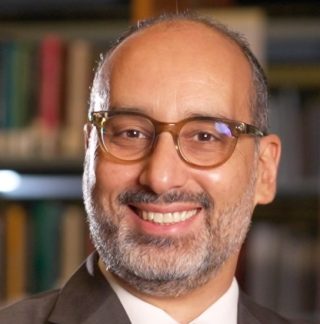
Sherif Aly Ahmed
CAC ExCom Member-at-Large, ABETSherif G. Aly Ahmed is a professor and former Chair of the Department of Computer Science and Engineering at the American University in Cairo (AUC). He has held several leadership roles at AUC, including vice-chair of the University Senate, associate dean for Graduate Studies and Research in the School of Sciences and Engineering and director of the PhD program.
He also chaired the AUC Council of Information Management. Beyond AUC, Dr. Aly serves as an Executive Committee member of the Computing Accreditation Commission (CAC) of ABET and chairs its Criteria Committee. He was also a steering member of the steering committee for the ACM/IEEE/AAAI CS2023 taskforce.
In addition to his academic leadership, Dr. Aly has significant industry experience, having worked with General Dynamics, Telcordia Technologies, and as a guest researcher at the National Institute of Standards and Technology (NIST).
Kristine Nagel
CAC ExCom Member-at-Large, ABET, Academic Professional, Georgia Institute of TechnologyKristine Nagel is currently serving on the CAC Executive Committee and has over 10 years of experience conducting domestic and international site visits, both in-person and virtually. She is currently at Georgia Institute of Technology, coordinating and teaching capstone and professional communication, and has served in academia leadership since 2006.
She has prepared self-studies for engineering programs and materials for full institutional accreditation. Her industry experience includes work as an analyst programmer for launch support of manned and unmanned vehicles, consultant to DoD projects, and manager for a start-up tech company managing subsidized multi-family housing in a distributed network.
She is active in the ACM SIGCSE group, serving as program chair (2013) and technical symposium chair (2014), and has provided continual service as an associate program chair.
Discussion Den: Ask Me Anything – International Accreditation
In this Ask Me Anything Discussion Den about International Accreditation, attendees are invited to ask any and all international accreditation-related questions and our experts will answer them.
Each Discussion Den brings ABET thought leaders together with Symposium attendees for an informal and enlightening discussion on a specific topic. These are organic conversations. There is no agenda or PowerPoint presentation. The audience’s questions and experiences build an inquisitive conversation that the group leaders guide with their insight and expertise.
Discussion Dens allow attendees to learn from the group leaders as well as from the questions and experiences of their peers.
In this Ask Me Anything Discussion Den about International Accreditation, attendees are invited to ask any and all international accreditation-related questions and our experts will answer them. Each Discussion Den brings ABET thought leaders together with Symposium attendees for an informal and enlightening discussion on...
Jane Emmet
Senior Director, Accreditation Operations, ABETJane Emmet has been responsible for the management and administration of ABET’s accreditation policies and procedures and the overall operations of ABET’s accreditation processes since November, 2015. She joined ABET in January 2014 as the training manager responsible for the training of the over 2,000 volunteer professionals who serve ABET. Today, Emmet is the senior director, accreditation operations.
Emmet's background, prior to joining ABET, includes directing and managing training and leadership development programs at professional service organizations, energy companies and developing education programs for history museums. She holds a bachelor’s degree from Barnard College in history/education and a master’s degree in museum education from The George Washington University. She also holds a graduate certificate from the University of Maryland Baltimore County in instructional systems design.

Sherri Hersh
Senior Manager, International Accreditation, ABETSherri Hersh has been with ABET for over 15 years. Originally a member of the Engineering Credentials Evaluation International (ECEI) team, she joined the accreditation department in late 2006 when ABET decided to undertake accreditation activities for programs outside the U.S. During her time at ABET, Hersh has seen the organization's international market grow to accredit programs in 41 countries around the world.
Hersh holds a master’s degree in management from New York University.

Daniela Iacona
Director for International Engagement and Governance, ABETDaniela Iacona is the director for international engagement and governance at ABET, a non-profit, non-governmental organization that accredits college and university-level programs in the disciplines of applied & natural sciences, computing, engineering, and engineering technology worldwide. Iacona has supported ABET’s mission for over 15 years and has played a key role in the development and implementation of its global operations plan. Iacona currently oversees all of ABET’s international initiatives, including its engagement in mutual recognition agreements, memoranda of understanding, and global outreach and collaboration activities.
In her dual role, Iacona is also responsible for managing all operational activities related to the governance of ABET. In this capacity, she is responsible for leading all Board of Directors, Board of Delegates, four Area Delegations and affiliated Council and Committees operational functions.
Iacona earned her master of global management degree from Thunderbird School of Global Management and baccalaureate in international studies from Old Dominion University. She has also earned American Society of Association Executives' (ASAE) Certified Association Executive (CAE) designation.
How to Prepare for Your ABET Site Visit
Preparing for your ABET site visit can be challenging. This presentation offers insight into the visit process, which is one of the most important events in the accreditation cycle. The presentation focuses on what an institution can do to prepare for the visit in order to make the process as smooth as possible. Both virtual and on-site visits are covered.
Learning Objectives
- Understand the ABET site visit process
- Plan and organize for a successful site visit
- Ensure compliance and facilitate logistics
Preparing for your ABET site visit can be challenging. This presentation offers insight into the visit process, which is one of the most important events in the accreditation cycle. The presentation focuses on what an institution can do to prepare for the visit in order...
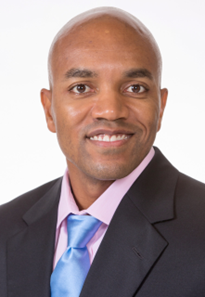
Michael Johnson
ETAC ExCom Member-at-large, ABETDr. Michael D. Johnson is a professor in the department of engineering technology and industrial distribution (ETID) at Texas A&M University. He also serves as interim associate provost for faculty success. Prior to joining the Provost’s team, Johnson was associate dean for inclusion and faculty success in the College of Engineering. Before joining the faculty at Texas A&M, he was a senior product development engineer at the 3M Corporate Research Laboratory in St. Paul, Minnesota. He is also a member of the Engineering Technology Accreditation Commission of ABET Executive Committee.
Johnson received his B.S. in mechanical engineering from Michigan State University in addition to his S.M. and Ph.D. from the Massachusetts Institute of Technology. Johnson’s research focuses on production economics, engineering education, and design tools. His research has been funded by the National Science Foundation, the Department of Energy, and industry. Johnson has over 100 peer reviewed publications and several patents.
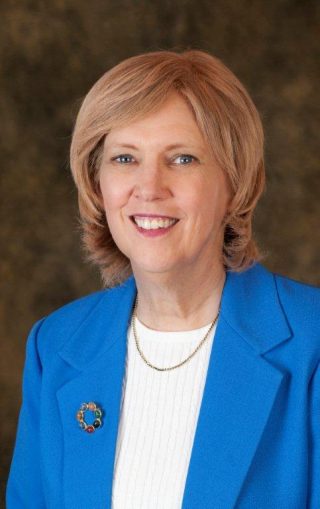
Carolyn Jacobson
CAC Representative, ABETDr. Carolyn Jacobson is a professor of information systems. She holds a doctorate in organizational communications from the Ohio University and has done post-doctoral work in information systems at the University of Minnesota and Indiana University.
Dr. Jacobson was recruited to Gettysburg College to design, create, and build a new Department of Management. She later went to Marymount University in Virginia to grow their master’s program in information systems. She served as department chair and program director for their graduate program and started a BS in Information Systems. She went on to become Director of Graduate and Adult Business Programs at Mount St. Mary’s University in Maryland where she designed and launched a graduate certificate program in project management.
She has recently retired from Pennsylvania State University where she was an assistant dean and a director of outreach. She has built strong business-educational partnerships and has conducted management consultation and training programs for diverse corporate and foundation clients.
Dr. Jacobson has served on the Computing Accreditation Commission (CAC) for ten years and has been a team chair and program evaluator on domestic and international visits for over 20 years. She currently serves on the CAC Executive Committee and Training Committee.
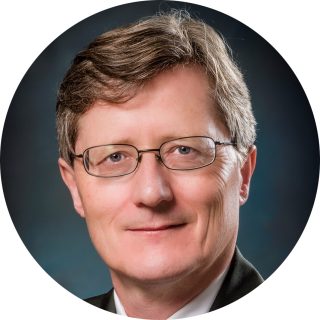
Sigurd Meldal
2025-26 Chair-Elect, EAC, ABETDr. Sigurd Meldal serves as CEO of Mostly Sunny, an IP Risk Management firm in Silicon Valley. The company works with technology companies in the security, telecommunications and network sectors to evaluate IP risks and to provide advice regarding how one may approach issues of IP exposure. He has testified on IP issues in federal and state courts, before the USPTO Patent Trial and Appeal Board, and at the U.S. International Trade Commission.
His work has been referenced in decisions by the U.S. Court of Appeals for the Federal Circuit. Prior to entering the private sector, Meldal had served as Department Chair at Cal Poly and SJSU and as Co-Director of Education at the NSF STC TRUST center at UC Berkeley. He has served the Engineering Accreditation Commission of ABET as program evaluator, commissioner and (currently) as Chair-Elect of the commission.

Mary Lou Dunzik-Gougar
ANSAC ExCom Member-at-large, ABETDr. Mary Lou Dunzik-Gougar is professor of Nuclear Engineering and Associate Dean of the College of Science and Engineering at Idaho State University. She holds a doctorate in nuclear engineering and a master’s in environmental engineering from Penn State University, as well as a bachelor’s in chemistry from Cedar Crest College.With over 25 years in the nuclear field, Dunzik-Gougar has conducted research across various aspects of the nuclear fuel cycle, including waste form development, spent fuel processing, material characterization, and fuel cycle modeling. Her work has fostered national and international collaborations, including positions with PBMR Ltd in South Africa and EDF Energy in France, and consulting roles for the European Commission and International Atomic Energy Agency. She has led multi-institutional research teams at Idaho State University and Idaho National Laboratory.Dedicated to education, Dunzik-Gougar has developed and teaches undergraduate and graduate courses on nuclear physics, fuel cycles and radioactive waste management. Before graduate school, she taught high school science and mathematics for seven years.An active member of the American Nuclear Society (ANS) for three decades, Dunzik-Gougar served as ANS president from 2020-2021. In 2022, she joined the advisory committee for the Nuclear Fuels and Materials Complex at Idaho National Laboratory and was recognized as an Outstanding Engineering Alumna by Penn State College of Engineering.
International Higher Education Partnerships for a Better World
Best practice international higher education partnerships can inspire students to develop a passion for their research and for a career in their discipline but they can also achieve real change by engaging with communities to address their problems and they can help higher education institutions innovate or build capacity.
To introduce this discussion we will hear about an inspirational model partnership involving US and Colombian universities supporting an artisanal gold mining project in Colombia – which encourages innovation and strengthens local employment while making use of international and local knowledge.
This will be followed by a Q&A with experts on international partnerships to discuss some of the challenges faced and opportunities arising from Global North-Global South and other international partnerships.
Learning objectives
- Improve understanding of why and how to make partnerships equitable
- Raise awareness of the importance of community engagement and co-creation of agendas
- Provide insight into how partnerships can help build capacity in line with SDG 17 (Partnerships for Development)
Attendees will be invited to ask any and all international partnership-related questions and our experts will answer them.
Best practice international higher education partnerships can inspire students to develop a passion for their research and for a career in their discipline but they can also achieve real change by engaging with communities to address their problems and they can help higher education institutions...
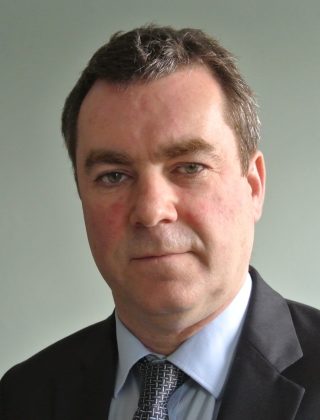
Brendan O’Malley
Editor-in-Chief, University World NewsBrendan O’Malley is editor in chief of University World News, the global higher education news and commentary platform and an international consultant. He has decades of experience in reporting on education, development, conflict and peace, and international politics. He has spoken at many academic conferences and UN and other international fora on these issues.
He has reported firsthand in dozens of countries around the world including many in Africa and Asia and many conflict countries.
Under his leadership University World News has made a strong commitment to covering higher education’s impact on society and its contribution to sustainability and achieving the United Nations’ Sustainable Development Goals. It’s in-depth coverage of this area is supported by a partnership with ABET.
Alana Heath
Co-founder & COO, How to Change the WorldAlana Heath is the co-founder and COO of How to Change the World. How to Change the World is a social enterprise transforming careers to create a sustainable future through online experiential learning programs – while building the tech to revolutionise online experiential learning at scale.
Prior to her current role, Heath spent over a decade mobilising business and technology as forces for good in sectors such as financial inclusion, energy access and sustainability. She has worked across the U.S., Europe, India and East Africa with social enterprises, non-profits and impact investing funds such as Grassroots Capital Management, the Microfinance Information Exchange and SunFunder, and as a consultant on World Bank projects. In 2012 Heath co-founded Alta Solar, a non-profit introducing solar technology to villages in the Himalayan mountain range in Ladakh (northern India), and in 2016 she co-founded Ara Energy, a venture researching access to energy in East Africa in partnership with Factore[e] Ventures.
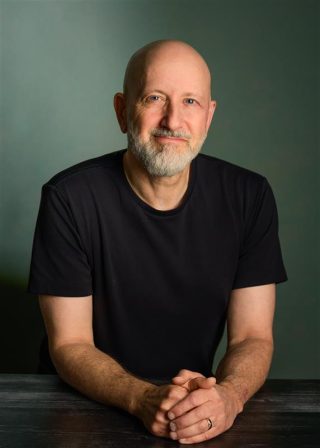
Noah Pickus
Head of Global Strategy and Partnerships and Senior Advisor to Provost , Duke UniversityNoah Pickus is Head of Global Strategy and Partnerships and Senior Advisor to the Provost at Duke University. He is the founder of the Future Universities Alliance, a global network advancing access to high‑quality education worldwide.
A lead architect of Duke Kunshan University, he previously served as Chief Academic Officer of Minerva Project, co‑directed the ASU–Georgetown Academy for Innovation in Higher Education Leadership, directed the Kenan Institute for Ethics and was founding director of the Institute for Emerging Issues at NC State University.
He served for a decade as Associate Provost at Duke. His most recent book is The New Global Universities.
Stewardship and Leadership: Navigating the Challenges for Women of Color in STEM
This invited panel session brings together the powerful voices of women of color who are transforming STEM education through stewardship, leadership and advocacy. Anchored in the forthcoming book Partner and Leverage: Stories of Stewardship and Leadership from Women of Color in Engineering and Computing, the session explores strategic partnerships, mentorship models and leadership practices that drive inclusive excellence in engineering and computing.
Throughout history, women of color leaders have spearheaded large-scale transformations in the makeup of STEM higher education (McGee et al., 2022; Nixon, 2017). However, existing scholarship fails to capture the change efforts produced by women of color in STEM higher education (Patton & Haynes, 2018). As a consequence, women of color’s change efforts are ignored, hindering STEM higher education and aspiring women of color leaders’ access to the knowledge and unique contributions of women of color. The session lecture is to bridge this gap by bringing together women of color professionals who have led change efforts in engineering and computing education. Panelists will share personal narratives from academia and industry, highlighting themes such as authentic leadership, navigating systemic barriers and building supportive networks. These stories offer actionable insights for cultivating inclusive environments, expanding access and preparing the next generation of STEM leaders.
Learning Objectives
- Identify key strategies used by women of color leaders to foster stewardship and inclusive leadership in STEM.
- Analyze the challenges and systemic barriers faced by women of color in engineering and computing and articulate approaches for overcoming these obstacles.
- Describe the value and impact of mentorship and strategic partnerships for advancing the careers and leadership journeys of underrepresented groups in STEM.
- Formulate action steps to promote equity, access and inclusive excellence in STEM education and workplaces.
- Envision pathways for institutional change that support the advancement and success of women of color.
This invited panel session brings together the powerful voices of women of color who are transforming STEM education through stewardship, leadership and advocacy. Anchored in the forthcoming book Partner and Leverage: Stories of Stewardship and Leadership from Women of Color in Engineering and Computing, the...

Yvette E. Pearson
Associate Dean, University of Texas at DallasDr. Yvette E. Pearson is an Associate Dean holding dual appointments in the Jonsson School of Engineering and Computer Science and the School of Natural Sciences and Mathematics at The University of Texas at Dallas. A Fellow of ASCE and ASEE, Pearson’s nearly 30 years of experience include leadership roles at the department, school, and university levels that have involved oversight for engineering accreditation as well as developing and leading operational and strategic partnerships. She is a registered Professional Engineer, an Envision Sustainability Professional, and an ABET EAC Commissioner who is globally recognized for her work,which centers sustainability, access, and opportunity in education and practice.

Fay Cobb Payton
Professor, Rutgers UniversityFay Cobb Payton, PhD is Special Advisor to the Chancellor for Innovation, Professor (with Tenure) in the Department of Mathematics and Computer Science at Rutgers University – Newark and an affiliate faculty in the Rutgers New Jersey Medical School. She is the director of the Institute for Data, Research and Innovation Science (IDRIS) at Rutgers University – Newark.
She is also Professor Emerita and was a Full Professor (with Tenure) of Information Technology/Analytics at North Carolina State University. She completed a rotation as a Program Director at the National Science Foundation where she initiated the CISE Minority Serving Institution Research Expansion Program, and worked on several initiatives, such as Smart Health and Biomedical Research in the Era of Artificial Intelligence and Advanced Data Science; AI Fairness, Equity, Accountability & Transparency; and Research Expansion and Cloud Computing with partnerships with Amazon, Google and Microsoft. She received the NSF Director’s Award during her rotation at the agency.
Dr. Payton is a member of the National Academics of Science, Engineering and Medicine’s Committee on Women in Science, Engineering and Medicine. She has published over 150 peer-reviewed journal articles, conference publications and book chapters on topics of data quality, AI bias/ethics, healthcare and innovation.
She earned her Ph.D. in Information and Decision Systems from Case Western Reserve University. She is a graduate of Georgia Institute of Technology (BS – Industrial and Systems Engineering) and Clark Atlanta University (BA – Accounting and minor in Mathematics; MBA – Decision Systems).
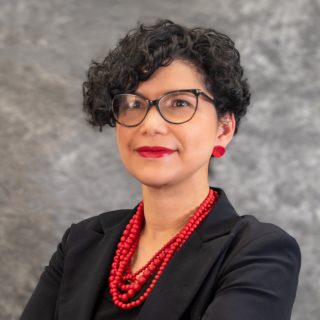
Maria Mayorga
Chair in Operations Research and Director of Operations Research, North Carolina State UniversityMaria Mayorga, PhD is the Goodnight Distinguished Chair in Operations Research and Director of Operations Research at North Carolina State University. She is a professor in the Edward P. Fitts Department of Industrial and Systems Engineering, part of the Healthcare Systems Engineering group. Her goal is to address fundamental research barriers in moving from estimates of efficacy to estimates of the effectiveness of interventions or policies by explicitly considering individual patient preferences when the underlying patient population is heterogeneous.
She is also interested in optimally allocating resources in emergency medical service systems. To achieve these goals, Mayorga will create analytical models of health systems that incorporate patient-level data. She uses techniques such as simulation, dynamic programming, applied probability, queuing theory and mathematical programming. She employs multiple sources of secondary data and a mixed methods approach to enable predictions of health outcomes at levels for which it is difficult to conduct studies in practice.
This research is inherently interdisciplinary and is thus facilitated via collaborations with health services researchers such as epidemiologists, economists and medical doctors. Before joining the NC State faculty, she was on the faculty at Clemson University, Department of Industrial Engineering for seven years. She has authored over 90 publications in archival journals and refereed proceedings. Her research has been supported by NIH and NSF, among others. She received the distinguished National Science Foundation CAREER Award for her work to incorporate patient choice into predictive models of health outcomes.
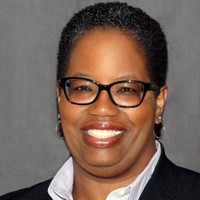
Stephanie G. Adams
Dean, University of Texas at DallasStephanie G. Adams, PhD, is the Erik Jonsson School of Engineering and Computer Science Dean and Lars Magnus Ericsson Chair in Electrical Engineering at the University of Texas at Dallas, and a past President of the American Society of Engineering Education. Previously Dr. Adams served as the Dean of the Frank Batten College of Engineering and Technology at Old Dominion University (2016–2019) and Department Head and Professor of Engineering Education at Virginia Tech (2011–2016).
She also held faculty and administrative positions at Virginia Commonwealth University (2008–2011) and the University of Nebraska-Lincoln (1998–2008). Her research interests include broadening participation, faculty and graduate student development, international/global education, teamwork and team effectiveness, and quality control and management. In 2003, she received the CAREER award from the Engineering Education and Centers Division of the National Science Foundation.
Dr. Adams is a leader in the advancement and inclusion of all in STEM education. She has worked with a number of colleges and universities, government agencies, and non-profit organizations on topics related to graduate education, mentoring, faculty development, and diversifying STEM. Dr. Adams is an honor graduate of North Carolina A&T State University, where she earned her BS in Mechanical Engineering in 1988. In 1991, she was awarded the Master of Engineering degree in Systems Engineering from the University of Virginia. She received her PhD in Interdisciplinary Engineering from Texas A&M University in 1998, where she concentrated on Industrial Engineering and Management.
Beyond the Classroom: Engineering Education as a Platform for Global Sustainable Development Goals Partnerships
This session details the Engineering Entrepreneurship Summer Institute (E2SI) program, which fundamentally redefines the scope of engineering learning by positioning students as global collaborators and agents of change. E2SI leverages international partnerships—specifically with Cuatro Caminos in Panama and the University of Galway in Ireland as co-educators—to transform traditional academic experiences into platforms for inclusive innovation, ethical engagement, and community-building.
The program treats these global networks not as extracurriculars, but as core pedagogical tools. Students engage in cross-sector collaboration with farmers, academics, and industry mentors to design technology ventures that serve both local and global Sustainable Development Goal (SDG) needs. We highlight the principle of Inclusive Innovation, where ventures are designed with—not for—communities, elevating lived experience alongside applied knowledge.
Crucially, the we will demonstrate the seamless curricular integration of these activities, mapping outcomes directly to ABET learning objectives to prove that global engagement enhances core technical and professional competencies. The key takeaway provides concrete strategies for integrating high-impact global SDG partnerships into ABET-aligned curricula, focusing on community, belonging, and real-world results.
Learning Objectives
This session will equip educators with strategies to integrate global partnerships, inclusive innovation, and ethical engagement into engineering curricula, advancing ABET’s commitment to interdisciplinary collaboration and student-centered learning.
This session details the Engineering Entrepreneurship Summer Institute (E2SI) program, which fundamentally redefines the scope of engineering learning by positioning students as global collaborators and agents of change. E2SI leverages international partnerships—specifically with Cuatro Caminos in Panama and the University of Galway in Ireland as...

Lauri Olivier
Director and Professor Engineering Entrepreneurship, Villanova UniversityDr. Lauri Olivier, PhD, MBA, is a distinguished academic leader and a veteran of technology-driven innovation, currently directing the Engineering Entrepreneurship program and serving as an Associate Professor of Practice at Villanova University. Her background features convergence of top-tier credentials: a Ph.D. in Biomedical Engineering from Duke University, a B.S. in Mechanical Engineering from the University of Cincinnati and an MBA from Northwestern University's Kellogg School of Management.
This interdisciplinary foundation allows her to speak the "language of the scientist, the engineer and the entrepreneur," a skill she identifies as her greatest professional asset. Dr. Olivier has over 20 years of experience spanning the full innovation lifecycle, from the research lab to successful market exit. Her commercial achievements include the launch of multiple medical technologies startups.
She has also held key roles in product development at companies like Raytheon and managed technology commercialization for university medical schools globally. She has served as a global university innovation manager, facilitating company spin-outs and licensing complex technologies. At Villanova, she translates this experience into high-impact, experiential education. Her teaching philosophy emphasizes that entrepreneurship empowers students to be compassionate and empowered citizens. She is passionate about Venture Creation where she witnesses students’ most profound growth.
The Stackable Frontier: Engineering Quality Pathways from Microcredentials to Degrees
This session presents the design of stackable credentials frameworks from multiple institutional perspectives. The Polytechnic University of Puerto Rico (PUPR) will share its efforts in creating pathways that connect Cybersecurity and Artificial Intelligence microcredentials, academic certificates, and degree programs, aligned with workforce needs. Siemens Digital Industries Software will provide an industry perspective on microcredentials developed for the future workforce, both independently and in collaboration with university partners. Purdue University Online will offer insights around the development of their suite of AI microcredentials that can articulate for credit into the MSAI degree.
All three institutions have developed globally accessible microcredentials that can either stack into a degree or be integrated into university curricula. Siemens and Purdue partnered with ABET to pilot a credential quality assurance review and recognition process, both successfully earning ABET recognition for their credentials.
Attendees will learn practical strategies for designing, assessing and scaling stackable credentials that connect education to workforce demands and how such initiatives can be leveraged to advance innovation through purposeful partnership.
Learning Objectives
- Explain core design elements of stackable credentials, including academic structure, industry-relevant competencies and pathways to degrees.
- Identify challenges and opportunities across different institutional contexts, including small teaching-focused institutions, large research universities and industry partners.
- Apply insights from academic and industry perspectives to local credential, curriculum and workforce-aligned initiatives.
This session presents the design of stackable credentials frameworks from multiple institutional perspectives. The Polytechnic University of Puerto Rico (PUPR) will share its efforts in creating pathways that connect Cybersecurity and Artificial Intelligence microcredentials, academic certificates, and degree programs, aligned with workforce needs. Siemens Digital...

Carrie Berger
Executive Director, Purdue OnlineCarrie Berger is the Executive Director of Academic Affairs and Strategic Initiatives at Purdue University Online. Berger leads the Growth Catalyst team responsible for leading the development and delivery of online courses and programs to support workforce development in close collaboration with industry partners.
She is credited with building Purdue University’s innovative and first pan-university programs, the M.S. in Artificial Intelligence and M.S. in Data Science. For nearly a decade, Berger served as the Associate Dean for Research, Executive Associate Dean and Interim Dean of the Purdue Polytechnic Institute leading the transformation of research operations for the college.
Earlier, she spent eight years as the Assistant Dean for Research at the University Virginia School of Engineering and Applied Science focused on the growth of interdisciplinary research. Berger holds a Bachelor of Science in botany from the University of Oklahoma and a PhD in medicinal chemistry from Purdue University.
Janelle Simmonds
Global Enablement Lead, Siemens Digital Industries SoftwareJanelle Simmonds is passionate about advancing education at the intersection of academia and industry. She has used her expertise in university/industry partnerships, organizational strategy and online learning to positively impact institutions and individuals throughout the course of her career in both higher education and the corporate sector.
Simmonds is the Global Enablement Lead for the Academic and Future Workforce Strategy team at Siemens Digital Industries Software. She is responsible for content and credential strategy, enabling learners and educators with resources to prepare the future workforce with the skills needed to succeed in industry.
Before joining Siemens, she led the Partnership Development team at the University of Michigan’s Center for Academic Innovation and previously served as chief of staff to the Office of the Provost at the University of Michigan-Dearborn.
Before joining U-M, she spent 12 years overseas, working in international pathways education in the UK and Europe. During that time, she leveraged her former career in PR and public affairs to teach PR, marketing, advertising, writing and business development to students from across the world. At Kaplan International Pathways, she served as a lecturer and curriculum consultant, then as a program leader, college director, and associate director of the Center for Learning Innovation and Quality.
Simmonds holds a BA in Communications and International Studies, and an MA in Communication from Wayne State University. She also completed an executive coaching certification from the University of Michigan and provides coaching and consulting to empower leaders and teams in moving toward their goals.
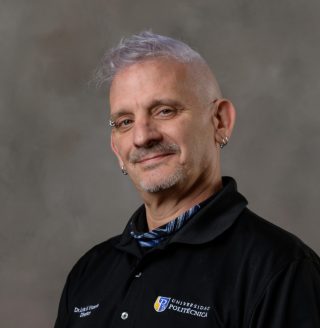
Luis Vicente
Director ECECS Dept., Polytechnic University of Puerto RicoLuis M. Vicente, Ph.D. is Director and Associate Professor of Electrical & Computer Engineering and Computer Science at the Polytechnic University of Puerto Rico (PUPR). He leads accreditation and assessment initiatives across multiple ABET-accredited programs (EAC, CAC, ANSAC) and has extensive experience aligning curricula with institutional goals of excellence, diversity and sustainability.
Dr. Vicente’s work integrates cybersecurity, artificial intelligence, and data science education with outreach to high school students, stackable credentials, and workforce development. He has designed micro-credential programs in Cybersecurity and AI/ML that connect secondary education, undergraduate curricula and industry-recognized certifications. His initiatives emphasize equitable access and purposeful partnerships, engaging underserved communities and fostering innovation through collaboration with industry and government.
He actively contributes to national and international discussions on curriculum design, accreditation, and educational innovation, presenting at conferences such as the National Cyber Summit and the National Cybersecurity Education Colloquium. Beyond academia, Dr. Vicente integrates creativity and systems thinking into his teaching and leadership, inspiring students to connect technical expertise with human and societal impact.
Assessments in Computing in the Age of GenAI
CS courses, including their learning outcomes and assessments, are changing in light of GenAI. We once focused largely or entirely on evaluating code that students write often outside of a proctored setting. But now students, like professionals, will use GenAI to write most of their code. If we don’t change how we assess students to align with what they can now accomplish, we risk students disengaging and offloading their work to GenAI without learning the skills necessary to program in the GenAI era. At UCSD and U Toronto, we have been exploring and integrating new types of assessments into courses as varied as CS1, Software Engineering, and Systems Programming. Our assessments acknowledge both that GenAI is a powerful programming companion and that there are important skills (some new, some old) that students need to learn. Our assessments include large, open-ended projects; video-based assessments; problem decomposition tasks; and authentic engagement with open-source projects. These assessments focus on skills such as prompting, understanding the purpose of code, communication/teamwork, and working with large codebases. In this presentation, we will discuss why assessments need to change, provide examples of our new assessment types, and offer preliminary evidence of student engagement and achievement.
Learning Objectives
ABET Student Outcomes for Computing Programs states: “Design, implement, and evaluate a computing-based solution to meet a given set of computing requirements in the context of the program’s discipline.” As the computing discipline changes due to GenAI tools, new assessments are needed.
CS courses, including their learning outcomes and assessments, are changing in light of GenAI. We once focused largely or entirely on evaluating code that students write often outside of a proctored setting. But now students, like professionals, will use GenAI to write most of their...
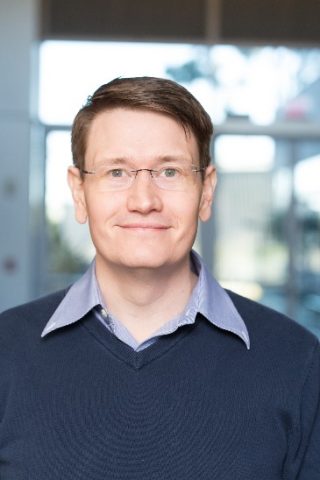
Leo Porter
Professor, UC San DiegoDr. Leo Porter is a Professor in the Computer Science and Engineering Department at UC San Diego. He is best known for his research on the impact of Peer Instruction in computing courses, the development of the Basic Data Structures Concept Inventory and integrating GenAI into the CS curriculum.
He co-wrote the first book on integrating LLMs into the instruction of programming with Daniel Zingaro. He has received seven Best Paper Awards, an ICER Lasting Impact Award, the SIGCSE 50th Anniversary Top Ten Symposium Papers of All Time Award and the Academic Senate Distinguished Teaching Award at UC San Diego.
He previously served as Secretary of the SIGCSE Board and as Program Chair for ICER. He currently co-Directs the GenAI in CS Education Consortium, aimed at helping faculty and institutions integrate GenAI into the CS Curriculum.

Ernest Holmes
Technical Program Manager, GoogleErnest Holmes is a PhD student at Georgia Tech and a Technical Program Manager at Google.org. He is a Morehouse alumnus who and is President and Co-Founder of Codehouse Corporation.
Mr. Holmes presently serves on the advisory board for the Consortium for GenAI in CS Education.
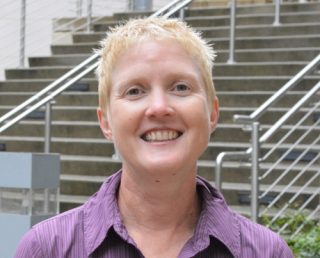
Beth Simon
Professor, UC San DiegoDr. Beth Simon is a Teaching Professor in the Department of Education Studies. Her research interests lie in the areas of computing education and online and technology-enhanced teaching.
Beth is currently involved in the development of high school computing curriculum and the training and community needs of K-12 teachers wanting to bring computing education opportunities to their students. Previously, Beth has studied the impacts of evidence-based active learning practices (e.g., Peer Instruction) on student outcomes in higher education, student conceptions of computing concepts and novice computing students’ self-efficacy.
Beth is currently the Faculty Advisor for Digital Learning in the UCSD Teaching + Learning Commons where she supports faculty and instructional staff in the use of technology to support their educational efforts both on-campus and through MOOCs (Massive Open Online Courses). Beth has served as a Teaching Professor in the Computer Science and Engineering Department and as Director of UCSD’s Center for Teaching Development (now part of the Teaching and Learning Commons).
From 2014-2015, Beth served as the Principal Teaching and Learning Specialist at Coursera, supporting faculty in the development of MOOCs and advising on pedagogical platform development. During 2007-2008, Beth served as a Science Teaching and Learning Fellow in the Carl Wieman Science Education Initiative at the University of British Columbia.
Accreditation of Programs Under Applied and Natural Science Accreditation Commission’s (ANSAC) General Criteria
ANSAC began in the 2016-17 accreditation cycle applying general criteria that specifically address natural science and mathematics programs. A number of programs in biology, chemistry, mathematics and physics, etc. have gone through the ABET accreditation process since that cycle. ANSAC also added program criteria for Data Science, Data Analytics, and similarly named programs in recent years. This addition expanded the list of ANSAC-approved program criteria for applied sciences, including but not limited to: Construction Management, Facilities Management, Industrial Hygiene, Safety, and Surveying, etc. In this session, the presenters will discuss the protocols for determining the appropriateness of request for evaluation through ANSAC and the application of ANSAC general criteria for the accreditation of applied and natural science programs. We will also discuss common findings of the accreditation process.
Learning Objectives
- Determine the appropriateness of request for evaluation through ANSAC.
- Explain ANSAC accreditation process for programs with no program criteria.
- Discuss the application of ANSAC general criteria for the accreditation of applied and natural science programs.
ANSAC began in the 2016-17 accreditation cycle applying general criteria that specifically address natural science and mathematics programs. A number of programs in biology, chemistry, mathematics and physics, etc. have gone through the ABET accreditation process since that cycle. ANSAC also added program criteria for...
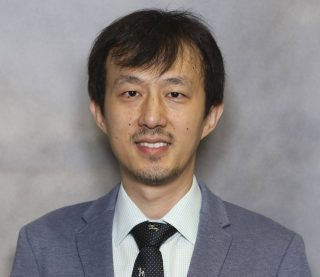
Lu Yuan
2025-26 Chair, ANSAC, ABETDr. Lu Yuan, CIH, CSP, is Corporate EHS Manager of Performance Contractors, Inc. Before joining Performance Contractors in December 2023, he was Professor of Occupational Safety, Health, and Environment at Southeastern Louisiana University. He is an Adjunct Associate Professor in the Department of Environmental Health Sciences of the Tulane Celia Scott Weatherhead School of Public Health and Tropical Medicine.
Dr. Yuan served on the American Society of Safety Professionals (ASSP) Council on Academic Affairs and Research Educational Standards Committee from 2018 to 2022. He served as ASSP Academics Practice Specialty Administrator from 2017 to 2019 and ISOES (International Society for Occupational Ergonomics and Safety) Member at Large from 2018 to 2020. Dr. Yuan was awarded the William E. Tarrants Outstanding Safety Educator of the Year by ASSP in 2015. He received the Craft Workforce Development Champion Award from the Greater Baton Rouge Industry Alliance in 2016.
Dr. Yuan currently serves as Chair of the 2025-2026 ABET Applied and Natural Science Accreditation Commission (ANSAC).

Richard Olawoyin
2025-26 Chair-Elect, ANSAC; IDEA Council Chair, ABETDr. Richard Olawoyin, P.E., is a professor of engineering at Oakland University. He is a US Fulbright Scholar (alumnus), and has engaged students globally through teaching and research, particularly in four countries: China, Costa Rica, the Dominican Republic and the United States.
He has served ABET in various roles including serving as the current chair of the ABET Inclusion, Diversity, Equity, and Accessibility (IDEA) Advisory Council, chair-elect of ABET ANSAC, Team Chair, Training Support Facilitator for PEV candidates, and a PEV mentor. He received the ABET Fellow Award and Claire L. Felbinger Award for Diversity and Inclusion in 2025. He was awarded the ASSP Charles V. Culbertson Outstanding Award in 2019 and 2022 for his professional contributions.
Sharing the Program Evaluator (PEV) Perspective
This panel discussion is designed for a prospective PEV who is interested in having as much information as possible on what the job really entails. The session will start with a brief presentation of an ABET visit from the perspective of a PEV, from the initial assignment to the campus visit and return home. This will be followed by Q&A from the audience.
Learning Objectives
A thorough understanding of both the expectations placed on and the growth opportunities available to a new PEV.
This panel discussion is designed for a prospective PEV who is interested in having as much information as possible on what the job really entails. The session will start with a brief presentation of an ABET visit from the perspective of a PEV, from the...

Jennifer Brock
Associate Dean for Academics, College of Engineering, University of Alaska AnchorageJennifer McFerran Brock is an associate professor and chair of the Mechanical Engineering Department at University of Alaska Anchorage.
In addition to leading her own department’s assessment efforts since 2012, she was chair of the UAA College of Engineering Assessment Committee from 2014-2018 and has been involved in numerous campus-wide assessment- and accreditation-related initiatives, most recently serving as a tri-chair of the UAA Institutional Self-Study Committee from 2016-18 in connection with the institution’s regional accreditation.
She became a commissioner with the EAC in 2022.
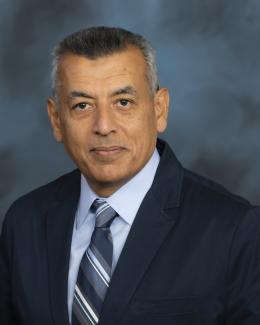
Walid Metwally
EAC ExCom Member-at-large, ABETWalid A. Metwally is a Distinguished R&D Scientist and leads the Nuclear Criticality Safety Group at Oak Ridge National Laboratory (ORNL). He also worked at the Atomic Energy Authority in Egypt, NC State University, United Arab Emirates University and Global Nuclear Fuel (GNF) in Wilmington, NC. In 2012, Metwally joined the University of Sharjah, UAE, where he founded and chaired the Nuclear Engineering and Mechanical Engineering Programs and also served as the vice dean of the College of Engineering.
Metwally obtained his B.Sc. and M.Sc. in Nuclear Engineering from Alexandria University, Egypt, in 1992 and 1997. In 1998, he joined the Department of Nuclear Engineering at North Carolina State University as a Ph.D. student. He remained there until completing his doctorate. After completing his doctorate, he served as a Research Associate until 2003. Metwally also holds a Master of Science in Operations Research and a Masters degree in Business Administration.
Metwally serves as a member of the ABET EAC Executive Committee, ABET commissioner and program evaluator, chair of the ANS Accreditation Policy and Procedures Committee (APPC), past chair of the UAE ANS local section, past chair of Working Group 1 of the IAEA International Nuclear Security Education Network (INSEN), and technical expert on IAEA missions and assignment

John Vian
Technical Fellow, BoeingDr. John Vian is a Boeing Technical Fellow working in advanced flight automation, urban air mobility concepts and collaborative education initiatives in Ethiopia. Vian has served ABET since 1997 in various roles, including: IEEE Program Evaluator, Engineering Accreditation Commissioner, Executive Committee/Editor 1, Team Chair, Engineering Area Delegation and Board of Delegates.
Jenny Amos
Teaching Professor, Bioengineering, University of Illinois at Urbana-ChampaignJenny Amos is a Teaching Professor in Bioengineering at the University of Illinois Urbana-Champaign. She is an AIMBE Fellow, BMES Fellow, BMES Board of Director Member, ABET Commissioner, two-time Fulbright Specialist in engineering education and has won multiple awards and recognitions for her teaching and scholarship of teaching.
Amos was also the lead investigator for the National Science Foundation Revolutionizing Engineering Departments award for Illinois, leading efforts to innovate assessment practices for engineering toward producing more holistic engineers. Amos has over a decade’s worth of experience leading curriculum reform implementing robust assessment strategies.
Mostafa El-Said
Professor of Computing, Chair of the Computer Science Department and Director of Assessment & Accreditation , Grand Valley State UniversityDr. El-Said is an accomplished academic leader in applied computing, Cybersecurity, and Artificial Intelligence (AI), with over two decades of experience in higher education. He holds a B.Sc. in Electrical Engineering, an M.S. in Electrical and Electronic Engineering, an M.S. in Computer Science and a Ph.D. in Computer Science and Engineering, bringing strong interdisciplinary expertise that spans core engineering disciplines and advanced computing systems.
Dr. El-Said currently serves as Professor of Computing, Chair of the Computer Science Department, and Director of Assessment & Accreditation at Grand Valley State University, where he has led innovative interdisciplinary program development and ABET accreditation across multiple degrees, including Information Systems (IS), Cybersecurity, Information Technology (IT), Computer Science (CS), Artificial Intelligence (AI) and Software Engineering (SE).
He spearheaded the Build Bridges Break Barriers initiative (4B), creating industry partnerships and expanding access to stackable micro-credentials for workforce development. Dr. El-Said has served as a volunteer for ABET since 2020 as a Program Evaluator (PEV) for various Computing programs.
Closing Plenary
Moderated by Dr. Ann Kenimer, ABET Chief Accreditation Officer, the closing plenary will bring the symposium to a dynamic close through a series of fast-paced Idea Spotlights focused on the future of partnership-driven innovation in education. Confirmed participants include academic professionals, industry partners and sponsors, each offering a concise perspective drawn from practice and collaboration.
Through these brief, high-impact talks, speakers will explore topics ranging from industry partnerships and interdisciplinary collaboration to microcredentials, emerging learning pathways and workforce alignment. Designed to spark ideas and inspire action, the session will challenge participants to reflect on what’s next—and how purposeful partnerships can turn innovation into meaningful, scalable impact beyond the symposium.
Moderated by Dr. Ann Kenimer, ABET Chief Accreditation Officer, the closing plenary will bring the symposium to a dynamic close through a series of fast-paced Idea Spotlights focused on the future of partnership-driven innovation in education. Confirmed participants include academic professionals, industry partners and sponsors,...
Jane Emmet
Senior Director, Accreditation Operations, ABETJane Emmet has been responsible for the management and administration of ABET’s accreditation policies and procedures and the overall operations of ABET’s accreditation processes since November, 2015. She joined ABET in January 2014 as the training manager responsible for the training of the over 2,000 volunteer professionals who serve ABET. Today, Emmet is the senior director, accreditation operations.
Emmet's background, prior to joining ABET, includes directing and managing training and leadership development programs at professional service organizations, energy companies and developing education programs for history museums. She holds a bachelor’s degree from Barnard College in history/education and a master’s degree in museum education from The George Washington University. She also holds a graduate certificate from the University of Maryland Baltimore County in instructional systems design.
Ann Kenimer
Chief Accreditation Officer, ABETDr. Ann Kenimer is the Chief Accreditation Officer at ABET, bringing over three decades of academic and leadership experience to her role. Prior to joining the ABET Headquarters staff in 2024, Kenimer spent over 20 years as an ABET volunteer serving as a program evaluator, team chair, executive committee member and officer in the Engineering Accreditation Commission.
Kenimer is also professor emerita and associate provost emerita at Texas A&M University, where she held various leadership positions before retiring. Over her 30-year career as a faculty member at Texas A&M, she held several college- and university-level positions including associate dean and interim executive associate dean in the College of Agriculture and Life Sciences, associate dean of faculties, interim dean and chief operating officer at Texas A&M University at Qatar, and associate provost for undergraduate studies.
In addition to her status as fellow of ABET and the American Society of Agricultural and Biological Engineers (ASABE) and registered Professional Engineer in Texas, Kenimer has received numerous teaching awards, including the Minnie Stevens Piper Professor award.
Kenimer earned her Ph.D. in agricultural engineering from the University of Illinois at Urbana-Champaign in 1990, following her M.S. and B.S. degrees in agricultural engineering from Virginia Tech.
Jason Blackstock
Founder & CEO, How to Change the WorldDr Jason Blackstock is the founder and CEO of How to Change the World – a social enterprise that he spun out from University College London (UCL). How to Change the World is a social enterprise transforming careers to create a sustainable future through online experiential learning programs – while building the tech to revolutionise online experiential learning at scale.
Blackstock's previous experience spans quantum physics research; silicon valley tech development; sustainability, technology & innovation policy; and higher education innovation & leadership. Since the mid-2000s, he has taught, provided policy advice and led research from universities and think tanks such as Harvard, Oxford, the Centre for International Governance Innovation, and the International Institute for Applied Systems Analysis. Jason was the Founding Head of UCL STEaPP (2013-18), and currently serves as a director or advisory board member for numerous organisations, including MIT IDSS and We Make Change.

Paul Gilbert
CEO, QuanserAs the CEO of Quanser since 2002, Paul Gilbert oversees the strategic development of solutions geared towards improving the quality of engineering education and research in the global academic community. Paul is passionate about bringing hands-on experiments into universities, enabling students to gain real world experience and graduate as the strongest and most influential generation of engineering leaders.
Paul regularly travels around the world delivering keynote presentations and meeting with senior engineering educators. He is also as an active participant with global academic leadership organizations, including IFEES, GEDC, WEEF, IUCEE, and ASEE.
Paul has over two decades as a senior executive in SME companies in North America. He brings wealth of international experience developing global partner relationships and major R&D oriented projects in the packaging, aerospace and energy management sectors.
Paul holds an MBA from the Richard Ivey School of Business in Canada as well as a Bachelor of Mechanical Engineering from the University of Southampton, U.K.
In addition to his day job, Paul has been an active youth mentor in a number of programs designed to develop young minds and promote STEM education. Currently he is active with the NEXT 36 Entrepreneurial Development program. Paul is also an avid cyclist and together with his team has raised over $250,000 for the Princess Margaret Cancer Centre in the last 5 years with the Ride to Conquer Cancer.
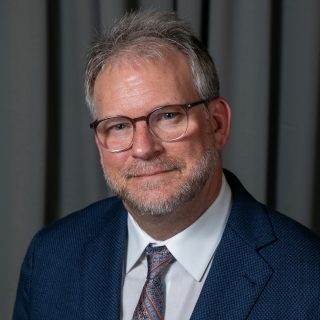
Davy McDowell
Chief Executive Officer, NCEESDavy McDowell, P.E. is the Chief Executive Officer of NCEES. In this role, he serves as secretary of the board of directors and chief employed officer of NCEES, with authority over its daily operations.
Before he was appointed CEO of NCEES in fall of 2024, McDowell served NCEES as the Chief Operating Officer from 2009 until being named CEO. Prior to that, he served NCEES as an Exam Development Engineer and as the Director of Professional Services.
McDowell stated his career with Duke Energy Company as an Agricultural Engineering Representative where he was employed for 10 years.
McDowell, who is a licensed engineer in South Carolina, earned bachelor’s and master’s degrees in agricultural engineering from Clemson University.
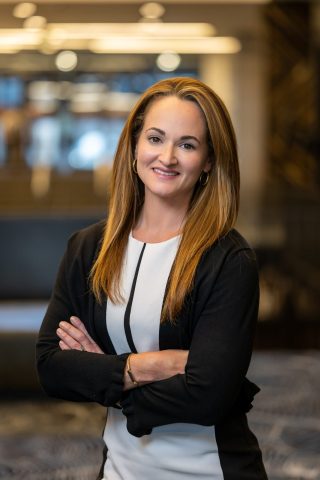
Jessica Silwick
Chief Financial Officer, Chief Operating Officer, ABETJessica Silwick is ABET’s CFO/COO. She is responsible for developing ABET’s financial management strategy and the integrity of the financial information. She leads communications and marketing, professional offerings, operations, HR and Lead Internal Auditor. She previously worked for large organizations in manufacturing, pharmaceutical and energy fields.
Her bachelor’s in accounting is from University of Notre Dame of Maryland and an MBA from University of North Carolina, Kenan-Flagler School of Business. She is an active Certified Public Accountant, a Certified Association Executive and has professional certificates from Yale and Cornell.
She was recognized as a 2022 top 50 CFOs by OnCon ICON Awards, and won the AICPA’s, Emerging Leader Award in 2015.
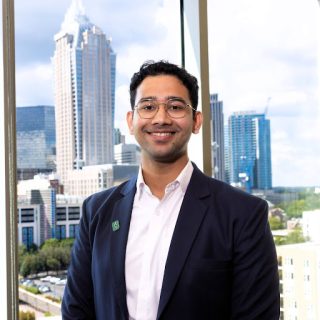
Yash Tadimalla
Computing Innovation (CI) Fellow, Computing Research Association (CRA)Sri Yeswanth (Yash) Tadimalla holds a Ph.D. in Computing and Information Systems with an interdisciplinary focus in Sociology. Dr. Tadimalla’s research agenda examines how human identity impacts interactions with technology and learning experiences, particularly within the contexts of Artificial Intelligence (AI) and Computer Science (CS) education. His contributions include several socio-technical frameworks: the Human-AI Interaction Ecosystem Framework, the AI Identity Boundary Object model—which examines how identity shapes the creation, perception, and use of AI—and the Higher Education AI Readiness (HEAIR) Framework. His work on universal AI Literacy advocates a shift from techno-centric AI education to an interdisciplinary, socio-technical model. As the Global Focal Point for the United Nations Major Group for Children and Youth (UNMGCY) Science-Policy Interface, He advocates globally for equitable access to STEM education, mental health, gender/sexual and reproductive health rights (SRHR), and sustainable human-centered technology development and deployment. He coordinates youth and civil society participation in advocacy mechanisms and policy engagements for high-level meetings within the ECOSOC cycle, including the STI Forum, Partnership Forum, Youth Forum, High-Level Political Forum (HLPF), and United Nations General Assembly (UNGA). He has presented his work as a keynote speaker and researcher at distinguished international conferences (ASEE, ACM-SIGCSE, IEE-FIE, AAAI, UN) across diverse global locations in 20+ countries.
The ASEE Mindset Project: Engineering Curricula and Pedagogy for the 21st Century
For over 70 years, undergraduate engineering education has remained largely tethered to the "Grinter mindset," a model established in 1955 that prioritizes calculus-centered rigor and a "weed-out" culture. While this approach shifted engineering toward a science-based profession, it is increasingly ill-suited for the demands of Industry 4.0 and a diverse, innovation-driven society. This presentation explores the findings of the landmark report, The Engineering Mindset: A Vision for Change, which calls for a fundamental systemic transformation of how engineers are educated in the United States. We will outline the findings and recommendations of the Engineering Mindset report, advocating for a coordinated national effort to make engineering accessible to everyone interested in solving problems.
Learning Outcomes
By the end of this session, participants will be able to:
- Critique the "Grinter Mindset" and the "Factory Model" of education: Examine how the historical dependence on calculus-focused rigor and lecture-based teaching acts as a gatekeeper that excludes students and fails to address the interdisciplinary and ethical needs of Industry 4.0.
- Evaluate strategies for 'weaving in' all students: Identify specific systemic reforms—such as in-context mathematics, competency-based assessments, and modular curricula—designed to replace traditional "weed-out" cultures with greater access and student-centered pathways.
For over 70 years, undergraduate engineering education has remained largely tethered to the “Grinter mindset,” a model established in 1955 that prioritizes calculus-centered rigor and a “weed-out” culture. While this approach shifted engineering toward a science-based profession, it is increasingly ill-suited for the demands of...
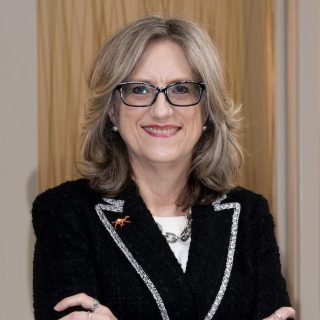
Jenna Carpenter
Founding Dean and Professor, School of Engineering, Campbell UniversityDr. Jenna Carpenter is Founding Dean and Professor of Engineering at Campbell University and President of the American Society for Engineering Education (ASEE). An expert on issues impacting success of women in STEM and innovative STEM curricula, she has held national leadership roles including ASEE Vice President, WEPAN (Women in Engineering ProActive Network) President and Mathematical Association of America First Vice-President.
In addition, she chaired the National Academies Ad Hoc Committee on the Gulf Scholars Program. Carpenter is co-recipient of the 2022 Bernard M. Gordon Prize for Innovation in Engineering and Techology Education from the National Academy of Engineering, recognizing her contributions as one of the pioneers of the Grand Challenges Scholars Program.
Carpenter is an ABET Program Evaluator and on the Executive Committee of the Global Engineering Deans Council. In 2015, DreamBox Learning selected her as one of 10 Women in STEM Who Rock! for her advocacy and TEDx talk, “Engineering: Where are the Girls and Why aren’t They Here?”, the only academic on a list of CEOs, politicians and actresses. She received the 2019 ASEE Sharon Keillor Award for Women in Engineering Education, as well as the 2018 WEPAN Founder’s Award and 2013 WEPAN Distinguished Service Award.
A Conversation about Promoting a Respectful Environment and How the IDEA Advisory Council Supports ABET’s Value Position Statement
In its value position statement, ABET articulates its commitment to "fostering equal dignity, respect and fair access, removing barriers and promoting sustainable excellence," and the IDEA Advisory Council exists to support these values. One of the main ways that the various commissions' accreditation criteria manifest this commitment is through the recently harmonized Criterion 8, which requires institutional support to "create and foster a respectful environment among the program's students, faculty, staff and administrators". The first portion of this workshop will feature a presentation on the concept of a respectful environment by Ann Kenimer, ABET’s Chief Accreditation Officer and long-time Program Evaluator as well as one of the main advocates behind the harmonized Criterion 8. Following the presentation, IDEA Council members will lead a small-group breakout session with participants regarding the Council's role in the ABET community.
Learning Objectives
Upon completion of this workshop, participants will be:
- Conversant in the history of and rationale behind the harmonized C8;
- Capable of implementing and/or evaluating the implementation of C8;
- Knowledgeable about and, if desired, stakeholders in IDEA Council's role within ABET.
In its value position statement, ABET articulates its commitment to “fostering equal dignity, respect and fair access, removing barriers and promoting sustainable excellence,” and the IDEA Advisory Council exists to support these values. One of the main ways that the various commissions’ accreditation criteria manifest...
Ann Kenimer
Chief Accreditation Officer, ABETDr. Ann Kenimer is the Chief Accreditation Officer at ABET, bringing over three decades of academic and leadership experience to her role. Prior to joining the ABET Headquarters staff in 2024, Kenimer spent over 20 years as an ABET volunteer serving as a program evaluator, team chair, executive committee member and officer in the Engineering Accreditation Commission.
Kenimer is also professor emerita and associate provost emerita at Texas A&M University, where she held various leadership positions before retiring. Over her 30-year career as a faculty member at Texas A&M, she held several college- and university-level positions including associate dean and interim executive associate dean in the College of Agriculture and Life Sciences, associate dean of faculties, interim dean and chief operating officer at Texas A&M University at Qatar, and associate provost for undergraduate studies.
In addition to her status as fellow of ABET and the American Society of Agricultural and Biological Engineers (ASABE) and registered Professional Engineer in Texas, Kenimer has received numerous teaching awards, including the Minnie Stevens Piper Professor award.
Kenimer earned her Ph.D. in agricultural engineering from the University of Illinois at Urbana-Champaign in 1990, following her M.S. and B.S. degrees in agricultural engineering from Virginia Tech.
Donna Reese
Recognition of Credentials Steering Committee, ABETDonna Reese is professor emerita of Computer Science at Mississippi State University where she retired as head of computer science and engineering in 2017. She is a former president of CSAB, the professional society for all computing accreditations.
In addition to her service on ABET's Computing Area Delegation, Reese also serves as a lead facilitator for ABET’s Program Evaluator Training. She began her ABET service in 2005 as a program evaluator and was elected to the Computing Accreditation Commission in 2009.
After serving on the ExCom of CAC from 2014-2017, she served as the chair of the Computing Accreditation Commission in 2017-18. Reese was named an ABET Fellow in 2020 and a CSAB Fellow in 2023.
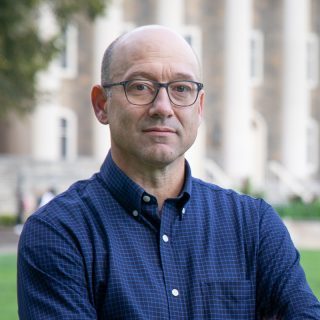
David Hunter
Professor Emeritus of Statistics, Penn State UniversityDavid Hunter is professor emeritus of statistics at Penn State University, where he served on the faculty for 26 years including six years as department head. He is a fellow of the American Statistical Association and the Institute of Mathematical Statistics. He has served in various roles on the board of CSAB since 2021 and currently chairs ABET's IDEA Advisory Council.
From Classroom to Career: Partnerships for Accessible STEM Pathways
The World Health Organization (WHO) estimates “1.3 billion people – about 16% of the global population – currently experience significant disability.” Roughly 20% of the global population is estimated to be neurodivergent. The National Science Foundation (NSF) reports only 3% of the U.S. STEM workforce is disabled (compared to roughly 11% of the general working age population) and, of that fraction, the majority (over 70%) are in middle-skill and science and engineering-related jobs that do not require STEM bachelor’s degrees. This not only limits our capabilities to solve problems for the benefit of all of society, it also produces disparities in employment outcomes.
For students in STEM disciplines, internships and research experiences during their undergraduate years provide an important first glimpse into their professional future possibilities. However, accessibility – beyond rote compliance – is not “top of mind” for many employers. Blending research, practice, and lived experience, the presenters will share how intentional partnerships can transform STEM pathways into truly accessible ecosystems.
This session will equip faculty, administrators and practitioners to center disabled students’ voices while leveraging academic-workforce partnerships to ensure their access to experiential learning opportunities and careers in STEM.
Learning Objectives
Attendees will learn how disability and neurodiversity fuel innovation, spark ideas for student-driven academic–workforce partnerships, and leave with practical strategies to break barriers and create accessible STEM pathways for all.
The World Health Organization (WHO) estimates “1.3 billion people – about 16% of the global population – currently experience significant disability.” Roughly 20% of the global population is estimated to be neurodivergent. The National Science Foundation (NSF) reports only 3% of the U.S. STEM workforce...
Yvette E. Pearson
Associate Dean, University of Texas at DallasDr. Yvette E. Pearson is an Associate Dean holding dual appointments in the Jonsson School of Engineering and Computer Science and the School of Natural Sciences and Mathematics at The University of Texas at Dallas. A Fellow of ASCE and ASEE, Pearson’s nearly 30 years of experience include leadership roles at the department, school, and university levels that have involved oversight for engineering accreditation as well as developing and leading operational and strategic partnerships. She is a registered Professional Engineer, an Envision Sustainability Professional, and an ABET EAC Commissioner who is globally recognized for her work,which centers sustainability, access, and opportunity in education and practice.
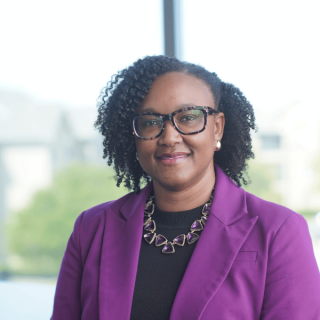
Torrie Cropps
Research Scientist and Lecturer, University of Texas at DallasDr. Torrie A. Cropps is a Research Scientist and Lecturer in the School of Natural Sciences and Mathematics at The University of Texas at Dallas where her research focuses on equity in STEM faculty hiring.
Her teaching includes environmental justice, history and leadership courses. Cropps' research interests include the socialization, mentoring and advising of graduate students, classroom community and inclusive pedagogy and leadership development.
Her experience being hard of hearing and neurodivergent contributes to her steadfast commitment to inclusive education.

Laureen Summers
Project Director, American Association for the Advancement of ScienceLaureen Summers is Project Director of the Entry Point! program, which is the signature program of the Project on Science, Technology and Disability at the American Association for the Advancement of Science (AAAS) and connects undergraduate and graduate students with disabilities to partners in industry, government and university research programs for consideration of placement in summer internships.
She hosts a gathering of students and professionals with disabilities at the annual Emerging Researchers National Conference (ERN) to discuss issues of STEM education and careers. Associated with the project since 1992, Summers studied Liberal Arts at Cazenovia College in New York and has taken coursework in Special Education and Teaching at the George Washington University.
A woman with cerebral palsy, she has contributed to several publications and conferences focusing on disability for over 30 years.
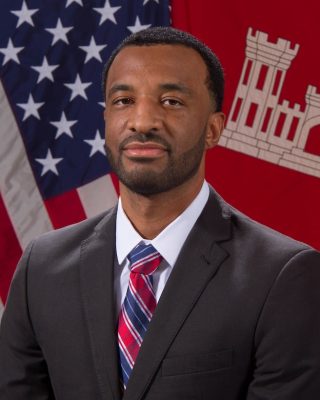
Quincy Alexander
Director, Alexander Business SolutionsQuincy G. Alexander is a civil engineer dedicated to fostering strategic partnerships, advancing engineering education and promoting industry-academia collaboration.
Through his work, he aims to bridge the gap between academic institutions and industry needs, ultimately enhancing the preparation and success of future engineers.
From Checklists to Readiness: Using Assessment to Anchor Your Accreditation Review
ABET accreditation visits come around every few years, but effective assessment and evaluation are engines that drive improvement in student learning. By adopting best practices, programs can make evidence gathering for ABET Criteria 2, 3, and 4 more seamless and less stressful. This session dives into actionable assessment strategies designed to help programs confidently anchor preparations for their next accreditation review. Presenters will share practical, field-tested tips and a candid ‘do this, not that’ playbook, so participants gain fresh insights and avoid common and unnecessary stumbling blocks as they prepare for their next review.
Learning Objectives
At the end of this session, participants will be able to:
- Identify what types of evidence are needed to help demonstrate compliance with ABET criteria and the Accreditation Policy and Procedures Manual.
- Recognize key aspects of their CI that simplify preparation for accreditation reviews.
ABET accreditation visits come around every few years, but effective assessment and evaluation are engines that drive improvement in student learning. By adopting best practices, programs can make evidence gathering for ABET Criteria 2, 3, and 4 more seamless and less stressful. This session dives...
Daina Briedis
Adjunct Director, Professional Programs, ABETDaina Briedis is Associate Professor Emerita of Chemical Engineering and Materials Science at Michigan State University. She served as her program’s and college’s assessment coordinator for over 20 years across the span of four accreditation reviews including an early EC2000 visit.
Dr. Briedis has been a Lead Facilitator for ABET Program Evaluator training for eight years and was involved in the early design of the training program. Over the past 35 years, Daina has served ABET as a program evaluator for AIChE, a team chair and member of the Engineering Accreditation Commission (EAC), the first chair of the EAC Training and Materials Development Committee, an EAC Executive Committee member and a member of the ABET Board of Directors.
She was a program evaluator on one of the very first EC2000 visits and subsequently chaired several new criteria visits. She is currently an Adjunct Director of Professional Development at ABET, Inc. wherein she facilitates and helps design ABET's assessment workshops. Dr. Briedis is active nationally and internationally as a consultant in engineering accreditation and is a Fellow of ABET, ASEE and the AIChE.
Larraine Kapka
Professor Emeritus, Sinclair CollegeLarraine Kapka is a Professor Emeritus at Sinclair College in Dayton, Ohio, USA. A licensed Professional Engineer in the State of Ohio, her disciplinary specialty is heating, ventilating and air conditioning.
She served in the Air Force and spent 20 years in industry before moving to academia full-time. She led several ABET-accredited programs at Sinclair College and is currently in her 7th year on the ABET Board of Directors. She also helps design and deliver ABET Program Evaluator Training. As a practicing engineer, she was named “Energy Manager of the Year” by the Department of Energy and received a national Federal Energy Efficiency award.
As an academic, she received the Rousche Excellence in Teaching award from the League for Innovation. Besides her work in ABET, she remains active in both ASHRAE and ASME.
Discussion Den: Ask Me Anything – Closing Plenary “Idea Spotlights”
Continue the conversation sparked during the Closing Plenary in this interactive “Ask Me Anything” session. Designed as a follow-up to the fast-paced Idea Spotlights, this informal discussion den provides attendees with the opportunity to engage directly with plenary presenters, ask deeper questions and explore practical implications of the ideas shared.
Building on themes of partnership-driven innovation, emerging learning pathways, microcredentials and workforce alignment, this session creates space for candid dialogue, cross-sector exchange and actionable insight. Participants are invited to probe further, challenge assumptions and collaborate on how bold ideas can translate into meaningful, scalable impact beyond the symposium.
Continue the conversation sparked during the Closing Plenary in this interactive “Ask Me Anything” session. Designed as a follow-up to the fast-paced Idea Spotlights, this informal discussion den provides attendees with the opportunity to engage directly with plenary presenters, ask deeper questions and explore practical...
Jessica Silwick
Chief Financial Officer, Chief Operating Officer, ABETJessica Silwick is ABET’s CFO/COO. She is responsible for developing ABET’s financial management strategy and the integrity of the financial information. She leads communications and marketing, professional offerings, operations, HR and Lead Internal Auditor. She previously worked for large organizations in manufacturing, pharmaceutical and energy fields.
Her bachelor’s in accounting is from University of Notre Dame of Maryland and an MBA from University of North Carolina, Kenan-Flagler School of Business. She is an active Certified Public Accountant, a Certified Association Executive and has professional certificates from Yale and Cornell.
She was recognized as a 2022 top 50 CFOs by OnCon ICON Awards, and won the AICPA’s, Emerging Leader Award in 2015.
Yash Tadimalla
Computing Innovation (CI) Fellow, Computing Research Association (CRA)Sri Yeswanth (Yash) Tadimalla holds a Ph.D. in Computing and Information Systems with an interdisciplinary focus in Sociology. Dr. Tadimalla’s research agenda examines how human identity impacts interactions with technology and learning experiences, particularly within the contexts of Artificial Intelligence (AI) and Computer Science (CS) education. His contributions include several socio-technical frameworks: the Human-AI Interaction Ecosystem Framework, the AI Identity Boundary Object model—which examines how identity shapes the creation, perception, and use of AI—and the Higher Education AI Readiness (HEAIR) Framework. His work on universal AI Literacy advocates a shift from techno-centric AI education to an interdisciplinary, socio-technical model. As the Global Focal Point for the United Nations Major Group for Children and Youth (UNMGCY) Science-Policy Interface, He advocates globally for equitable access to STEM education, mental health, gender/sexual and reproductive health rights (SRHR), and sustainable human-centered technology development and deployment. He coordinates youth and civil society participation in advocacy mechanisms and policy engagements for high-level meetings within the ECOSOC cycle, including the STI Forum, Partnership Forum, Youth Forum, High-Level Political Forum (HLPF), and United Nations General Assembly (UNGA). He has presented his work as a keynote speaker and researcher at distinguished international conferences (ASEE, ACM-SIGCSE, IEE-FIE, AAAI, UN) across diverse global locations in 20+ countries.
Jason Blackstock
Founder & CEO, How to Change the WorldDr Jason Blackstock is the founder and CEO of How to Change the World – a social enterprise that he spun out from University College London (UCL). How to Change the World is a social enterprise transforming careers to create a sustainable future through online experiential learning programs – while building the tech to revolutionise online experiential learning at scale.
Blackstock's previous experience spans quantum physics research; silicon valley tech development; sustainability, technology & innovation policy; and higher education innovation & leadership. Since the mid-2000s, he has taught, provided policy advice and led research from universities and think tanks such as Harvard, Oxford, the Centre for International Governance Innovation, and the International Institute for Applied Systems Analysis. Jason was the Founding Head of UCL STEaPP (2013-18), and currently serves as a director or advisory board member for numerous organisations, including MIT IDSS and We Make Change.
Davy McDowell
Chief Executive Officer, NCEESDavy McDowell, P.E. is the Chief Executive Officer of NCEES. In this role, he serves as secretary of the board of directors and chief employed officer of NCEES, with authority over its daily operations.
Before he was appointed CEO of NCEES in fall of 2024, McDowell served NCEES as the Chief Operating Officer from 2009 until being named CEO. Prior to that, he served NCEES as an Exam Development Engineer and as the Director of Professional Services.
McDowell stated his career with Duke Energy Company as an Agricultural Engineering Representative where he was employed for 10 years.
McDowell, who is a licensed engineer in South Carolina, earned bachelor’s and master’s degrees in agricultural engineering from Clemson University.
Paul Gilbert
CEO, QuanserAs the CEO of Quanser since 2002, Paul Gilbert oversees the strategic development of solutions geared towards improving the quality of engineering education and research in the global academic community. Paul is passionate about bringing hands-on experiments into universities, enabling students to gain real world experience and graduate as the strongest and most influential generation of engineering leaders.
Paul regularly travels around the world delivering keynote presentations and meeting with senior engineering educators. He is also as an active participant with global academic leadership organizations, including IFEES, GEDC, WEEF, IUCEE, and ASEE.
Paul has over two decades as a senior executive in SME companies in North America. He brings wealth of international experience developing global partner relationships and major R&D oriented projects in the packaging, aerospace and energy management sectors.
Paul holds an MBA from the Richard Ivey School of Business in Canada as well as a Bachelor of Mechanical Engineering from the University of Southampton, U.K.
In addition to his day job, Paul has been an active youth mentor in a number of programs designed to develop young minds and promote STEM education. Currently he is active with the NEXT 36 Entrepreneurial Development program. Paul is also an avid cyclist and together with his team has raised over $250,000 for the Princess Margaret Cancer Centre in the last 5 years with the Ride to Conquer Cancer.
Continuous Improvement Plans from Scratch
A key to a quality educational program is a clear, concise, and systematic continuous improvement plan. However, sometimes it’s not clear where to start or how to use the information once the plan is implemented. In this session, attendees will receive pointers on how to start, structure and implement a continuous improvement plan.
Learning Objectives
By the end of this session, attendees will:
- Identify the importance of a well-documented continuous improvement process.
- Analyze the basic elements of a continuous improvement plan that best fits their program/institution.
- Recognize the need to evaluate their continuous improvement plan.
A key to a quality educational program is a clear, concise, and systematic continuous improvement plan. However, sometimes it’s not clear where to start or how to use the information once the plan is implemented. In this session, attendees will receive pointers on how to...
Kevin Huggins
Professor of Computer Science and Data Science, Harrisburg University of Science and TechnologyKevin Huggins, Ph.D., is a Professor of Computer and Data Science at Harrisburg University of Science and Technology. He also serves as the Interim Chair of the Department of Computer Science as well as the Executive Director of the Data Analytics Institute.
Dr. Huggins has also served as a commissioner for the Computing Accreditation Commission of ABET and is currently a Senior IDEAL Scholar, facilitating workshops on assessment throughout the US and internationally.
In addition to his bachelor's degree from West Point, Kevin also holds an M.S. and Ph.D. in Computer Science from the Naval Postgraduate School in Monterey, California, and MINES ParisTech in France, respectively.
Tips for Writing Good Self-Study Reports
Executive committee members from each commission will discuss the various elements of Self-Study Reports (SSRs), important content areas and frequently asked questions about the preparation and review processes for the SSRs. The discussion will also include recommendations for the SSR format and content from the lens of the reviewer.
Learning Objectives
Participants will gain an increased understanding of best practices for drafting their Self-Study Reports including suggested elements for content, style and format.
Executive committee members from each commission will discuss the various elements of Self-Study Reports (SSRs), important content areas and frequently asked questions about the preparation and review processes for the SSRs. The discussion will also include recommendations for the SSR format and content from the...
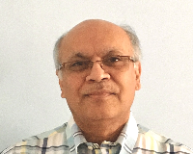
Prahlad Murthy
Professor of Civil & Environmental Engineering and Director of the Office of Global Engagement, Wilkes UniversityPrahlad Murthy is a Professor of Civil and Environmental Engineering and Director of the Office of Global Engagement at Wilkes University, Wilkes-Barre, PA. He is a professional engineer registered in Pennsylvania and Delaware and is a Board-Certified Environmental Engineer (BCEE).
He has been associated with ABET since 2005, serving in various roles including Program Evaluator (PEV), Team Chair (TC), Commissioner and Executive Committee (EXCOM) member.
Jenny Amos
Teaching Professor, Bioengineering, University of Illinois at Urbana-ChampaignJenny Amos is a Teaching Professor in Bioengineering at the University of Illinois Urbana-Champaign. She is an AIMBE Fellow, BMES Fellow, BMES Board of Director Member, ABET Commissioner, two-time Fulbright Specialist in engineering education and has won multiple awards and recognitions for her teaching and scholarship of teaching.
Amos was also the lead investigator for the National Science Foundation Revolutionizing Engineering Departments award for Illinois, leading efforts to innovate assessment practices for engineering toward producing more holistic engineers. Amos has over a decade’s worth of experience leading curriculum reform implementing robust assessment strategies.

Scott Murray
Past Chair, CAC, ABETScott Murray is a Senior Data Engineering Director for Procore, a construction software and data organization. Prior to the role at Procore, Murray spent 17 years at HCA Healthcare where he held several roles including Senior Manager of Business Intelligence, Business Intelligence DBA and Business Intelligence Architect. He also teaches, in an adjunct role, Information Systems classes for Kennesaw State University.
He has been a Team Chair and Program Evaluator for ABET for the past 15 years and most recently was Chair of the Computing Accreditation Commission; previously he co-chaired the Data Science initial program criteria subcommittee, which created new data science criteria for CSAB and ABET.
Additionally, Murray is a CSAB Fellow and a Representative Director for CSAB.

Mark Lower
Past Chair, ETAC, ABETMark Lower is currently a Program Manager/Mechanical Engineer at ORNL. He has several publications related to boiler, pressure vessel, and pipeline safety and position papers regarding regulatory applications. He has extensive experience in implementing contemporary design, construction and process practices, including several technical reports regarding material and fabrication practices intended to increase performance or extend design life.
Mark is a graduate of the University of Tennessee with a Ph.D. in Mechanical Engineering and a registered Professional Engineer in the state of Tennessee.
He is the past chair of the Engineering Technology Accreditation Committee (ETAC) and an ASME Fellow.
Supporting the Next Generation of Engineers
NCEES is committed to advancing engineering and surveying licensure to safeguard the health, safety, and welfare of the public. Attendees will learn about the Fundamentals of Engineering (FE) exam—a first step on the path to professional licensure designed for recent graduates and students close to completing an undergraduate engineering degree. The session will also highlight the educator resources NCEES makes available to academic programs, including free subject-matter reports that break down FE exam performance data for students and graduates. If you are an educator looking to strengthen program outcomes or promote the value of earning the P.E. credential, this session offers practical insights and tools to support your work.
Learning Objectives
Attendees will leave with:
- A better understanding of the FE exam and its role in the licensure pathway
- Knowledge of NCEES educator resources and how to use them for program assessment
- Strategies for promoting the value of licensure to students and the broader public
NCEES is committed to advancing engineering and surveying licensure to safeguard the health, safety, and welfare of the public. Attendees will learn about the Fundamentals of Engineering (FE) exam—a first step on the path to professional licensure designed for recent graduates and students close to...
Davy McDowell
Chief Executive Officer, NCEESDavy McDowell, P.E. is the Chief Executive Officer of NCEES. In this role, he serves as secretary of the board of directors and chief employed officer of NCEES, with authority over its daily operations.
Before he was appointed CEO of NCEES in fall of 2024, McDowell served NCEES as the Chief Operating Officer from 2009 until being named CEO. Prior to that, he served NCEES as an Exam Development Engineer and as the Director of Professional Services.
McDowell stated his career with Duke Energy Company as an Agricultural Engineering Representative where he was employed for 10 years.
McDowell, who is a licensed engineer in South Carolina, earned bachelor’s and master’s degrees in agricultural engineering from Clemson University.
Coordinating and Planning a Multi-Program Visit
Preparing for an ABET accreditation visit is always a demanding endeavor, but coordinating a multi-program visit introduces an additional layer of complexity. This session will provide a practical roadmap for organizing and executing a successful multi-program review that ensures consistency, efficiency, and institutional alignment with ABET expectations.
Drawing on lessons learned from recent multi-program visits involving multiple engineering and computing programs, the presentation will outline a multi-year planning timeline and demonstrate how structured collaboration between programs and college leadership can streamline the process. Participants will see examples of effective tools and templates that help maintain quality and consistency across all programs.
The session will also highlight logistical considerations specific to multi-program site visits. Emphasis will be placed on communication strategies, proactive issue tracking, and post-visit response coordination.
Attendees will leave with actionable examples and planning tools that can be adapted to their own institutions, helping them feel confident and prepared for their next ABET visit—no matter how many programs are involved.
Learning Objectives
- Design a coordinated timeline for preparing and executing a multi-program ABET visits.
- Implement shared tools and communication structures that enhance cross-program collaboration.
- Apply proven strategies and lessons learned to anticipate and manage common challenges.
Preparing for an ABET accreditation visit is always a demanding endeavor, but coordinating a multi-program visit introduces an additional layer of complexity. This session will provide a practical roadmap for organizing and executing a successful multi-program review that ensures consistency, efficiency, and institutional alignment with...
James Warnock
Adjunct Director, Professional Programs, ABETDr. James N. Warnock is a professor and the Associate Dean in the Jere W. Morehead Honors College at the University of Georgia, Athens, USA. Prior to joining the Morehead Honors College in 2024, Dr. Warnock served as chair of the School of Chemical, Materials and Biomedical Engineering in the College of Engineering, a position he held since 2017.
Dr. Warnock has conducted research in engineering education and has earned international acclaim for his work using problem-based learning to enable students to develop professional skills. He currently serves as the director for Engineering Workforce Development for the NSF Engineering Research Center in Cellular Manufacturing Technologies (CMaT).
Dr. Warnock holds a bachelor’s degree in biological science from the University of Wolverhampton, United Kingdom. He earned a master’s in biochemical engineering and a doctorate in chemical engineering from the University of Birmingham. He was a postdoctoral research fellow for the Georgia Institute of Technology/Emory University Center for the Engineering of Living Tissues.
Jenny Amos
Teaching Professor, Bioengineering, University of Illinois at Urbana-ChampaignJenny Amos is a Teaching Professor in Bioengineering at the University of Illinois Urbana-Champaign. She is an AIMBE Fellow, BMES Fellow, BMES Board of Director Member, ABET Commissioner, two-time Fulbright Specialist in engineering education and has won multiple awards and recognitions for her teaching and scholarship of teaching.
Amos was also the lead investigator for the National Science Foundation Revolutionizing Engineering Departments award for Illinois, leading efforts to innovate assessment practices for engineering toward producing more holistic engineers. Amos has over a decade’s worth of experience leading curriculum reform implementing robust assessment strategies.
Continuous Improvement: Launching the Decennial Review of ABET’s Engineering Accreditation Commission’s (EAC) Non-Harmonized Criteria
In 2023, the ABET Engineering Accreditation Commission (EAC) began a comprehensive review of its continuous improvement processes to ensure the engineering accreditation criteria remain well-defined, consistently applied, and responsive to global practice. Building on that effort, the EAC has launched the decennial review of the non-harmonized Criteria—Criterion 3 (Student Outcomes), Criterion 5 (Curriculum), and Criterion 6 (Faculty). The review seeks to clarify definitions, align expectations with emerging technologies such as artificial intelligence and cybersecurity, and maintain relevance to workforce and educational needs worldwide. The process follows a ten-year review cycle supported by annual “pulse-checks” that collect input from institutions, volunteers, and professional societies.
This session invites Symposium participants to help shape the next generation of Criteria 3, 5, and 6 by raising awareness of the review, sharing the planned timeline and engagement opportunities, and gathering early feedback from the ABET community. Through discussions led by the respective committee chairs, participants will explore the clarity of current outcomes, the evolving definition of engineering design, and how emerging issues such as AI, cybersecurity, and modern tools influence accreditation. Input from this dialogue will inform the 2026–27 stakeholder survey and future revisions.
Learning Objectives
- Explain the purpose and timeline of ABET EAC’s decennial review of Criteria 3, 5, and 6.
- Assess the clarity and relevance of Criteria 3, 5, and 6.
- Share feedback to guide the 2026–27 stakeholder survey and future engagement activities.
In 2023, the ABET Engineering Accreditation Commission (EAC) began a comprehensive review of its continuous improvement processes to ensure the engineering accreditation criteria remain well-defined, consistently applied, and responsive to global practice. Building on that effort, the EAC has launched the decennial review of the...

Teri Reed
Director and Professor, University of OklahomaDr. Teri K. Reed is a member of the EAC Executive Committee and is the current Chair of the Criteria Committee.

Andrew Smith
Department Chair and Professor, US Naval AcademyDr. Andrew Neil Smith is a member of the EAC Executive Committee and is the current Co-Chair of the Criteria Committee.
COSMOS: Innovation and Entrepreneurship with Purpose
COSMOS, the Center for Innovation and Entrepreneurship at Universidad de Las Américas (UDLA), exemplifies how higher education can foster purposeful partnerships that generate social and economic impact. Recognized by the World Economic Forum for its contribution to Latin America’s innovation ecosystem, COSMOS connects academia, industry, and society to co-create sustainable solutions.
Engineering students, mentors, and faculty from across the College of Engineering and Applied Sciences actively participate in COSMOS programs and national innovation competitions, where they collaborate with industry partners to design, test, and scale transformative ideas. These teams have achieved recognition and awards for their creativity, technological innovation, and entrepreneurial spirit. Through mentorship, alliances, and interdisciplinary collaboration, COSMOS empowers participants to turn projects into prototypes, startups, and research-based ventures that address real-world challenges.
This presentation will showcase the COSMOS framework, successful startup cases, and the mechanisms through which UDLA integrates entrepreneurship and innovation into academic programs. Participants will learn how to replicate this ecosystem to promote inclusion, sustainability, and cross-sector engagement consistent with ABET’s vision of partnership-driven progress.
Learning Objectives
Attendees will learn how university innovation ecosystems like COSMOS can drive purposeful partnerships, enhance student innovation capacity and strengthen ABET-aligned interdisciplinary collaboration.
COSMOS, the Center for Innovation and Entrepreneurship at Universidad de Las Américas (UDLA), exemplifies how higher education can foster purposeful partnerships that generate social and economic impact. Recognized by the World Economic Forum for its contribution to Latin America’s innovation ecosystem, COSMOS connects academia, industry,...
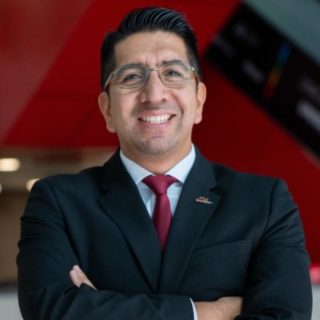
Ángel Jaramillo-Alcázar
Dean, College of Engineering and Applied Sciences, Universidad de Las AméricasÁngel Gabriel Jaramillo Alcázar, PhD, is Dean of the College of Engineering and Applied Sciences at Universidad de Las Américas (UDLA), Ecuador, and a Senior Member of IEEE. He holds a Doctorate in Computer Science from the University of Alicante, Spain, and has over 15 years of experience in higher education. Ángel has served as an evaluator for higher education institutions at the national level, contributing to accreditation and quality assurance. He leads educational innovation initiatives such as the Micro-Credential and UDLA’s Learning Itineraries Project, which establishes competency-based micro-credentials developed by UDLA to strengthen professional skills and employability. His leadership aligns with ABET’s mission to promote continuous improvement, global collaboration, and lifelong learning in engineering education.
Program Criteria for Artificial Intelligence (AI), Machine Learning and Considering AI across the Criteria
ABET's Computing Accreditation Commission (CAC) approved the proposed program criteria for Artificial Intelligence, Machine Learning, and similarly named computing programs for public review and comment. CSAB and the CAC will review all feedback and make adjustments accordingly prior to any final approvals in the fall of 2026. Additionally, CSAB and the CAC are considering AI across computing program criteria and are seeking public input. This “engaged discussion session” is one (and perhaps the best) way to provide that feedback and input directly to those responsible for collecting and analyzing it. You can find all of the details regarding the Program Criteria Proposal for Artificial Intelligence, Machine Learning, and similarly named programs in Section V.
Learning Objectives
Gain familiarity with the proposal for Program Criteria AI, ML and similarly named computing programs, provide feedback about all aspects of the proposed criteria and submit input about AI across computing program criteria.
ABET’s Computing Accreditation Commission (CAC) approved the proposed program criteria for Artificial Intelligence, Machine Learning, and similarly named computing programs for public review and comment. CSAB and the CAC will review all feedback and make adjustments accordingly prior to any final approvals in the fall...
Shari Plantz-Masters
2025-26 Chair, CAC, ABETDr. Shari Plantz-Masters is a Professor of Software Engineering in the Anderson College of Business and Computing at Regis University in Denver. She brings a unique mix of industry experience and academic leadership to her work.
Before joining academia, she spent years at U S WEST’s Research and Development Labs, leading teams that created pioneering technologies such as Voice Messaging, early Internet services, and some of the first Business Video Network applications. She later became Vice President of Network Planning, overseeing the Public Switched Network, after directing the marketing team that launched conferencing services.
Dr. Plantz-Masters also founded a software development and consulting firm before moving into higher education. At Regis, she served as founding Academic Dean of both the College of Computer & Information Sciences and the Anderson College of Business and Computing. She currently chairs ABET’s Computing Accreditation Commission and leads the Center for the Common Good Network, which connects academia, industry, and government to use technology for societal benefit.
Mihaela Sabin
Professor, University of New HampshireDr. Mihaela Sabin is Professor of Computer Science at the University of New Hampshire. Dr. Sabin’s current research focuses on computing education and curriculum development. Her teaching experience includes foundations of programming, data structures, software engineering, artificial intelligence and capstone project courses.
Dr. Sabin chaired the ACM/IEEE-CS task force who released the IT2017 curricular report. She serves as Vice President of CSAB, is a member of the ACM Education Board, serves as the ACM SIGCITE Vice-Chair for Education and represents SIGCITE on the ACM Education Advisory Committee. She has also contributed to the AI field of constraint satisfaction and its application in network diagnosis and product configuration.
Dr. Sabin earned the degrees of M.S. in Computer Science from “Politehnica” University in Bucharest, Romania and M.S. for Teachers in College Teaching and Ph.D. in Computer Science from University of New Hampshire, USA.
Sherif Aly Ahmed
CAC ExCom Member-at-Large, ABETSherif G. Aly Ahmed is a professor and former Chair of the Department of Computer Science and Engineering at the American University in Cairo (AUC). He has held several leadership roles at AUC, including vice-chair of the University Senate, associate dean for Graduate Studies and Research in the School of Sciences and Engineering and director of the PhD program.
He also chaired the AUC Council of Information Management. Beyond AUC, Dr. Aly serves as an Executive Committee member of the Computing Accreditation Commission (CAC) of ABET and chairs its Criteria Committee. He was also a steering member of the steering committee for the ACM/IEEE/AAAI CS2023 taskforce.
In addition to his academic leadership, Dr. Aly has significant industry experience, having worked with General Dynamics, Telcordia Technologies, and as a guest researcher at the National Institute of Standards and Technology (NIST).
Andrew Phillips
Executive Director, CSAB Inc.Andrew Phillips is the Executive Director of Computing Sciences Accreditation Board (CSAB) Inc, the lead ABET member society for accreditation of degree programs in computing disciplines. Prior to that role, Dr. Phillips served from 2009-2023 as Academic Dean and Provost at the U.S. Naval Academy and was a tenured Professor of Computer Science.
He has been a program evaluator for ABET since 1997, was a member of its Computing Accreditation Commission from 2004-2009 and served as the Computing Area Director and member of the ABET Board of Directors from 2018-2022.
He is also a past President of CSAB, a CSAB Fellow, an ABET Fellow, and continues to be a Team Chair/Program Evaluator for both ABET and the Middle States Commission on Higher Education in the United States.
Discussion Den: Ask Me Anything – Students in Accreditation
Programmatic accreditation is often framed as a process of faculty, administration and external evaluators ensuring program quality and compliance. Yet students, whose learning and preparation are at the heart of accreditation, are seldom engaged as meaningful contributors beyond limited touchpoints such as course assessments or accreditation-visit interviews. ABET Student Outcomes provide a ready foundation for student engagement, but the question remains: how can programs leverage that foundation to meaningfully include students in quality assurance and continuous improvement quality assurance and continuous improvement processes?
This interactive session invites participants to examine their universities’ students’ awareness of programmatic accreditation **—including their experiences participating in accreditation interviews during evaluation visits—**and learn from other institutions. Participants will engage in facilitated discussion to: (1) share the current state of student awareness and involvement in accreditation and program improvement before, during, and after accreditation reviews; (2) challenge conventional models of student engagement and brainstorm more ambitious roles; and (3) identify how leveraging Student Outcomes (SOs) already embedded in curriculum may serve as a point of entry for sustained student engagement.
Participants will leave with fresh perspectives on what student involvement could look like—not just through assessing their work or participating in interviews during evaluation visits, but through a set of questions and peer ideas to adapt in their own institutional context. Whether a program is in early accreditation preparation or deep in continuous improvement, this discussion offers new pathways to position students as active partners in accreditation across the full accreditation cycle and to connect.
Programmatic accreditation is often framed as a process of faculty, administration and external evaluators ensuring program quality and compliance. Yet students, whose learning and preparation are at the heart of accreditation, are seldom engaged as meaningful contributors beyond limited touchpoints such as course assessments or...

Makayla Headley
Ph.D. Candidate, Clemson UniversityMakayla Headley, a PhD student in Engineering and Science Education at Clemson University with a B.S in Chemical Engineering from the University of Maryland, Baltimore County.
She is an ABET intern studying engineering program accreditation, ABET quality assurance services and exploring engineering students' perspectives in quality assurance and programmatic accreditation.
ABET Recognition of Credentials: Lessons Learned from Early Adopters
This panel session will seek to unveil the lessons learned from our pilot participants of ABET's new quality assurance service, the Recognition of Credentials (ROC). The following questions will be addressed/discussed by the panelists.:
- Why did you choose to seek ABET credential recognition?
- What was your experience like with the process?
- What advice do you have for others who might consider seeking credential recognition?
Learning Objectives
- Learn more about the ROC service.
- Hear from our ROC pilot participants their experience with this independent quality assurance service.
- Better determine if this quality assurance service would be a benefit for your credential program.
This panel session will seek to unveil the lessons learned from our pilot participants of ABET’s new quality assurance service, the Recognition of Credentials (ROC). The following questions will be addressed/discussed by the panelists.: Why did you choose to seek ABET credential recognition? What was...
Melanie Diaz
Senior Manager, Professional Programs, ABETMelanie Diaz is a passionate experienced quality assurance, business development, and education leader, with a proven track record of expanding the reach of quality training programs globally. Her background in strategic partnerships and market analysis enables me to develop and deliver lifelong learning opportunities to address the skills gap across a multitude of industry sectors.
With over two decades of delivering innovative learning solutions in the non-profit, for-profit and academia space, her goal is to make a difference in student's lives, giving them access to quality education while ensuring alignment with organizational goals and mission-driven initiatives.
She also possesses a strong background in program design, development, delivery, and assessment, as well as marketing and sales expertise.
Carrie Berger
Executive Director, Purdue OnlineCarrie Berger is the Executive Director of Academic Affairs and Strategic Initiatives at Purdue University Online. Berger leads the Growth Catalyst team responsible for leading the development and delivery of online courses and programs to support workforce development in close collaboration with industry partners.
She is credited with building Purdue University’s innovative and first pan-university programs, the M.S. in Artificial Intelligence and M.S. in Data Science. For nearly a decade, Berger served as the Associate Dean for Research, Executive Associate Dean and Interim Dean of the Purdue Polytechnic Institute leading the transformation of research operations for the college.
Earlier, she spent eight years as the Assistant Dean for Research at the University Virginia School of Engineering and Applied Science focused on the growth of interdisciplinary research. Berger holds a Bachelor of Science in botany from the University of Oklahoma and a PhD in medicinal chemistry from Purdue University.
Janelle Simmonds
Global Enablement Lead, Siemens Digital Industries SoftwareJanelle Simmonds is passionate about advancing education at the intersection of academia and industry. She has used her expertise in university/industry partnerships, organizational strategy and online learning to positively impact institutions and individuals throughout the course of her career in both higher education and the corporate sector.
Simmonds is the Global Enablement Lead for the Academic and Future Workforce Strategy team at Siemens Digital Industries Software. She is responsible for content and credential strategy, enabling learners and educators with resources to prepare the future workforce with the skills needed to succeed in industry.
Before joining Siemens, she led the Partnership Development team at the University of Michigan’s Center for Academic Innovation and previously served as chief of staff to the Office of the Provost at the University of Michigan-Dearborn.
Before joining U-M, she spent 12 years overseas, working in international pathways education in the UK and Europe. During that time, she leveraged her former career in PR and public affairs to teach PR, marketing, advertising, writing and business development to students from across the world. At Kaplan International Pathways, she served as a lecturer and curriculum consultant, then as a program leader, college director, and associate director of the Center for Learning Innovation and Quality.
Simmonds holds a BA in Communications and International Studies, and an MA in Communication from Wayne State University. She also completed an executive coaching certification from the University of Michigan and provides coaching and consulting to empower leaders and teams in moving toward their goals.
Beyond Technical Mastery: Assessing Cross-Cutting and Professional Competencies in Higher Education
In this Discussion Den, participants are invited to ask questions related to those “elusive” student outcomes that are not directly measured by engineering knowledge or technical skills. The audience will engage in discussions and learn from experts about innovative practices in the assessment of cross-cutting and professional competencies including: the ability to communicate with a range of audiences; consideration of public health, welfare, and global, cultural, and social factors in design; making informed judgments based on professional and ethical considerations; functioning effectively in collaborative and inclusive teams; demonstrating leadership qualities; and developing the skills needed for lifelong learning.
Participants will leave this session with a range of solutions and a clear understanding of the assessment methods, measures, tools and exercises that are available to both develop and properly demonstrate student mastery of non-technical competencies. These tools can be used to develop specific performance indicators that enable the program to properly assess those outcomes.
Learning Objectives
- Propose and discuss innovative methods and measures to assess non-technical student outcomes,
- Identify common mistakes in design of assessment methods for cross-cutting and professional competencies,
- Develop an assessment toolbox of tools, measures, and outcome indicators for a broad range of student outcomes.
In this Discussion Den, participants are invited to ask questions related to those “elusive” student outcomes that are not directly measured by engineering knowledge or technical skills. The audience will engage in discussions and learn from experts about innovative practices in the assessment of cross-cutting...

Alaa Ashmawy
President, National Authority for Quality Assurance and Accreditation of Education (NAQAAE)Alaa Ashmawy is President of the National Authority for Quality Assurance and Accreditation of Education (NAQAAE), Egypt’s recognized accreditor of pre-college and higher education institutions and programs. He also serves as Special Advisor to ABET’s CEO and is an ABET workshop facilitator. Alaa has over 35 years of academic experience in the US, the UAE, and Egypt as a professor, academic administrator, and engineering education consultant. He served in leadership positions on the International Federation of Engineering Education Societies (IFEES), the Global Engineering Deans Council (GEDC), and the Arab Network for Quality Assurance in Higher Education (ANQAHE).
Going the Distance: Strategies for Delivering Academically Efficient and Effective Labs that Scale
Quanser has been a member of the academic community for almost 40 years, working with academic leaders from around the world to understand their needs. We have found that one unifying challenge faced almost universally is the management of academically efficient labs. The efficient allocation of resources (time, faculty, space, staff, etc.) without a significant impact on the quality of the student experience is essential, but often difficult to control with changing enrolment, budget, space and faculty.
In this presentation Peter Martin, Director of Engineering, will outline an approach to helping faculty and staff to increase the efficiency of their labs and programs by reducing the time needed to prepare and deliver lab experiences, minimizing the overall budget required to deliver multiple labs and hands-on experiences across programs, and optimizing the space required. Beyond those metrics, Quanser has developed a design philosophy focused on multidisciplinary applications. This approach has ensured that across different lab structures, pedagogical approaches, and strategic tactics the Quanser ecosystem of platforms are the most efficient way to increase lab efficiency.
Quanser has been a member of the academic community for almost 40 years, working with academic leaders from around the world to understand their needs. We have found that one unifying challenge faced almost universally is the management of academically efficient labs. The efficient allocation...

Peter Martin
Director of Engineering , QuanserPeter Martin is a robotics and engineering education specialist who has been a member of the Quanser R&D team for over fifteen years.
As Director of Engineering, Peter is responsible for ensuring that Quanser's vision and strategy continues a legacy of world-leading innovative and academically aligned products and services.
Before taking on the role of director, Peter was responsible for managing the Academic team, and the development of several notable ground-breaking products focused on diverse markets from robotics and mechatronics to educational platforms and tools
Leveraging Technology for Streamlined ABET Assessment and Continuous Improvement
This panel showcases three institutions that have leveraged technology to streamline ABET assessment and strengthen continuous improvement. Panelists will demonstrate practical, scalable approaches using widely available platforms. Examples include deploying standardized Canvas rubrics to ensure consistent scoring and efficient data export; implementing a custom Microsoft PowerApps system to collect measures data, analyze results, and support two way communication; and using Microsoft Teams as a centralized hub for planning, task delegation with automated reminders, collaborative editing, and maintaining auditable documentation. Attendees will gain adaptable strategies to enhance efficiency, transparency, and faculty engagement across their assessment and accreditation processes.
This panel showcases three institutions that have leveraged technology to streamline ABET assessment and strengthen continuous improvement. Panelists will demonstrate practical, scalable approaches using widely available platforms. Examples include deploying standardized Canvas rubrics to ensure consistent scoring and efficient data export; implementing a custom Microsoft...

Alok Verma
Professor and Department Head, Texas A&M University at GalvestonAlok Verma is the Powell Chair and Head of the Marine Engineering Technology Department at Texas A&M University in Galveston. Dr. Verma received his BS in Aeronautical Engineering from the renowned institution, IIT Kanpur, his MS in Engineering Mechanics and his Ph.D. in Mechanical Engineering from Old Dominion University.
Prof. Verma is a licensed professional engineer, a certified manufacturing engineer and has certifications in Lean Manufacturing and Six Sigma. Dr. Verma's scholarly publications include over 87 journal articles, papers in conference proceedings and more than 50 technical reports.
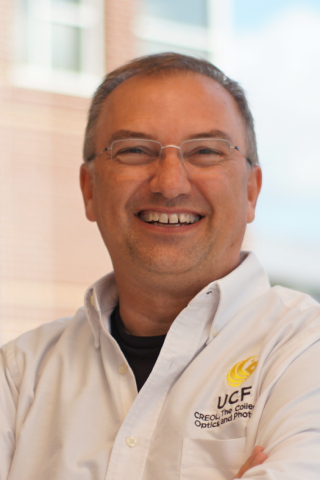
Mike McKee
Associate Director, University of Central FloridaMike McKee is currently the associate director for the Bachelor of Science in Photonic Science (BSPSE) and Engineering at CREOL, The College of Optics and Photonics, a position he has held since 2013 and is a joint program between the College of Engineering and Computer Science and the College of Optics and Photonics.
For nearly twenty years prior to this, he was a high school physics teacher, science instructional coach and conducted workshops for teachers and students alike. He also was the co-director for the Science Olympiad National Tournament, hosted at the University of Central Florida in 2012 and in 2014. This event required massive coordination of all the activities for the science activities that included hosting about 7000 people, opening and closing ceremonies and other program details.
From 1999 to 2018, he was the state director for the Florida Science Olympiad, coordinating activities at seven regional competitions, a state competition at UCF and the involvement of 200 schools across the state of Florida. Relevance: Mike has a strong background in assessment and pedagogy approaches. He has conducted multiple workshops on inquiry-based learning, development of assessment tools and is currently in the process of writing the third ABET Self-Study.
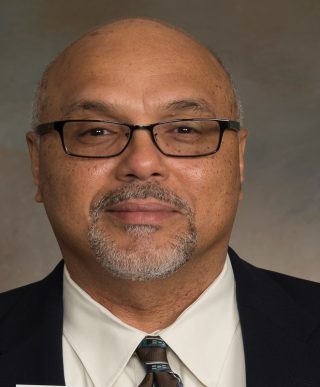
Paul Potier
Professor of Practice, Texas A&M University at GalvestonPaul Potier is a Professor of the Practice in the Marine Engineering Technology Department at Texas A&M University in Galveston. Dr. Potier received his B.S. in Electrical Engineering from Lamar University, his M.S. in Engineering from the University of Texas at Austin and his Ph.D. in Electrical Engineering from Prairie View A&M University.
Dr. Potier has over 24 years of corporate experience with IBM, ExxonMobil, and Motorola. He is also a certified Project Management Professional (PMP).

Evan O’Toole
Assistant Lecturer, University of WyomingEvan O’Toole, P.E., is an Assistant Lecturer in the Department of Civil and Architectural Engineering and Construction Management at the University of Wyoming. Since joining the faculty in 2020, he has served on the ABET Outcome 3 committee, contributing to the development and implementation of assessment strategies.
His recent work focuses on fostering purposeful partnerships with faculty to improve outcome data collection using Canvas. Prior to his academic role, Evan spent 14 years as a programming engineer at BridgeTech, Inc., where he specialized in developing structural analysis software for bridge engineers, including WYDOT’s BRASS suite.
His combined experience in engineering practice and outcome assessment provides a unique perspective on leveraging technology and collaboration to enhance accreditation processes.
Empowering Innovation with Purpose Through Curriculum, Startups and Industry Partnerships
This session demonstrates how Canadian University Dubai (CUD) advances innovation with purpose by transforming education into a continuum that connects classrooms, industries, and communities. Consistent with the CUD’s Vision and Mission, CUD has embedded purpose as a defining element of its academic culture. A game changer in this evolution was the 2013–2018 Strategic Plan, which positioned innovation, entrepreneurship, and partnership as institutional pillars - marking a decisive shift from traditional instruction to purpose-centered learning and engagement.
Building on this foundation, CUD implemented a comprehensive four Mentorship-based courses, 6-credit-hour in Innovation and Entrepreneurship sequence mandatory for all undergraduate students. Designed to transform ideas into purposeful startups and spin-offs, this curriculum embeds creative thinking, design innovation, and applied problem-solving across disciplines. Complementing this framework, the CUD Incubator and a new industry co-delivery model - in which 40% of program courses include more than 20% delivery by industry experts - create authentic, practice-based learning experiences that bridge academia and enterprise with purpose. These initiatives align with SDG 17, demonstrating how academic–industry collaboration drives impact.
The session engages academic leaders, educators, and assessment professionals in exploring how to embed innovation and purpose in education to foster stronger partnerships.
Learning Objectives
Participants will explore how integrating innovation, entrepreneurship, and industry partnerships advances ABET values of innovation, continuous improvement, and collaboration, demonstrating how academia and industry unite with purpose to achieve measurable educational and societal impact.
This session demonstrates how Canadian University Dubai (CUD) advances innovation with purpose by transforming education into a continuum that connects classrooms, industries, and communities. Consistent with the CUD’s Vision and Mission, CUD has embedded purpose as a defining element of its academic culture. A game...
Karim Chelli
President and Vice Chancellor, Canadian University DubaiProf. Karim Chelli is the founding President of Canadian University Dubai (CUD). An innovative entrepreneur in higher education, he previously held several strategic academic and administrative roles in Canada before establishing the first Canadian university outside of Canada, in the United Arab Emirates.
Prof. Chelli earned his Doctorate with distinction (Mention Très Honorable) from Louis Pasteur University, France. In Canada, he held senior roles at Laurentian University, Collège des Grands-Lacs, Centennial College and served as President and Board Member of the French Language Health Services Advisory Committee in Niagara Region and Vice-President and Board Member of the French-Canadian Association of Ontario, Niagara Chapter.
He has received numerous international honors and awards, including the World Chancellors and Vice Chancellors Congress Award for Outstanding Contribution to Education, the Institution Renowned for Academic Excellence Award at the 2019 Gulf Education Awards, and recognition among the 251 Fabulous Global Education Leaders by the World Education Congress. He also received Honorary Doctorates for Voluntary Work and in Business Administration, was appointed Ambassador of Hope for the International “Food and Treatment” Initiative and awarded the Medal of the City of Lyon.
Through his vision, CUD continues to strengthen global partnerships across Canada, Europe, Dubai, the Middle East and Southeast Asia.
Can AI Be Employed in Assessment Without Eroding Faculty Engagement?
Employing technology to save faculty time and effort in assessment is enticing. Discussions of leveraging AI in assessment often focus on its application for course-assessment purposes (e.g., giving students customized feedback and learning opportunities). The potential applications of AI for program assessment are obvious, attractive, and abundant: to create learning outcomes, rubrics, and tests; automating analyses; producing results graphics; generating reports; interpreting results; and providing improvement recommendations.
However, leveraging technology to lighten faculty workload is not without potential negative consequences. The question, “How can we employ AI in program assessment?” is easily answered but a different question from “Should or when should we use AI in assessment?” Such questions, however, fail to consider the downstream consequences of employing AI. Separate from the recognized issues regarding the accuracy and appropriateness of AI output are concerns regarding the impact of offloading critical aspects of assessment from faculty. There is a potentially significant and perhaps critical impact on faculty engagement and assessment culture where faculty have not been actively engaged in the development and implementation of the assessment process.
Robustness of the current culture is a key factor to consider in decisions about how AI should be employed. This session presents a model that factors the robustness of assessment culture.
Learning Objectives
Participants will:
- Consider the assessment process and the steps/tasks within it.
- Brainstorm specific uses of AI in the various steps of the assessment process to assist with tasks.
- Gauge the robustness of their own AOL culture.
- Consider the impact of the use of AI on the development
Employing technology to save faculty time and effort in assessment is enticing. Discussions of leveraging AI in assessment often focus on its application for course-assessment purposes (e.g., giving students customized feedback and learning opportunities). The potential applications of AI for program assessment are obvious, attractive,...
Karen Tarnoff
Associate Dean for Assessment and Assurance of Learning, East Tennessee State UniversityKaren, an Associate Professor of Management, serves as the Associate Dean for Assessment in the College of Business and Technology at East Tennessee State University. She coordinates assessment of student learning across eight diverse departments (i.e., Accountancy, Computing, Economics and Finance, Management and Supply Chain Management, Sport and Recreation Management, Marketing, Digital Media and Media and Communications) and multiple accreditors (ABET CAC, AACSB business and accountancy accreditation, NASAD, SACSCOC).
She has given numerous conference presentations on assessment-related topics and has served as a consultant to many schools helping them develop and refine their assessment processes and systems. Karen facilitates ABET assessment workshops and serves an AACSB Global Lead Facilitator having created assessment offerings for both accreditors. She also serves as co-chair of the AACSB’s Annual Assessment Conference.
Culminating Experiences: Purposeful Integration of Learning and Practice
Across all ABET-accredited programs, the curriculum must culminate in experiences that integrate knowledge and skills acquired throughout prior coursework to prepare graduates for professional practice and lifelong learning. Whether expressed as a comprehensive project, design experience, or sequenced set of applied learning activities, this culminating requirement embodies the intentional partnership between education and practice that lies at the heart of Advancing Innovation Through Partnership with Purpose.
This session will explore how culminating experiences serve as engines for purposeful innovation where faculty, students, employers, and communities collaborate to address authentic challenges and demonstrate the value of integrated learning. Panelists will share examples illustrating how these experiences promote inclusion, ethical reasoning, sustainability, and professional adaptability while reinforcing continuous improvement and lifelong learning. Participants will gain actionable strategies to design, assess, and document culminating experiences that not only satisfy accreditation expectations but also transform them into meaningful partnerships for impact, purpose, and enduring professional growth.
All commissions will be represented by the speakers.
Learning Objectives
After participating in this session, attendees will be able to identify the essential elements of culminating experiences that demonstrate the integration of knowledge, skills, and professional competencies; apply strategies to design and assess culminating projects that foster innovation, inclusion
Across all ABET-accredited programs, the curriculum must culminate in experiences that integrate knowledge and skills acquired throughout prior coursework to prepare graduates for professional practice and lifelong learning. Whether expressed as a comprehensive project, design experience, or sequenced set of applied learning activities, this culminating...
Mohsin Siddiqui
Associate Professor of Civil, Construction, and Environmental Engineering, University of DelawareDr. Mohsin K. Siddiqui is an Associate Professor and Interim Associate Chair of Undergraduate Education for Civil, Construction and Environmental Engineering at the University of Delaware, where he leads a study abroad program in Dubai.
Previously, he held faculty roles in the Middle East, focusing on program assessment and accreditation. A member of ASCE and CMAA, Dr. Siddiqui became an ABET PEV in 2013 and currently chairs the Forms Committee for ANSAC.
An ASCE ExCEEd Scholar (2019), he emphasizes student-centered learning. He holds a PMP certification, is a licensed PE in Wyoming, and completed a certificate in Instructional Design (2024) from the University of Delaware.
He is an ExCom member at large of the 2025-26 ABET ANSAC.
Keith V. Johnson
Vice President for Student Success, and Department Chair, East Tennessee State UniversityDr. Keith V. Johnson is Vice President for Student Success, professor and Chair of the Department of Engineering, Engineering Technology and Surveying at East Tennessee State University. He completed his undergraduate and master’s degree from North Carolina A&T State University and his Ph.D. from The Ohio State University.
Dr. Johnson is responsible for the establishment and implementation of the university’s student success strategic plan. In his academic department, he is also responsible for nine undergraduate and graduate programs. He assures current and innovative academic curriculums and is responsible for maintaining program accreditations including the Accreditation Board for Engineering and Technology (ABET) and the Council for Interior Design (CIDA).
He has been very active with the American Society for Engineering Education for over 30 years. During his tenure, he served on the ASEE education advisory board, in addition to serving as conference and program chair for the annual meetings. He also volunteers in other areas including, but not limited to, serving as moderator, diversity committee, scholarship committees and national initiatives sponsored by ASEE. In addition, he served as chair of the Engineering Technology Division and Engineering Technology Council of ASEE.
Previously, Dr. Johnson served as chair of the Engineering Technology Division of ASEE and currently serves as a program evaluator, commissioner and ExCom member for ETAC.

Kate Terwilliger
EAC ExCom Member-at-Large, Society Liaison, ABETKate Terwilliger leads Naval Architecture & Engineering Department at Naval Surface Warfare Center – Carderock Division, guiding research, design and support for naval vessels.
She also is currently serving as the (acting) Technical Director, the senior civilian providing leadership and continuity of the business and technical direction of the workforce. Previously, she held positions at Norfolk Naval Shipyard and Naval Sea Systems Command.
She holds degrees from Virginia Tech, Naval Postgraduate School and SUNY Maritime. She's involved with ABET as a member of the EAC ExCom and as the SNAME liaison.

Haidar Harmanani
CAC ExCom Member-at-Large, ABETDr. Haidar Harmanani is a professor of computer science and dean of the School of Arts and Sciences at the Lebanese American University. He holds a BS, MS and PhD in Computer Engineering from Case Western Reserve University, Cleveland, Ohio, completed in 1989, 1991 and 1994, respectively. Dr. Harmanani is professionally active in computing education circles, serving as a CAC ABET Commissioner, EAC Program Evaluator, and a member of ABET’s CAC executive committee. He is a senior member of the Institute of Electrical and Electronics Engineers (IEEE) and a senior member of the Association of Computing Machinery (ACM), and an NVIDIA Deep Learning Institute ambassador. He has served on several editorial boards and contributed to numerous international conferences, serving on the program committees for multiple IEEE conferences.
Using the Fundamentals of Engineering (FE) Exam for Effective Outcomes Assessment and Course Improvement
This session highlights best practices in outcomes assessment using the NCEES Subject Matter Reports to provide you with information about the strengths and weaknesses of students in your program. The FE Exam provides valuable, nationally normed data that allows you to understand how your students compare to those across the nation. The presentation will specifically focus on using the FE results as one of your program’s direct measures in assessing the ABET student outcomes. The same results can be used to help you improve your individual classes. Information packets will be provided.
Learning Objectives
Participants will learn how to effectively utilize the results of their students’ FE examinations for assessment of ABET student outcomes.
This session highlights best practices in outcomes assessment using the NCEES Subject Matter Reports to provide you with information about the strengths and weaknesses of students in your program. The FE Exam provides valuable, nationally normed data that allows you to understand how your students...
David Whitman
Professor Emeritus, University of WyomingDavid L. Whitman, Ph.D., P.E., F.ASEE is Professor Emeritus at the University of Wyoming. He is a past president of the National Council of Examiners for Engineers and Surveyors (NCEES) and an emeritus member of the Wyoming State Board of Registration for Professional Engineers and Professional Land Surveyors.
He has been involved with various NCEES committees and has been part of the FE exam preparation since 2001.

Grant Crawford
Professor of Mechanical Engineering, Quinnipiac UniversityGrant Crawford, Ph.D., P.E., F.ASEE, Colonel (retired) U.S. Army is a Professor Emeritus of Mechanical Engineering for the School of Computing and Engineering at Quinnipiac University.
He is a former Director of the Mechanical Engineering Program at the United States Military Academy at West Point, New York, USA. He has served as a Program Evaluator for ABET’s Engineering Accreditation Commission and a Commissioner and Team Chair for the Engineering Technology Accreditation Commission.
He has been a member of the Fundamentals of Engineering Exam Committee for the National Council of Examiners for Engineers and Surveyors (NCEES) since 2005 and has chaired the committee. He is currently serving as the immediate past-president for ASEE.
Applied and Natural Science Accreditation Commission (ANSAC) Town Hall
Culminating ABET Symposium 2026, each of ABET’s Accreditation Commissions will have an interactive town hall session. After a brief presentation, members of the respective commission’s volunteer leadership and its Adjunct Director(s) will open the floor for accreditation questions and discussions. Symposium attendees may participate in the town hall session of their choice.
Culminating ABET Symposium 2026, each of ABET’s Accreditation Commissions will have an interactive town hall session. After a brief presentation, members of the respective commission’s volunteer leadership and its Adjunct Director(s) will open the floor for accreditation questions and discussions. Symposium attendees may participate in...
Lu Yuan
2025-26 Chair, ANSAC, ABETDr. Lu Yuan, CIH, CSP, is Corporate EHS Manager of Performance Contractors, Inc. Before joining Performance Contractors in December 2023, he was Professor of Occupational Safety, Health, and Environment at Southeastern Louisiana University. He is an Adjunct Associate Professor in the Department of Environmental Health Sciences of the Tulane Celia Scott Weatherhead School of Public Health and Tropical Medicine.
Dr. Yuan served on the American Society of Safety Professionals (ASSP) Council on Academic Affairs and Research Educational Standards Committee from 2018 to 2022. He served as ASSP Academics Practice Specialty Administrator from 2017 to 2019 and ISOES (International Society for Occupational Ergonomics and Safety) Member at Large from 2018 to 2020. Dr. Yuan was awarded the William E. Tarrants Outstanding Safety Educator of the Year by ASSP in 2015. He received the Craft Workforce Development Champion Award from the Greater Baton Rouge Industry Alliance in 2016.
Dr. Yuan currently serves as Chair of the 2025-2026 ABET Applied and Natural Science Accreditation Commission (ANSAC).
Richard Olawoyin
2025-26 Chair-Elect, ANSAC; IDEA Council Chair, ABETDr. Richard Olawoyin, P.E., is a professor of engineering at Oakland University. He is a US Fulbright Scholar (alumnus), and has engaged students globally through teaching and research, particularly in four countries: China, Costa Rica, the Dominican Republic and the United States.
He has served ABET in various roles including serving as the current chair of the ABET Inclusion, Diversity, Equity, and Accessibility (IDEA) Advisory Council, chair-elect of ABET ANSAC, Team Chair, Training Support Facilitator for PEV candidates, and a PEV mentor. He received the ABET Fellow Award and Claire L. Felbinger Award for Diversity and Inclusion in 2025. He was awarded the ASSP Charles V. Culbertson Outstanding Award in 2019 and 2022 for his professional contributions.
Mary Lou Dunzik-Gougar
ANSAC ExCom Member-at-large, ABETDr. Mary Lou Dunzik-Gougar is professor of Nuclear Engineering and Associate Dean of the College of Science and Engineering at Idaho State University. She holds a doctorate in nuclear engineering and a master’s in environmental engineering from Penn State University, as well as a bachelor’s in chemistry from Cedar Crest College.With over 25 years in the nuclear field, Dunzik-Gougar has conducted research across various aspects of the nuclear fuel cycle, including waste form development, spent fuel processing, material characterization, and fuel cycle modeling. Her work has fostered national and international collaborations, including positions with PBMR Ltd in South Africa and EDF Energy in France, and consulting roles for the European Commission and International Atomic Energy Agency. She has led multi-institutional research teams at Idaho State University and Idaho National Laboratory.Dedicated to education, Dunzik-Gougar has developed and teaches undergraduate and graduate courses on nuclear physics, fuel cycles and radioactive waste management. Before graduate school, she taught high school science and mathematics for seven years.An active member of the American Nuclear Society (ANS) for three decades, Dunzik-Gougar served as ANS president from 2020-2021. In 2022, she joined the advisory committee for the Nuclear Fuels and Materials Complex at Idaho National Laboratory and was recognized as an Outstanding Engineering Alumna by Penn State College of Engineering.
Engineering Technology Accreditation Commission (ETAC) Town Hall
Culminating ABET Symposium 2026, each of ABET’s Accreditation Commissions will have an interactive town hall session. After a brief presentation, members of the respective commission’s volunteer leadership and its Adjunct Director(s) will open the floor for accreditation questions and discussions. Symposium attendees may participate in the town hall session of their choice.
Culminating ABET Symposium 2026, each of ABET’s Accreditation Commissions will have an interactive town hall session. After a brief presentation, members of the respective commission’s volunteer leadership and its Adjunct Director(s) will open the floor for accreditation questions and discussions. Symposium attendees may participate in...

Maureen Hart
Executive Ride Development Engineer, ETAC ExCom, ABETMaureen Hart is an engineering executive leader with a broad technical background in the fields of themed entertainment, aerospace and alternative energy. She is currently employed by Walt Disney Imagineering, which provides rides and shows for Disney theme parks, resorts and cruise ships. Her previous employers include Lockheed Skunk Works and Rockwell Energy Systems Group.
She has 11 years of volunteer experience with the Engineering Technology Accreditation Commission (ETAC) of ABET and is currently serving as a member of the ETAC Executive Committee and an ETAC Team Chair.
Michael Johnson
ETAC ExCom Member-at-large, ABETDr. Michael D. Johnson is a professor in the department of engineering technology and industrial distribution (ETID) at Texas A&M University. He also serves as interim associate provost for faculty success. Prior to joining the Provost’s team, Johnson was associate dean for inclusion and faculty success in the College of Engineering. Before joining the faculty at Texas A&M, he was a senior product development engineer at the 3M Corporate Research Laboratory in St. Paul, Minnesota. He is also a member of the Engineering Technology Accreditation Commission of ABET Executive Committee.
Johnson received his B.S. in mechanical engineering from Michigan State University in addition to his S.M. and Ph.D. from the Massachusetts Institute of Technology. Johnson’s research focuses on production economics, engineering education, and design tools. His research has been funded by the National Science Foundation, the Department of Energy, and industry. Johnson has over 100 peer reviewed publications and several patents.
Venancio Fuentes
2025-26 Chair, ETAC, ABETVenancio “Venny” L. Fuentes, P.E., is a retired professor from County College of Morris (CCM), a two-year community college in Randolph, NJ. He taught for nearly 30 years at CCM and served as the department chairperson for the Engineering Technologies/Engineering Science department for over 20 years.
His experience in ABET includes being on both sides of a visit as a department chairperson, program evaluator, team chair and statement editor. He continues to teach and is currently a full-time member of the faculty at Mohawk Valley Community College in Utica, NY. He has been an IEEE program evaluator since 2002.
He served on the IEEE Committee on Engineering Technology Accreditation Activities (CETAA) before joining the ABET Engineering Technology Accreditation Commission (ETAC) as a commissioner. He is presently serving as the Chair of the ETAC Executive Committee.
Before his teaching career, he was a systems engineer working on navigation systems for air, sea, and space applications.
Gary Clark
2025-26 Chair Elect, ETAC, ABETDr. Gary Clark is the chair elect and executive committee member of the Engineering Technology Accreditation Commission (ETAC) of ABET, and was a Program Evaluator (PEV) for the Engineering Accreditation Commission (EAC).
Dr Clark is a licensed professional engineer and a senior associate dean/professor emeritus with the College of Engineering at Kansas State University. He is also a Fellow of the American Society of Biological and Agricultural Engineers (ASABE).
Mark Lower
Past Chair, ETAC, ABETMark Lower is currently a Program Manager/Mechanical Engineer at ORNL. He has several publications related to boiler, pressure vessel, and pipeline safety and position papers regarding regulatory applications. He has extensive experience in implementing contemporary design, construction and process practices, including several technical reports regarding material and fabrication practices intended to increase performance or extend design life.
Mark is a graduate of the University of Tennessee with a Ph.D. in Mechanical Engineering and a registered Professional Engineer in the state of Tennessee.
He is the past chair of the Engineering Technology Accreditation Committee (ETAC) and an ASME Fellow.
Keith V. Johnson
Vice President for Student Success, and Department Chair, East Tennessee State UniversityDr. Keith V. Johnson is Vice President for Student Success, professor and Chair of the Department of Engineering, Engineering Technology and Surveying at East Tennessee State University. He completed his undergraduate and master’s degree from North Carolina A&T State University and his Ph.D. from The Ohio State University.
Dr. Johnson is responsible for the establishment and implementation of the university’s student success strategic plan. In his academic department, he is also responsible for nine undergraduate and graduate programs. He assures current and innovative academic curriculums and is responsible for maintaining program accreditations including the Accreditation Board for Engineering and Technology (ABET) and the Council for Interior Design (CIDA).
He has been very active with the American Society for Engineering Education for over 30 years. During his tenure, he served on the ASEE education advisory board, in addition to serving as conference and program chair for the annual meetings. He also volunteers in other areas including, but not limited to, serving as moderator, diversity committee, scholarship committees and national initiatives sponsored by ASEE. In addition, he served as chair of the Engineering Technology Division and Engineering Technology Council of ASEE.
Previously, Dr. Johnson served as chair of the Engineering Technology Division of ASEE and currently serves as a program evaluator, commissioner and ExCom member for ETAC.
Ilya Grinberg
Professor and Chair of Engineering Technology Department, SUNY Buffalo State UniversityDr. Ilya Grinberg is SUNY Distinguished Teaching Professor and Chair of Engineering Technology Department at SUNY Buffalo State University. He holds Kandidat Nauk degree (equivalent to Ph.D.) in Electrical Engineering from Moscow State University of Civil Engineering and qualification of an Electrical Engineer (equivalent to M.S. in Electrical Engineering) from the National University “Lviv Polytechnic”.
His research interests are in design automation, systems engineering, power systems, Smart Grid and microgrids and engineering education methodologies. He taught undergraduate courses and laboratories in power systems, electric machines, power electronics and senior design sequence. He established state-of the art joint Buffalo State University/University at Buffalo Smart Grid Laboratory, of which he is director.
He served as PI and co-PI on several grants and is a recipient of SUNY Buffalo State President’s Award for Excellence in Research, Scholarship, and Creativity (2012) and SUNY Chancellor’s Award for Excellence in Scholarship and Creative Activities (2016). He developed and revised multiple courses and leads departmental activities in ABET accreditation. He is currently Engineering Technology Accreditation Commission (ETAC) of ABET ExCom Member-at Large and served as team chair and program evaluator representing IEEE since 2005.
Berrin Tansel
2025-26 Vice-Chair of Operations, ETAC, ABETDr. Berrin Tansel is the vice-chair of operations and executive committee member of the Engineering Technology Accreditation Commission (ETAC) of ABET, and a Program Evaluator (PEV) for the Engineering Accreditation Commission (EAC). Dr. Berrin Tansel is an environmental engineer, researcher, author, educator and professor in the Civil and Environmental Engineering Department at Florida International University (FIU).
Dr. Tansel is a Diplomate of the American Academy of Water Resources Engineers and a Board-Certified Environmental Engineer by the American Academy of Environmental Engineers (AAEES). She is an elected fellow of the Water Environment Federation (WEF), the American Society of Civil Engineers (ASCE), and Environmental and Water Resources Engineers (EWRI).
Computing Accreditation Commission (CAC) Town Hall
Culminating ABET Symposium 2026, each of ABET’s Accreditation Commissions will have an interactive town hall session. After a brief presentation, members of the respective commission’s volunteer leadership and its Adjunct Director(s) will open the floor for accreditation questions and discussions. Symposium attendees may participate in the town hall session of their choice.
Culminating ABET Symposium 2026, each of ABET’s Accreditation Commissions will have an interactive town hall session. After a brief presentation, members of the respective commission’s volunteer leadership and its Adjunct Director(s) will open the floor for accreditation questions and discussions. Symposium attendees may participate in...
Shari Plantz-Masters
2025-26 Chair, CAC, ABETDr. Shari Plantz-Masters is a Professor of Software Engineering in the Anderson College of Business and Computing at Regis University in Denver. She brings a unique mix of industry experience and academic leadership to her work.
Before joining academia, she spent years at U S WEST’s Research and Development Labs, leading teams that created pioneering technologies such as Voice Messaging, early Internet services, and some of the first Business Video Network applications. She later became Vice President of Network Planning, overseeing the Public Switched Network, after directing the marketing team that launched conferencing services.
Dr. Plantz-Masters also founded a software development and consulting firm before moving into higher education. At Regis, she served as founding Academic Dean of both the College of Computer & Information Sciences and the Anderson College of Business and Computing. She currently chairs ABET’s Computing Accreditation Commission and leads the Center for the Common Good Network, which connects academia, industry, and government to use technology for societal benefit.
Scott Murray
Past Chair, CAC, ABETScott Murray is a Senior Data Engineering Director for Procore, a construction software and data organization. Prior to the role at Procore, Murray spent 17 years at HCA Healthcare where he held several roles including Senior Manager of Business Intelligence, Business Intelligence DBA and Business Intelligence Architect. He also teaches, in an adjunct role, Information Systems classes for Kennesaw State University.
He has been a Team Chair and Program Evaluator for ABET for the past 15 years and most recently was Chair of the Computing Accreditation Commission; previously he co-chaired the Data Science initial program criteria subcommittee, which created new data science criteria for CSAB and ABET.
Additionally, Murray is a CSAB Fellow and a Representative Director for CSAB.
Bruce McMillin
CAC ExCom Member-at-Large, ABETDr. Bruce McMillin is professor emeritus of computer science at the Missouri University of Science and Technology, where he worked for 34 years in cybersecurity research and teaching.
For the last 15 years, he has been an ABET volunteer, currently serves on the Executive Committee for the Computing Accreditation Commission (CAC) as Vice Chair of Operations and is chair of the program evaluator candidate training subcommittee.
He is a fellow of CSAB.

Bret Detillier
CAC ExCom Member-at-Large, ABETBret J. Detillier is an Instructional Professor teaching in the Computer Information Systems program at the University. He has been teaching in the CIS program at the University of Houston since 2005. Prior to this, Bret J. Detillier spent almost 25 years working in various roles within the IT Industry.
Bret became an Information Systems Program Evaluator in 2015. In 2020, he began serving as a Computing Accreditation Commission (CAC) Commissioner/Team Chair.
In the last five years, Bret has worked on the Criteria Committee and performed work on the Consistency Committee. He has recently joined the CAC Executive Committee, where he is also the Chair of the Policies and Documents Committee.
Sherif Aly Ahmed
CAC ExCom Member-at-Large, ABETSherif G. Aly Ahmed is a professor and former Chair of the Department of Computer Science and Engineering at the American University in Cairo (AUC). He has held several leadership roles at AUC, including vice-chair of the University Senate, associate dean for Graduate Studies and Research in the School of Sciences and Engineering and director of the PhD program.
He also chaired the AUC Council of Information Management. Beyond AUC, Dr. Aly serves as an Executive Committee member of the Computing Accreditation Commission (CAC) of ABET and chairs its Criteria Committee. He was also a steering member of the steering committee for the ACM/IEEE/AAAI CS2023 taskforce.
In addition to his academic leadership, Dr. Aly has significant industry experience, having worked with General Dynamics, Telcordia Technologies, and as a guest researcher at the National Institute of Standards and Technology (NIST).

Ruth Davis
CAC ExCom Member-at-large, ABETRuth Davis is Professor Emerita of Computer Science and Engineering at Santa Clara University, where she worked from 1979 until retirement in 2025. She has been recognized by the Association for Computing Machinery (Doctoral Dissertation Award in 1980, Distinguished Scientist since 2006), Society of Women Engineers (Distinguished Engineering Educator Award, 2020), and SCU (three endowed professorships, various presidential recognition and service awards and Faculty Senate Professor of the Year 2015).Davis’s research interests include formal methods, functional and relational programming and increasing the participation of underrepresented groups in engineering. She is currently serving on the Executive Committee of the Computing Accreditation Commission of ABET and its training committee.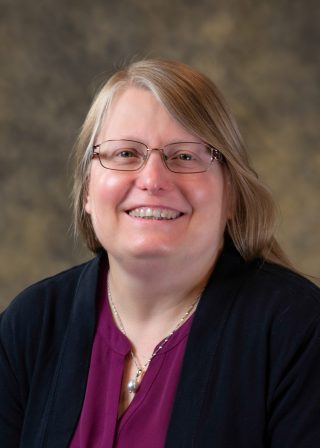
Sandra Gorka
CAC ExCom Member-at-Large, ABETSandra Gorka was a professor of computer science at Pennsylvania College of Technology for over 25 years. Her primary teaching focus was information technology and cybersecurity, and she served as the information technology department head for several years.
Gorka has been an ABET and CSAB volunteer since 2009 and is a member of the Computing Accreditation Commission Executive Committee.
She also served as a member of the CSAB Board of Directors and served as the CSAB Secretary/Treasurer for five years.

Edward Sobiesk
2024-25 Vice Chair of Operations, CAC, ABETDr. Edward Sobiesk is a Professor of Computer and Cyber Science in the Department of Electrical Engineering & Computer Science at the U.S. Military Academy.
With over 30 years of experience as an educator, leader and practitioner within the Cyber Domain, he has overseen multiple computing programs at West Point and managed a 200-person computer support directorate. His research interests include computing education, human-machine teaming, usable security and artificial intelligence.
Engineering Accreditation Commission (EAC) Town Hall
Culminating ABET Symposium 2026, each of ABET’s Accreditation Commissions will have an interactive town hall session. After a brief presentation, members of the respective commission’s volunteer leadership and its Adjunct Director(s) will open the floor for accreditation questions and discussions. Symposium attendees may participate in the town hall session of their choice.
Culminating ABET Symposium 2026, each of ABET’s Accreditation Commissions will have an interactive town hall session. After a brief presentation, members of the respective commission’s volunteer leadership and its Adjunct Director(s) will open the floor for accreditation questions and discussions. Symposium attendees may participate in...
Chris Taylor
2025-26 Chair, EAC, ABETDr. Chris Taylor is the Vice Chair of the Dwight and Dian Diercks School of Advanced Computing, Program Director for the Software Engineering housed within the school, and Professor at the Milwaukee School of Engineering.He is an enabler who enjoys working with others and seeing them succeed. He is a builder, enjoying anticipating needs, building solutions and, with the benefit of time, discovering all the ways they can be used productively. He is a people-person who values who he works with more than the work that he does. He is a proponent of persuasion who seeks to assert authority sparingly.Taylor is a Fellow of CSAB and currently serves as the chair of the Engineering Accreditation Commission of ABET.Sigurd Meldal
2025-26 Chair-Elect, EAC, ABETDr. Sigurd Meldal serves as CEO of Mostly Sunny, an IP Risk Management firm in Silicon Valley. The company works with technology companies in the security, telecommunications and network sectors to evaluate IP risks and to provide advice regarding how one may approach issues of IP exposure. He has testified on IP issues in federal and state courts, before the USPTO Patent Trial and Appeal Board, and at the U.S. International Trade Commission.
His work has been referenced in decisions by the U.S. Court of Appeals for the Federal Circuit. Prior to entering the private sector, Meldal had served as Department Chair at Cal Poly and SJSU and as Co-Director of Education at the NSF STC TRUST center at UC Berkeley. He has served the Engineering Accreditation Commission of ABET as program evaluator, commissioner and (currently) as Chair-Elect of the commission.
Mark Archambault
2025-2026 Vice Chair of Operations, EAC, ABETMark Archambault received his B.S. and M.S. in aerospace engineering from Florida Tech in 1992 and 1993. He then joined the Air Force Research Laboratory as a research scientist and earned his Ph.D. in aeronautics and astronautics from Stanford University in 1999.
In 2004, he joined the faculty of the aerospace engineering program at Florida Tech where he now holds the rank of Professor. Dr. Archambault later served as the Assistant Dean of Academics in the College of Engineering and Science and was appointed Associate Provost for Accreditation for the university in 2023.
In 2013, Dr. Archambault became an ABET PEV for aerospace engineering programs and an EAC Commissioner in 2017. He currently serves as the EAC Vice-Chair of Operations. His professional memberships include American Institute of Aeronautics and Astronautics (AIAA), American Society for Engineering Education (ASEE), and Institute for Liquid Atomization and Spray Systems (ILASS).
Navigating the General and Program Criteria for Computing Programs: An Interactive Workshop
Designed for faculty and administrators preparing for or undergoing accreditation reviews. Participants will deepen their understanding of ABET General and Program Criteria for computing programs, examine common pitfalls, and apply their knowledge in interactive breakout sessions. The workshop focuses on practical strategies for managing the self-study process, site visits and meeting accreditation requirements.
Designed for faculty and administrators preparing for or undergoing accreditation reviews. Participants will deepen their understanding of ABET General and Program Criteria for computing programs, examine common pitfalls, and apply their knowledge in interactive breakout sessions. The workshop focuses on practical strategies for managing the...
Andrew Phillips
Executive Director, CSAB Inc.Andrew Phillips is the Executive Director of Computing Sciences Accreditation Board (CSAB) Inc, the lead ABET member society for accreditation of degree programs in computing disciplines. Prior to that role, Dr. Phillips served from 2009-2023 as Academic Dean and Provost at the U.S. Naval Academy and was a tenured Professor of Computer Science.
He has been a program evaluator for ABET since 1997, was a member of its Computing Accreditation Commission from 2004-2009 and served as the Computing Area Director and member of the ABET Board of Directors from 2018-2022.
He is also a past President of CSAB, a CSAB Fellow, an ABET Fellow, and continues to be a Team Chair/Program Evaluator for both ABET and the Middle States Commission on Higher Education in the United States.
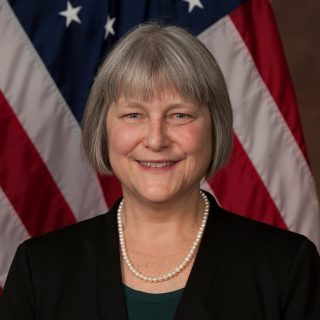
Jean Blair
Distinguished Professor of Innovation, United States Military AcademyJean Blair previously held positions as deputy to the Chief Academic Officer, director of the Computer Science Program and director of the Information Systems Engineering Program.
An ABET volunteer since the Computer Science Accreditation Commission (CSAC) merged with ABET, she has served as a program evaluator, team chair, commissioner, and on the Computing Accreditation Commission (CAC) executive committee, where she currently serves as the past chair.
She is a senior member of IEEE, a senior member of the Association for Computing Machinery and a member of both the Society for Industrial and Applied Mathematics and the American Society of Engineering Education. Jean was named both an ABET Fellow and a CSAB Fellow in 2023.

Cary Laxer
Professor Emeritus of Computer Science and Software Engineering, Rose-Hulman Institute of TechnologyCary Laxer is Professor Emeritus of Computer Science and Software Engineering at Rose-Hulman Institute of Technology in Terre Haute, Indiana. He earned his B.A. in computer science and mathematics from New York University and his Ph.D. in biomedical engineering from Duke University. His teaching specialties include international project collaboration, computer graphics, computer game development, data structures and computing fundamentals. Recent professional development efforts have focused on pedagogical concepts associated with students working on international collaborative open-ended projects.
Laxer is a Senior Member of ACM, a Life Senior Member of IEEE and a Member of ASEE. He has held numerous leadership roles with ACM's SIGCSE, ITiCSE, and CompEd conferences. He has served on the Education Committee of SIGGRAPH, including a term as chair of the computer science curriculum subcommittee. Laxer has served as a volunteer for ABET for almost 20 years, rising through the ranks as a Program Evaluator, Team Chair, Commissioner, and ExCom member. He currently serves as Chair of the Computing Accreditation Commission (CAC) of ABET. At Rose-Hulman, Laxer serves as the chapter adviser for the Rose Tech Chapter of Triangle Fraternity. For relaxation, Cary enjoys traveling, reading, the theatre, dark chocolate and a glass of good wine.
Fundamentals of Program Assessment Workshop
The Fundamentals of Program Assessment Workshop is an in-person workshop designed with a focus on small group interaction and individual assignments to introduce the context for program assessment, examine assessment processes, develop measurable outcomes and apply data collection and reporting methods. The exercises and examples are from associate’s, bachelor’s and/or tech-focused programs. These can be applied to other program types and/or timeframes.
This workshop will allow you to work in teams and ask questions of experienced facilitators.
The workshop prepares you to:
- Identify key elements of a functional assessment process.
- Clarify the similarities and differences between course and program assessment.
- Make student outcomes measurable with the development of performance indicators.
- Understand the methods to assess student outcomes.
- Develop rubrics as one method to score student performance in achieving student outcomes.
- Identify the pros and cons of various data collection methods.
- Decipher and report results.
The Fundamentals of Program Assessment Workshop is an in-person workshop designed with a focus on small group interaction and individual assignments to introduce the context for program assessment, examine assessment processes, develop measurable outcomes and apply data collection and reporting methods. The exercises and examples...
Christina Haden
Associate Teaching Faculty, Mechanical Engineering and Mechanics, Lehigh UniversityDr. Christina Viau Haden is Associate Teaching Faculty for the Mechanical Engineering and Mechanics Department at Lehigh University and the newly appointed Director of the First Year Rossin Engineering (FYRE) experience, which is reimagining how engineering education is approached in the first year. She led her department's ABET accreditation process, chaired the undergraduate curriculum committee and served as Associate Chair. In addition to a passion for teaching and curriculum innovation, she is also deeply committed to improving the retention rates of women in STEM through mentoring, retention programs and advising Lehigh's chapter of the Society for Women Engineers (SWE).

Catalina Plúa Morales
Head of the Office of Curriculum Design & International Accreditation and Professor of Education, Universidad San Francisco de Quito USFQCatalina Plúa is the Head of the Office of International Accreditation and Professor of the Education Program at Universidad San Francisco de Quito USFQ, a liberal arts college in Ecuador. She oversees international accreditation processes and manages and facilitates all assessment, accreditation and academic program review efforts for all the undergraduate programs and graduate programs offered in her university.
Advanced Program Assessment Workshop
Prerequisites
- Fundamentals of Program Assessment Workshop
or - Institute for the Development of Excellence in Assessment Leadership (IDEAL)
If you have already attended an ABET Fundamentals of Assessment Workshop and are confident in your assessment knowledge, but looking for a highly focused, hands-on group session to hone and refine your current process, this is your next step.
Developing sustainable assessment processes that lead to quality improvement of educational programs is an iterative process. Most experts would agree that the first few cycles of an assessment process lead to more improvements in the actual assessment processes than they do in improvements of student learning. This workshop is designed to help you take a critical look at your current assessment processes and take them to the next level of quality. Time is spent on critiquing processes and developing ways to ensure consistency in the assessment of student learning across multiple faculty evaluators. In this workshop, you build on the principles taught in ABET Fundamentals to develop more efficient and effective processes.
During the Advanced Program Assessment workshop, you work in a small group to critique performance indicators, undergo rubric calibration training, critique assessment processes, and engage in exercises centered on data visualization and evaluation. You leave the workshop with the ability to apply what you learned to improve your own assessment program.
The workshop prepares you to:
- Create a sustainable assessment process.
- Assure consistency in multi-faculty evaluations.
- Identify ways to improve your current assessment processes.
Prerequisites Fundamentals of Program Assessment Workshop or Institute for the Development of Excellence in Assessment Leadership (IDEAL) If you have already attended an ABET Fundamentals of Assessment Workshop and are confident in your assessment knowledge, but looking for a highly focused, hands-on group session to...
Daina Briedis
Adjunct Director, Professional Programs, ABETDaina Briedis is Associate Professor Emerita of Chemical Engineering and Materials Science at Michigan State University. She served as her program’s and college’s assessment coordinator for over 20 years across the span of four accreditation reviews including an early EC2000 visit.
Dr. Briedis has been a Lead Facilitator for ABET Program Evaluator training for eight years and was involved in the early design of the training program. Over the past 35 years, Daina has served ABET as a program evaluator for AIChE, a team chair and member of the Engineering Accreditation Commission (EAC), the first chair of the EAC Training and Materials Development Committee, an EAC Executive Committee member and a member of the ABET Board of Directors.
She was a program evaluator on one of the very first EC2000 visits and subsequently chaired several new criteria visits. She is currently an Adjunct Director of Professional Development at ABET, Inc. wherein she facilitates and helps design ABET's assessment workshops. Dr. Briedis is active nationally and internationally as a consultant in engineering accreditation and is a Fellow of ABET, ASEE and the AIChE.
Ben Juliano
Director, Assessment and Program Review, California State University - ChicoBen is Professor of Computer Science at Chico State. He is an ABET IDEAL Scholar (2011) and an alumnus of the WSCUC Assessment Leadership Academy (2016).
He has been involved with assessment since 2002, leading program assessment in his home department, facilitating program assessment in his college, and now coordinating both the assessment and program review processes for all programs in his campus.
In addition to his faculty experience, he has had administrative roles, including department chair, associate dean, and dean, director of Institutional Research and campus Accreditation Liaison Officer (ALO).